
While learning Java, Ayesha was building a simple program to manage her book collection. She initially used an ArrayList, but when she tried to frequently add and remove books from the middle of her list, the program slowed down. Her instructor suggested trying a LinkedList instead.
This raises a common question for Java developers: What’s the difference between ArrayList and LinkedList? Both implement the List interface, can store objects, and allow iteration, but their internal structure, performance, and best use cases differ. Understanding this difference is crucial for writing efficient, optimized code.
Quick Answer
- ArrayList is backed by a dynamic array, offering fast random access but slower insertions/removals in the middle.
- LinkedList is a doubly-linked list, allowing faster insertions/removals at any position but slower random access.
In short, ArrayList = fast lookup, LinkedList = fast modifications.
What is an ArrayList?
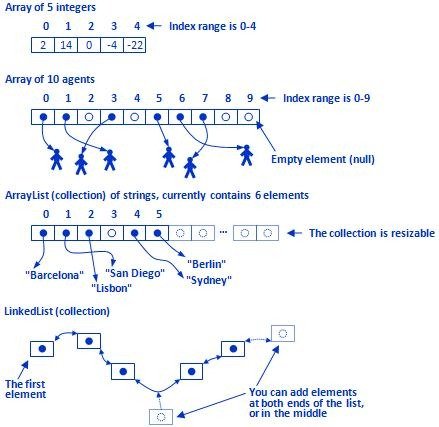
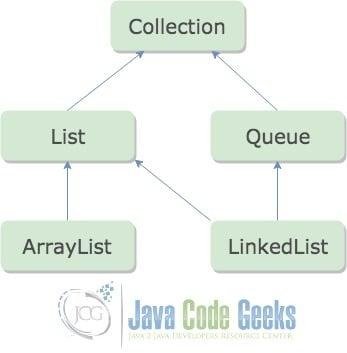
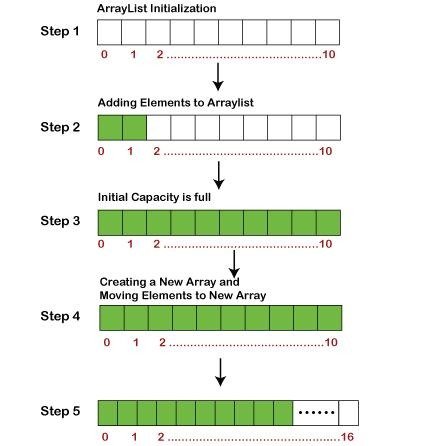
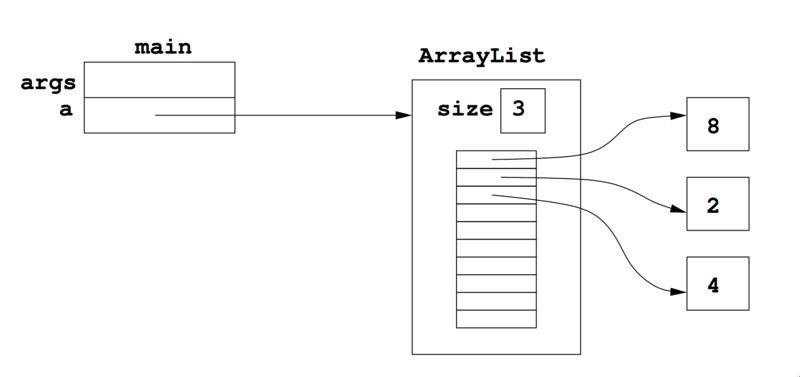
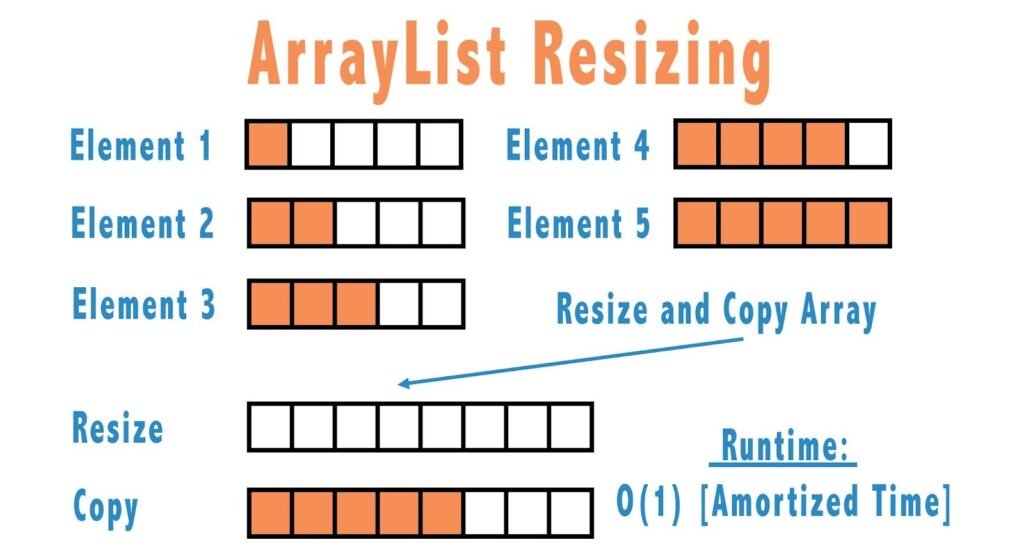
ArrayList is a resizable array implementation in Java. It stores elements in contiguous memory, allowing direct access by index.
Key Features of ArrayList:
- Fast random access (O(1) for get operations)
- Slower insert/remove in middle (O(n) due to shifting elements)
- Maintains insertion order
- Can store null values
- Resizes automatically when full
Real-World Example:
If you have a list of 1,000 student names and often need to access them by index, ArrayList is ideal because lookup is fast.
What is a LinkedList?
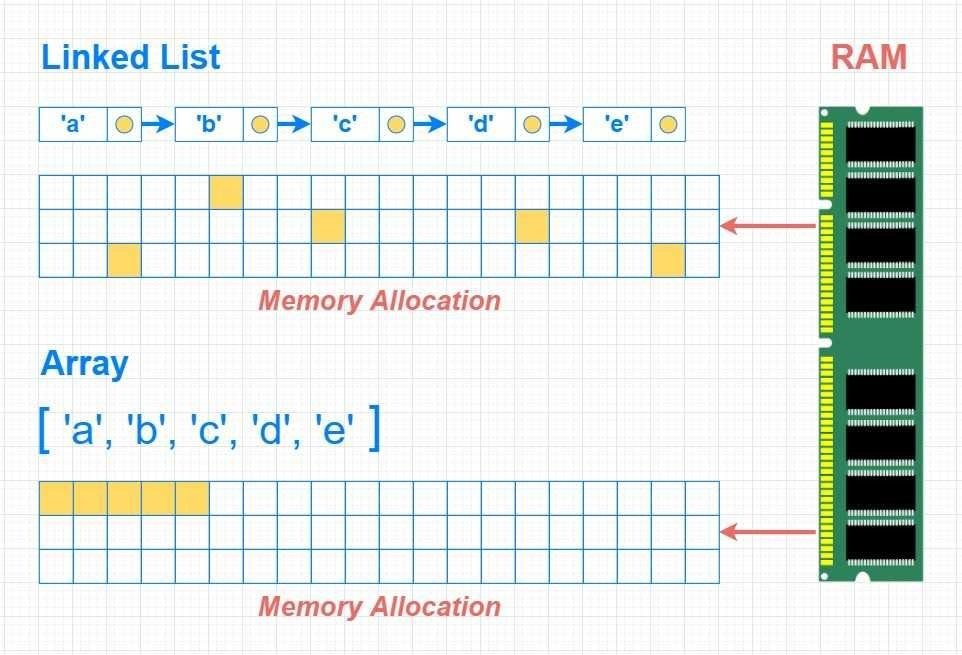
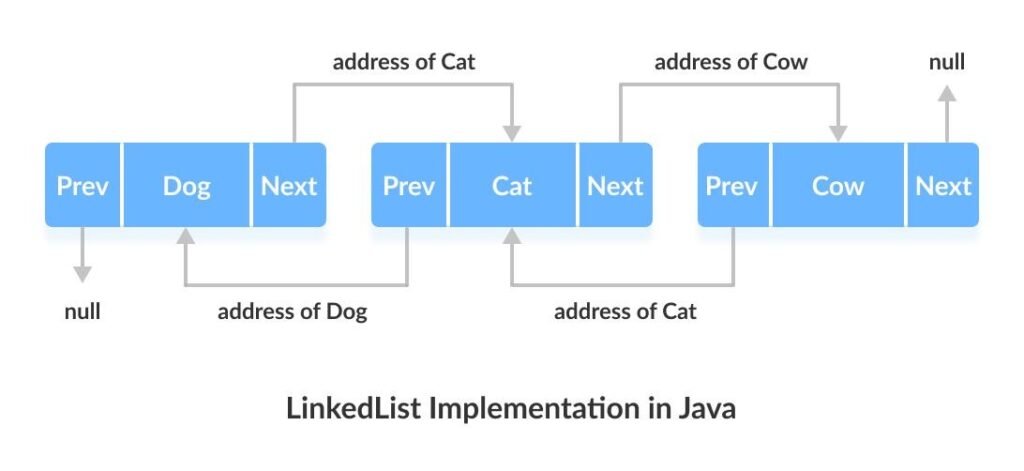
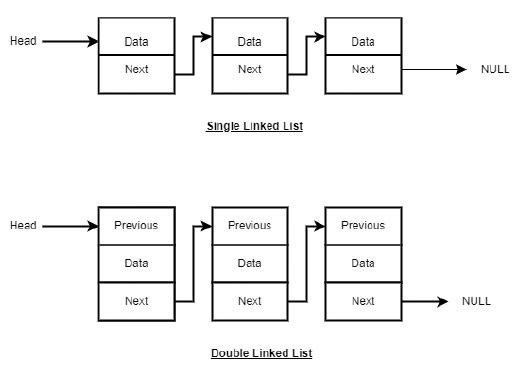
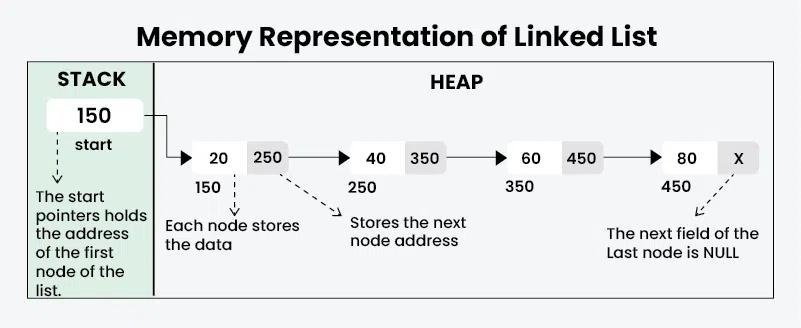
LinkedList stores elements as nodes, where each node contains data and pointers to the previous and next node (doubly-linked).
Key Features of LinkedList:
- Fast insertion and deletion at any position (O(1) if node reference is known)
- Slower random access (O(n) to traverse from head to index)
- Maintains insertion order
- Can be used as Queue, Deque, or Stack
- Can store null values
Real-World Example:
If you’re managing a dynamic playlist where songs are frequently added/removed in the middle, LinkedList is more efficient than ArrayList.
ArrayList vs LinkedList: Key Differences
| Feature | ArrayList | LinkedList |
| Data Structure | Dynamic Array | Doubly-linked list |
| Access Time | Fast (O(1) for get/set) | Slow (O(n) for get/set) |
| Insertion/Deletion | Slow in middle (O(n)) | Fast if node reference known (O(1)) |
| Memory Usage | Less memory (stores only data) | More memory (stores data + pointers) |
| Iteration | Slightly faster | Slightly slower |
| Implements Interfaces | List, RandomAccess, Cloneable, Serializable | List, Deque, Queue, Cloneable, Serializable |
| Use Case | Frequent access by index | Frequent add/remove operations |
Performance Comparison
1. Access by Index
- ArrayList: O(1) → Direct access via index
- LinkedList: O(n) → Must traverse from head or tail
2. Insertion/Removal
- ArrayList: O(n) → Shifts elements to maintain order
- LinkedList: O(1) → Adjusts pointers only
3. Memory Consumption
- ArrayList: More compact
- LinkedList: Uses extra memory for node pointers
When to Use ArrayList vs LinkedList
Use ArrayList When:
- You frequently access elements by index
- Insertions/deletions are rare or mostly at the end
- Memory efficiency is important
Use LinkedList When:
- Frequent insertions or deletions anywhere in the list
- You implement Queue, Deque, or Stack
- Index-based access is not frequent
Pros and Cons
ArrayList Pros:
- Fast random access
- Compact memory
- Simple implementation
ArrayList Cons:
- Slow insertions/deletions in middle
- Resizing overhead if list grows often
LinkedList Pros:
- Fast insertion/deletion
- Flexible for different list operations
- Can be used as multiple data structures (Queue, Deque)
LinkedList Cons:
- Slower element access
- Higher memory usage
- Extra pointer management
Real-Life Scenarios
Scenario 1: Accessing Elements Frequently
- Best Choice: ArrayList
- Example: Retrieving customer records by index
Scenario 2: Frequent Modifications
- Best Choice: LinkedList
- Example: Managing an online shopping cart with frequent additions/removals
Scenario 3: Memory-Conscious Application
- Best Choice: ArrayList
- Example: Large datasets in a mobile application
Internal Linking Suggestions
For a programming blog, link this article to:
- “Difference Between HashMap and TreeMap in Java”
- “Array vs ArrayList in Java: Key Differences”
- “Java Collections Framework Explained”
- “When to Use Queue, Stack, or LinkedList in Java”
FAQs
1. Can ArrayList be faster than LinkedList?
Yes, for random access and sequential reading, ArrayList is faster.
2. Can LinkedList store primitive types?
No, LinkedList stores objects. Use wrapper classes like Integer or Double.
3. Which one consumes more memory?
LinkedList consumes more due to additional pointers for each node.
4. Can I convert ArrayList to LinkedList?
Yes, using constructors:
LinkedList<Type> list = new LinkedList<>(arrayList);
5. Does LinkedList implement RandomAccess?
No, only ArrayList implements the RandomAccess marker interface.
Conclusion
The difference between ArrayList and LinkedList lies in internal structure, access speed, and modification efficiency. Use ArrayList for fast random access and compact storage. Choose LinkedList for frequent insertions and deletions, especially in dynamic data structures like queues or stacks.
Choosing the right list type can significantly improve your program’s performance and memory efficiency.