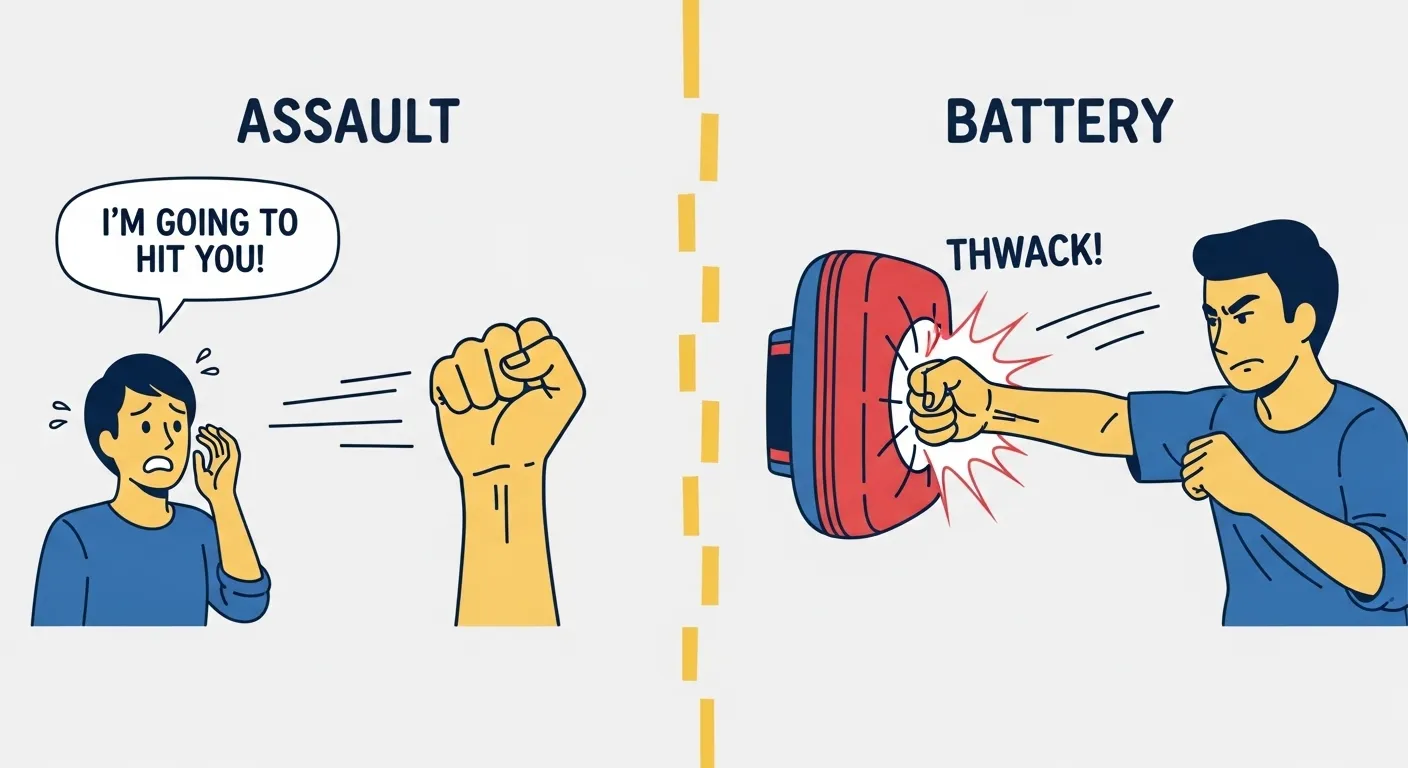
Imagine two people having an argument. One person raises a fist and threatens to hit the other person. The second person becomes scared because they think they might get hurt. This situation is called assault. Assault means threatening or attempting to harm someone, even if no physical contact happens.
Now imagine that the person actually hits the other person. This is called battery. Battery happens when someone physically touches or harms another person without permission.
The difference between assault and battery is mainly about physical contact. Assault is a threat or attempt to hurt someone, while battery involves actual physical contact. Learning the difference between assault and battery helps students understand basic legal terms. The difference between assault and battery is also important for understanding personal safety and the law. Knowing the difference between assault and battery helps people understand their rights and responsibilities in society.
Key Difference Between the Both
The main difference between assault and battery is whether physical contact occurs.
- Assault is threatening or attempting to harm someone.
- Battery is actually touching or harming someone physically.
Why Their Difference Is Important for Learners and Experts
Understanding the difference between assault and battery helps people learn about laws that protect individuals. Students studying law or social studies learn how different actions are treated under legal systems.
In society, these laws help protect people from threats and violence and encourage safe behavior.
Pronunciation
Assault
US: /əˈsɔːlt/
UK: /əˈsɔːlt/
Battery
US: /ˈbæt.ər.i/
UK: /ˈbæt.ər.i/
Linking Hook
Now that we understand the meanings of these legal terms, let us explore the difference between assault and battery through simple points.
Difference Between Assault and Battery
1. Meaning
Assault:
Threatening or attempting to hurt someone.
Examples:
- Raising a fist and threatening to hit someone.
- Pointing a stick at someone to scare them.
Battery:
Physically harming or touching someone without permission.
Examples:
- Hitting someone with a fist.
- Pushing someone during a fight.
2. Physical Contact
Assault:
No physical contact is required.
Examples:
- Threatening someone verbally.
- Moving as if to hit someone.
Battery:
Physical contact must happen.
Examples:
- Slapping someone.
- Throwing an object that hits someone.
3. Type of Action
Assault:
A threat or attempt.
Examples:
- Raising a hand to scare someone.
- Swinging but missing a punch.
Battery:
A completed harmful action.
Examples:
- Punching someone.
- Shoving someone to the ground.
4. Victim’s Experience
Assault:
Victim feels fear of being harmed.
Examples:
- Feeling threatened by aggressive behavior.
- Being scared of a possible attack.
Battery:
Victim experiences physical harm.
Examples:
- Being hit or pushed.
- Being injured during a fight.
5. Legal Definition
Assault:
A threat or attempt to cause harm.
Examples:
- Threatening gestures.
- Verbal threats with intention.
Battery:
Intentional physical harm.
Examples:
- Punching or kicking someone.
- Hitting with an object.
6. Result
Assault:
Creates fear or intimidation.
Examples:
- Someone feels unsafe.
- Someone fears an attack.
Battery:
Causes physical injury or contact.
Examples:
- Bruises or cuts.
- Pain from being hit.
7. Evidence
Assault:
Often based on threats or behavior.
Examples:
- Witnesses seeing threatening gestures.
- Recorded threats.
Battery:
Often has physical proof.
Examples:
- Injuries on the body.
- Medical reports.
8. Severity
Assault:
May involve threats only.
Examples:
- Verbal threats.
- Aggressive actions without contact.
Battery:
Usually more serious because harm occurs.
Examples:
- Physical fighting.
- Injuring someone.
9. Legal Charges
Assault:
Charge for threatening harm.
Examples:
- Attempted attack.
- Threatening behavior.
Battery:
Charge for actual physical harm.
Examples:
- Physical attack.
- Unlawful touching.
10. Everyday Example
Assault:
A person raises a stick to scare someone but does not hit.
Examples:
- Threatening gesture.
- Attempt to hit but stopping.
Battery:
A person hits someone with the stick.
Examples:
- Hitting during a fight.
- Throwing an object that strikes someone.
Nature and Behaviour of Both
Assault focuses on threats or attempts that create fear of harm.
Battery involves actual physical contact that causes harm or unwanted touching.
Why People Are Confused
People often confuse these terms because they are closely related and sometimes happen together in the same situation.
Table: Difference and Similarity
| Feature | Assault | Battery | Similarity |
| Meaning | Threat of harm | Physical harm | Both are legal offenses |
| Contact | Not required | Required | Both involve harmful intent |
| Result | Fear or intimidation | Physical injury | Both protect personal safety |
| Evidence | Threatening behavior | Physical injuries | Both can involve witnesses |
Which Is Better in What Situation?
Neither assault nor battery is acceptable behavior. Laws exist to prevent both actions and protect people from harm. Society encourages respectful communication and peaceful conflict resolution instead of threats or violence.
Metaphors and Similes
- Assault is like a storm warning that threatens damage.
- Battery is like the storm actually hitting and causing damage.
Connotative Meaning
Assault
Positive: none
Neutral: legal term for threat
Negative: intimidation or threat of harm
Example:
“The law considers threatening someone with violence as assault.”
Battery
Positive: none
Neutral: legal term for physical harm
Negative: violence or attack
Example:
“Striking someone without permission is considered battery.”
Idioms or Proverbs
“Violence solves nothing.”
Example: Avoiding assault and battery helps maintain peace.
“Keep your hands to yourself.”
Example: This rule prevents battery in everyday life.
Works in Literature
- To Kill a Mockingbird – Harper Lee (Novel, 1960)
- Crime and Punishment – Fyodor Dostoevsky (Novel, 1866)
Movies Related to Law and Justice
- A Few Good Men (1992, USA)
- 12 Angry Men (1957, USA)
Frequently Asked Questions
1. What is assault?
Assault is threatening or attempting to harm someone.
2. What is battery?
Battery is physically harming or touching someone without permission.
3. Can assault happen without touching someone?
Yes, assault can happen without physical contact.
4. Does battery require physical contact?
Yes, battery involves physical contact.
5. Can assault and battery happen together?
Yes, a threat can happen before a physical attack.
How Both Are Useful for Surroundings
Understanding these terms helps people know the laws that protect personal safety and prevent violence in society.
Final Words for Both
Assault and battery are legal terms that describe different types of harmful actions, with assault involving threats and battery involving physical contact.
Conclusion
The difference between assault and battery mainly lies in physical contact. Assault involves threatening or attempting to harm someone, while battery occurs when physical contact or harm actually happens. Both actions are considered serious under the law and are meant to protect people from violence and intimidation. Understanding the difference between assault and battery helps students and readers learn basic legal concepts and recognize the importance of respect, safety, and responsible behavior in society.
Meta Description (26 words):
Learn the difference between assault and battery with simple explanations, examples, and comparison table. Easy guide to understand these important legal terms and their meanings.