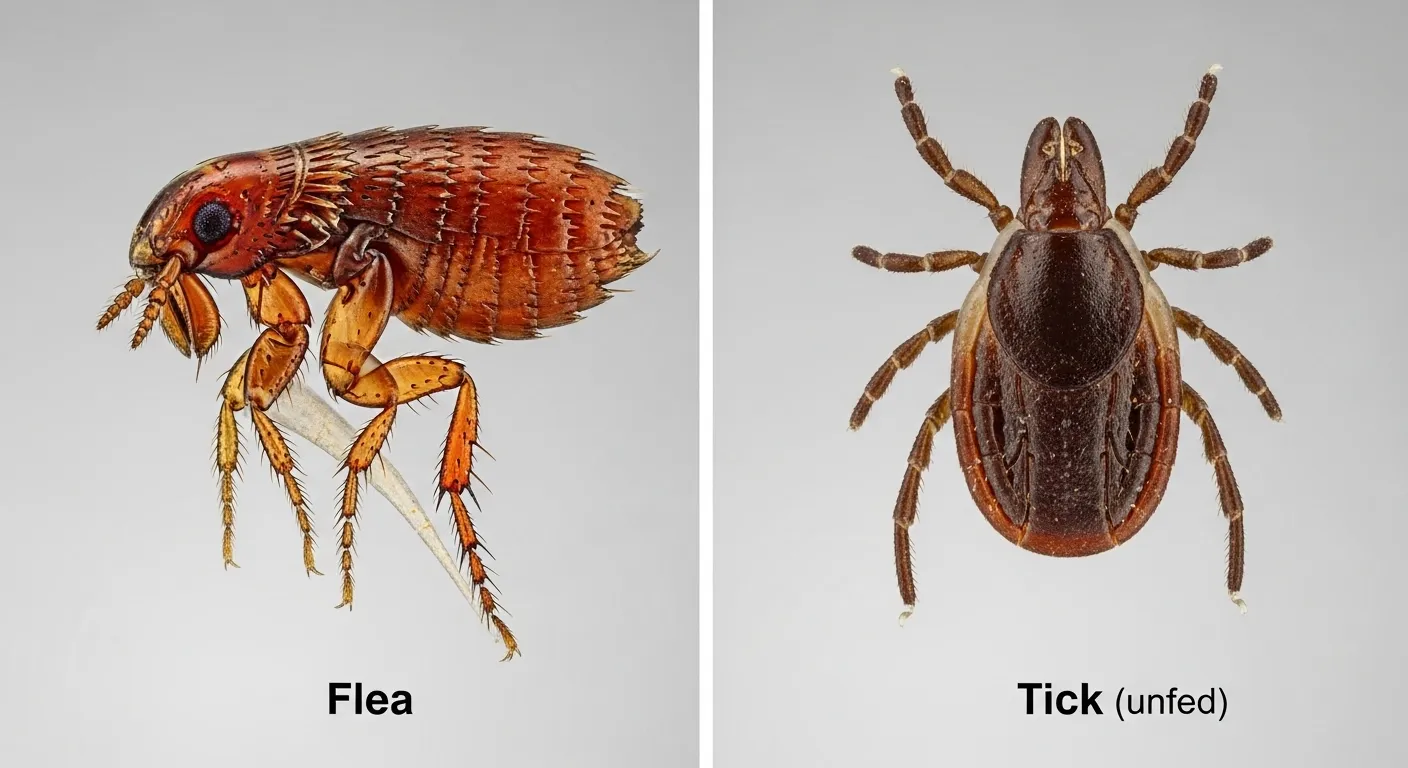
Imagine your pet scratching constantly. You might wonder whether the problem is caused by fleas or ticks. Although both are small parasites that live on animals, there is a clear difference between flea and tick.
The difference between flea and tick lies in their body structure, behavior, and how they feed on hosts. Fleas are tiny, jumping insects, while ticks are slow-moving arachnids that attach firmly to the skin. Understanding the difference between flea and tick helps pet owners, farmers, and homeowners protect animals and maintain hygiene. Learning the difference between flea and tick is also important for preventing diseases and ensuring proper treatment.
Key Difference Between the Both
The main difference is their movement and attachment.
Fleas jump quickly and move around on the host, while ticks attach themselves firmly and stay in one place while feeding.
Why Their Difference Is Necessary to Know
Knowing the difference is important for proper pest control and health protection. Fleas spread quickly and cause itching, while ticks can transmit serious diseases. Identifying whether your pet has fleas or ticks helps in choosing the correct treatment and preventing further infestation. Understanding the difference between flea and tick ensures better care for pets and safer living environments.
Pronunciation (US & UK)
Flea
- US: /fliː/
- UK: /fliː/
Tick
- US: /tɪk/
- UK: /tɪk/
Before exploring further, let’s examine the detailed difference between flea and tick.
Difference Between Flea and Tick
1. Biological Classification
Fleas are insects.
Ticks are arachnids (related to spiders).
Flea Examples
- Siphonaptera
- Have six legs.
Tick Examples
- Ixodida
- Have eight legs.
2. Body Shape
Fleas have flat, narrow bodies.
Ticks have round or oval bodies.
Flea Examples
- Thin body for moving through fur.
- Dark brown color.
Tick Examples
- Swollen body when filled with blood.
- Hard or soft outer shell.
3. Movement
Fleas jump quickly.
Ticks crawl slowly.
Flea Examples
- Can jump long distances.
- Move rapidly between hosts.
Tick Examples
- Climb and wait for a host.
- Attach when contact is made.
4. Feeding Behavior
Fleas bite frequently and move around.
Ticks attach and feed for a long time.
Flea Examples
- Multiple bites.
- Cause itching and irritation.
Tick Examples
- Stay attached for hours or days.
- Feed on blood continuously.
5. Size
Fleas are very small.
Ticks are larger and more visible.
Flea Examples
- About 1–3 mm.
- Hard to see.
Tick Examples
- Larger, especially when engorged.
- Easier to spot on skin.
6. Habitat
Fleas live on hosts and in their surroundings.
Ticks live outdoors and attach to hosts temporarily.
Flea Examples
- Found in carpets and bedding.
- Live with pets.
Tick Examples
- Found in grass and bushes.
- Attach during outdoor exposure.
7. Life Cycle
Fleas reproduce quickly indoors.
Ticks have a slower life cycle.
Flea Examples
- Eggs in carpets or pet fur.
- Rapid infestation.
Tick Examples
- Multiple stages (larva, nymph, adult).
- Longer development time.
8. Diseases
Fleas can cause skin irritation and some diseases.
Ticks can transmit serious illnesses.
Flea Examples
- Flea allergy dermatitis.
- Tapeworm transmission.
Tick Examples
- Lyme disease.
- Other infections.
9. Host Interaction
Fleas stay on the host frequently.
Ticks attach only while feeding.
Flea Examples
- Constant presence on pets.
- Jump between hosts.
Tick Examples
- Temporary attachment.
- Drop off after feeding.
10. Removal
Fleas are removed through treatment and cleaning.
Ticks must be carefully pulled out.
Flea Examples
- Flea shampoos and sprays.
- Cleaning environment.
Tick Examples
- Use tweezers to remove.
- Avoid leaving mouthparts in skin.
Nature and Behaviour
Flea: Fast, jumping parasite that feeds frequently and spreads quickly.
Tick: Slow, attaching parasite that feeds for long periods and can transmit serious diseases.
Why People Are Confused About Their Use
People often confuse fleas and ticks because both are small parasites found on animals and cause itching. However, their behavior and risks are quite different.
Table: Difference and Similarity Between Flea and Tick
| Feature | Flea | Tick | Similarity |
| Type | Insect | Arachnid | Parasites |
| Movement | Jumping | Crawling | Feed on blood |
| Size | Very small | Larger | Live on animals |
| Feeding | Frequent bites | Long attachment | Cause irritation |
| Risk | Mild to moderate | High (diseases) | Need control |
Which Is Better in What Situation?
Flea (100 words)
Fleas are not “better,” but they are easier to manage compared to ticks. Flea infestations can be controlled with proper cleaning, medications, and regular pet care. While they cause irritation and discomfort, they are less likely to transmit severe diseases compared to ticks. Early detection and treatment can quickly reduce flea problems in homes and pets.
Tick (100 words)
Ticks are more dangerous due to their ability to transmit serious diseases. They require careful handling and removal to avoid infection. Preventive measures such as protective clothing, tick repellents, and regular pet checks are essential. Although ticks are less common indoors, their impact can be more serious, making awareness and prevention very important.
Use in Metaphors and Similes
- “Annoying like fleas” (persistent irritation)
- “Clinging like a tick” (holding tightly)
Connotative Meaning
Flea
- Negative: Annoyance, irritation
- Neutral: Small parasite
Tick
- Negative: Danger, disease
- Neutral: Blood-feeding parasite
Idioms or Proverbs
“Put a flea in someone’s ear” – to annoy or warn someone
Example: His comment put a flea in her ear.
Works in Literature
- “The Adventures of Tom Sawyer” – Mark Twain (mentions fleas humorously)
Movies Related to Animals
- The Secret Life of Pets – Pet-related themes
- Dr. Dolittle – Animal care themes
Frequently Asked Questions
1. Are fleas and ticks the same?
No, fleas are insects and ticks are arachnids.
2. Which is more dangerous?
Ticks are generally more dangerous due to disease transmission.
3. Can humans get fleas or ticks?
Yes, both can bite humans.
4. How can I prevent them?
Regular pet care and cleaning help prevent infestations.
5. Do fleas or ticks live longer?
Ticks usually have a longer life cycle.
How Both Are Useful for the Surroundings
Although harmful to hosts, fleas and ticks play roles in ecosystems by serving as food for other organisms and contributing to ecological balance.
Final Words
Fleas and ticks are different parasites with unique behaviors and risks.
Conclusion
Understanding the difference between flea and tick is essential for proper pest control and health protection. Fleas are fast-moving, jumping insects that cause irritation, while ticks are slow-moving parasites that attach firmly and can transmit serious diseases. Although both affect animals and humans, their behavior, risks, and treatment methods differ significantly. Recognizing the difference between flea and tick helps ensure better care, prevention, and safety in everyday life.