A family once faced a frightening diagnosis when a loved one was told they had a brain tumor. At first, doctors used the term “glioma,” but later clarified it was “glioblastoma.” This created confusion and fear. Were they the same or different? This real-life situation highlights the difference between glioma and glioblastoma. While both are types of brain tumors, their severity and behavior differ significantly. Understanding the difference between glioma and glioblastoma is essential for patients, caregivers, and learners. The difference between glioma and glioblastoma lies in how aggressive the tumor is, how it grows, and how it is treated. Knowing the difference between glioma and glioblastoma helps in better awareness, early decisions, and informed discussions with medical professionals.
Pronunciation (US & UK)
- Glioma
- US: /ɡliˈoʊmə/
- UK: /ɡliˈəʊmə/
- Glioblastoma
- US: /ˌɡliːoʊblæsˈtoʊmə/
- UK: /ˌɡliːəʊblæsˈtəʊmə/
Now, let’s move forward to understand their distinctions in detail.
Key Difference Between Glioma and Glioblastoma
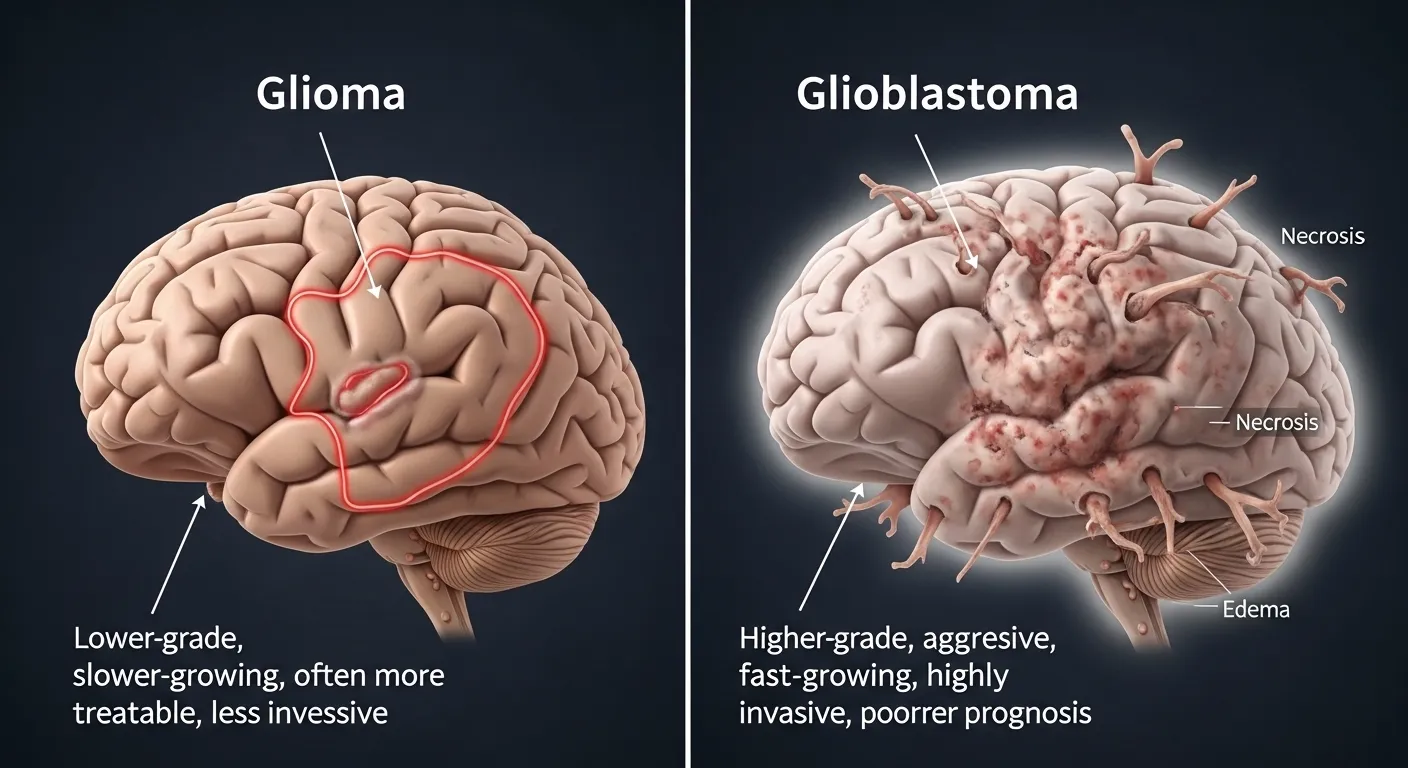
A glioma is a general term for tumors that arise from glial cells in the brain or spinal cord.
A glioblastoma (also called glioblastoma multiforme) is a specific, highly aggressive type of glioma classified as Grade IV.
Why Is It Important to Know Their Difference?
Understanding the difference between glioma and glioblastoma is crucial for both medical learners and the general public. It helps patients understand prognosis, treatment options, and urgency. For healthcare professionals, it guides diagnosis and care planning. In society, awareness can lead to early detection and better support systems for those affected by brain tumors.
H2: Difference Between Glioma and Glioblastoma
1. Definition
- Glioma: Broad category of brain tumors.
- Example 1: Astrocytoma is a type of glioma.
- Example 2: Oligodendroglioma falls under glioma.
- Glioblastoma: Specific, most aggressive glioma.
- Example 1: Rapidly growing brain tumor.
- Example 2: Often called GBM.
2. Severity
- Glioma: Can be low-grade or high-grade.
- Example 1: Slow-growing tumors.
- Example 2: Less life-threatening forms.
- Glioblastoma: Always high-grade (Grade IV).
- Example 1: Highly malignant.
- Example 2: Life-threatening condition.
3. Growth Rate
- Glioma: May grow slowly.
- Example 1: Stable for years.
- Example 2: Gradual symptom onset.
- Glioblastoma: Grows very rapidly.
- Example 1: Symptoms worsen quickly.
- Example 2: Tumor spreads fast.
4. Prognosis
- Glioma: Varies widely.
- Example 1: Some patients live many years.
- Example 2: Treatable in early stages.
- Glioblastoma: Poor prognosis.
- Example 1: Short survival period.
- Example 2: High recurrence rate.
5. Treatment
- Glioma: Surgery, radiation, or monitoring.
- Example 1: Watch-and-wait approach.
- Example 2: Targeted therapy.
- Glioblastoma: Aggressive treatment required.
- Example 1: Surgery plus chemotherapy.
- Example 2: Radiation therapy.
6. Spread in Brain
- Glioma: May remain localized.
- Example 1: Limited brain area.
- Example 2: Defined tumor margins.
- Glioblastoma: Infiltrates widely.
- Example 1: Spreads into surrounding tissue.
- Example 2: Hard to remove completely.
7. Symptoms
- Glioma: Mild to moderate symptoms.
- Example 1: Headaches.
- Example 2: Seizures.
- Glioblastoma: Severe symptoms.
- Example 1: Rapid neurological decline.
- Example 2: Memory loss and confusion.
8. Age Group
- Glioma: Occurs in various age groups.
- Example 1: Children and adults.
- Example 2: Different types by age.
- Glioblastoma: More common in older adults.
- Example 1: Typically over 50.
- Example 2: Rare in children.
9. Recurrence
- Glioma: Lower recurrence in low-grade types.
- Example 1: Long remission periods.
- Example 2: Controlled growth.
- Glioblastoma: Very high recurrence.
- Example 1: Returns after treatment.
- Example 2: Resistant to therapy.
10. Classification
- Glioma: Includes multiple tumor types.
- Example 1: Astrocytoma.
- Example 2: Ependymoma.
- Glioblastoma: One specific subtype.
- Example 1: Grade IV astrocytoma.
- Example 2: Most aggressive form.
Nature and Behaviour
- Glioma: Can be slow or fast-growing, depending on type and grade.
- Glioblastoma: Highly aggressive, invasive, and rapidly progressing.
Why Are People Confused?
People often confuse glioma and glioblastoma because glioblastoma is actually a type of glioma. The similar names and medical terminology make it difficult for non-experts to distinguish between them.
Table: Difference and Similarity
| Aspect | Glioma | Glioblastoma | Similarity |
| Type | Broad category | Specific subtype | Brain tumors |
| Severity | Variable | Very high | Affect brain |
| Growth | Slow or fast | Very fast | Abnormal cell growth |
| Prognosis | Varies | Poor | Require treatment |
| Treatment | Varies | Aggressive | Medical care needed |
Which Is Better in What Situation?
A low-grade glioma is generally more manageable and less aggressive. In such cases, patients may live longer with proper monitoring and treatment. It allows time for planning and better quality of life.
Glioblastoma, however, is never considered “better” due to its aggressive nature. Early diagnosis and treatment can help manage symptoms and extend survival, but it remains a serious condition requiring urgent medical care.
Metaphors and Similes
- Glioma: “Like a slow-growing plant in the brain.”
- Glioblastoma: “Like a wildfire spreading rapidly.”
Connotative Meaning
- Glioma: Neutral to negative
- Example: “The patient was diagnosed with a glioma.”
- Glioblastoma: Strongly negative
- Example: “Glioblastoma is a severe brain cancer.”
Idioms and Proverbs
(Direct idioms are rare due to medical nature, but related expressions can be used)
- “A ticking time bomb” (glioblastoma)
- Example: Doctors described it as a ticking time bomb due to rapid growth.
Works in Literature
- When Breath Becomes Air (Memoir, Paul Kalanithi, 2016)
- The Emperor of All Maladies (Non-fiction, Siddhartha Mukherjee, 2010)
Movies Related to Brain Tumors
- My Sister’s Keeper (2009, USA)
- Brain on Fire (2016, USA/Canada)
FAQs
1. What is the main difference between glioma and glioblastoma?
Glioma is a general category, while glioblastoma is a specific aggressive type.
2. Is glioblastoma a type of glioma?
Yes, it is the most aggressive form of glioma.
3. Which is more dangerous?
Glioblastoma is more dangerous.
4. Can glioma become glioblastoma?
Some gliomas can progress to higher grades, including glioblastoma.
5. Are both cancerous?
Most glioblastomas are malignant; gliomas can be benign or malignant.
How Both Are Useful for the Surroundings
While not “useful” in a positive sense, studying these conditions helps medical science improve treatments, research, and patient care, benefiting society.
Final Words
Glioma and glioblastoma are closely related but very different in severity. Understanding their differences can help in better awareness and informed medical decisions.
Conclusion
In conclusion, the difference between glioma and glioblastoma lies mainly in their classification, aggressiveness, and prognosis. Glioma is a broad category of brain tumors with varying severity, while glioblastoma is the most aggressive and life-threatening form. Recognizing these differences is essential for patients, caregivers, and healthcare professionals. With better understanding, individuals can approach diagnosis and treatment with greater clarity and preparedness.