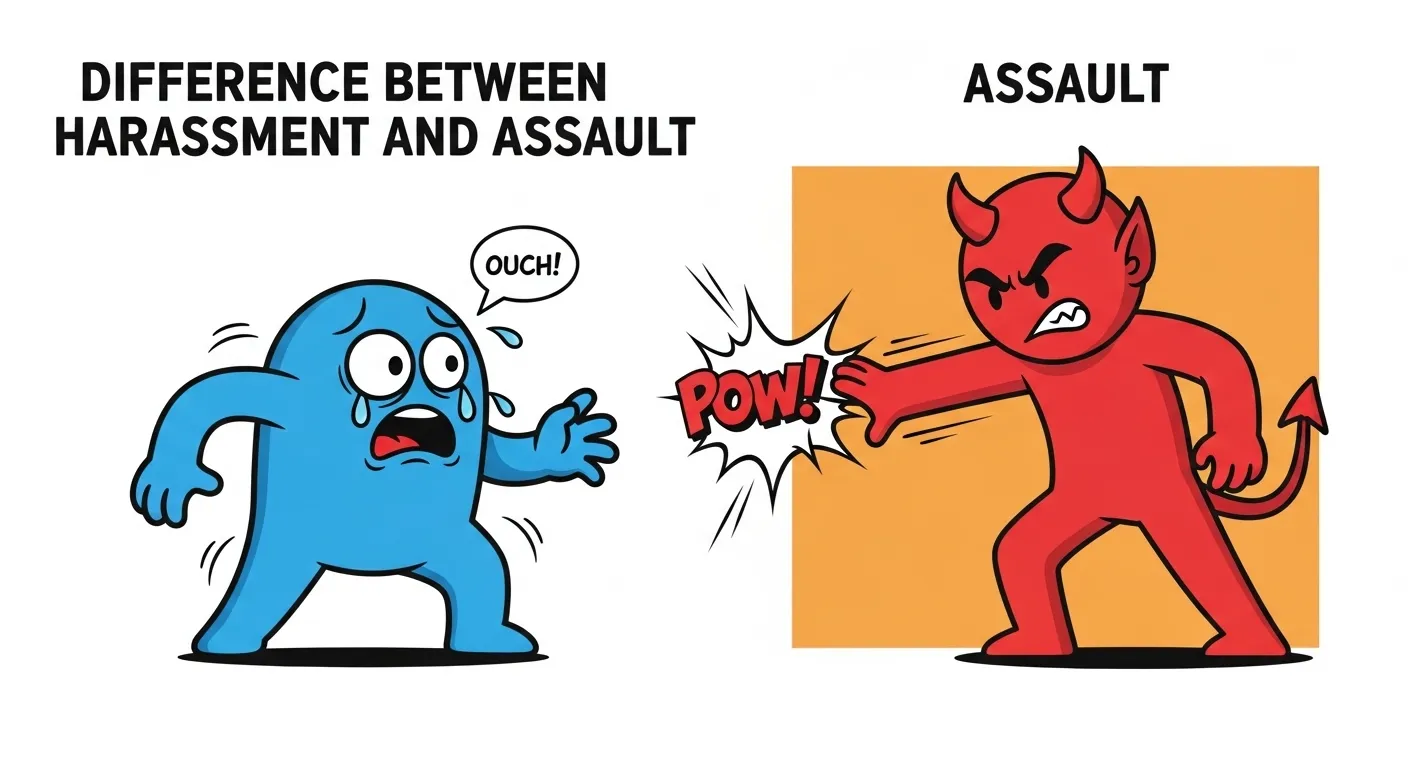
Difference Between Harassment and Assault: Understanding the Key Distinctions
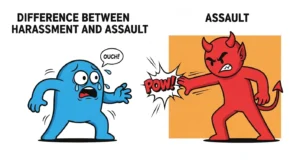
Imagine walking into a workplace where someone constantly makes offensive comments or unwelcome gestures. You might feel threatened or unsafe, but did you know that legally, this behavior may be classified as harassment rather than assault? Understanding the difference between harassment and assault is crucial for protecting yourself and others in society. Harassment involves repeated, unwanted behavior that causes emotional distress, while assault typically involves an act of physical harm or threat. Many people confuse harassment and assault, but knowing the difference ensures proper legal action and social awareness. Today, we will explore the difference between harassment and assault, their nature, and how society perceives them.
Pronunciation
- Harassment: US /həˈræs.mənt/, UK /həˈras.mənt/
- Assault: US /əˈsɔːlt/, UK /əˈsɔːlt/
Linking Hook: Now that we understand their basic meanings, let’s dive deeper into the difference between harassment and assault.
Difference Between Harassment and Assault
1. Nature of the Act
- Harassment: Involves repeated offensive behavior.
- Example 1: Sending unwanted messages daily at work.
- Example 2: Making repeated inappropriate jokes to a colleague.
- Assault: Involves a single act of physical harm or threat.
- Example 1: Punching someone during an argument.
- Example 2: Threatening someone with a weapon.
2. Physical Contact
- Harassment: Usually non-physical.
- Example 1: Staring in a threatening way.
- Example 2: Continuous verbal abuse.
- Assault: Physical contact or threat of physical contact is central.
- Example 1: Slapping someone.
- Example 2: Pushing or shoving aggressively.
3. Legal Consequences
- Harassment: Often results in warnings, restraining orders, or fines.
- Example 1: Workplace harassment complaint.
- Example 2: Online harassment charges.
- Assault: Can result in criminal charges, imprisonment, or severe fines.
- Example 1: Aggravated assault in public.
- Example 2: Assault with a deadly weapon.
4. Emotional vs Physical Impact
- Harassment: Primarily emotional distress.
- Example 1: Feeling anxious at work.
- Example 2: Stress from repeated bullying.
- Assault: Both physical injury and emotional trauma.
- Example 1: Bruises after being attacked.
- Example 2: PTSD after a physical threat.
5. Duration
- Harassment: Continuous or repeated behavior.
- Example 1: Persistent teasing over months.
- Example 2: Repeated stalking messages.
- Assault: Often a single or short-term event.
- Example 1: A mugging incident.
- Example 2: One-time altercation.
6. Intent
- Harassment: Intent is often to intimidate or annoy.
- Example 1: Boss targeting an employee.
- Example 2: Spreading rumors to damage reputation.
- Assault: Intent is to cause physical harm or threat.
- Example 1: Threatening with a knife.
- Example 2: Striking someone intentionally.
7. Evidence Required
- Harassment: Often requires documentation of repeated acts.
- Example 1: Emails or messages.
- Example 2: Recorded phone calls.
- Assault: Medical reports or witness statements usually suffice.
- Example 1: Hospital report for injuries.
- Example 2: Security footage of the attack.
8. Workplace vs Public Incidents
- Harassment: Common in workplaces or online.
- Example 1: Office bullying.
- Example 2: Social media harassment.
- Assault: Can occur anywhere.
- Example 1: Street fight.
- Example 2: Assault in a bar or public space.
9. Psychological Profile
- Harassment: Perpetrators often seek control or dominance.
- Example 1: Manager bullying staff.
- Example 2: Online trolls targeting victims.
- Assault: Perpetrators often act impulsively or violently.
- Example 1: Road rage attack.
- Example 2: Physical fight due to provocation.
10. Social Perception
- Harassment: Often underestimated but emotionally damaging.
- Example 1: Ignored workplace teasing.
- Example 2: Dismissed online abuse.
- Assault: Generally considered more serious due to physical harm.
- Example 1: Public outrage over attacks.
- Example 2: Media coverage of assaults.
Nature and Behaviour of Both
- Harassment: Persistent, repetitive, manipulative, emotional.
- Assault: Immediate, forceful, direct, physical.
Why People Are Confused
Many confuse harassment and assault because both involve harm. However, one is mostly emotional (harassment), and the other is physical (assault).
Table: Difference and Similarity
| Feature | Harassment | Assault | Similarity |
| Nature | Repeated, non-physical | Physical or threat of harm | Both harmful to victim |
| Duration | Long-term | Short-term | Both can cause fear |
| Evidence | Messages, documentation | Medical reports, witnesses | Proof needed for legal action |
| Legal Consequences | Fines, warnings, restraining order | Criminal charges, imprisonment | Both punishable |
| Impact | Emotional distress | Physical and emotional | Both affect victim’s life |
Which is Better in What Situation?
Harassment laws are better in workplaces or online environments where repeated non-physical behavior affects mental well-being. Assault laws are more effective in public spaces or situations involving direct physical threats. Knowing which legal framework applies ensures proper protection and justice.
Use in Metaphors and Similes
- Harassment: “Her words were a constant drizzle of harassment, slowly eroding his confidence.”
- Assault: “The criticism hit him like an assault, sudden and painful.”
Connotative Meaning
- Harassment: Negative.
- Example: Cyber harassment ruins mental health.
- Assault: Negative.
- Example: Assault leaves lasting scars.
Idioms or Proverbs
- “Fight fire with fire” – sometimes used metaphorically for responding to assault.
- “Sticks and stones may break my bones” – related to assault and emotional impact.
Literature Featuring the Keywords
- The Handmaid’s Tale (Dystopian, Margaret Atwood, 1985) – includes harassment themes.
- A Clockwork Orange (Novel, Anthony Burgess, 1962) – features assault elements.
Movies About the Keywords
- Enough (2002, USA) – harassment and assault themes.
- Sleeping with the Enemy (1991, USA) – stalking and harassment.
FAQs
1. Is harassment always non-physical?
Yes, it is mostly emotional or psychological.
2. Can assault be verbal?
Only if it causes fear of imminent physical harm.
3. Are harassment and assault punishable?
Yes, but legal consequences vary.
4. Can harassment escalate into assault?
Yes, repeated harassment can lead to physical confrontation.
5. How to report each?
Harassment: HR or online authorities. Assault: Police or emergency services.
How Both Are Useful for Surroundings
Understanding harassment and assault helps create safe workplaces, schools, and public spaces. Awareness prevents abuse and promotes responsible behavior.
Final Words
While harassment and assault may overlap in causing harm, their distinctions are crucial. Awareness protects victims, ensures justice, and maintains social order.
Conclusion
Harassment and assault are two serious forms of harmful behavior, yet they differ in nature, duration, and impact. Harassment is persistent and emotional, while assault is often sudden and physical. Recognizing these differences helps individuals, workplaces, and society respond appropriately, ensuring safety and justice. Legal systems treat each according to its unique characteristics, and public awareness can prevent both. By understanding harassment and assault, we foster respectful, secure environments for everyone. Knowledge of these terms is not just academic—it is a social responsibility.