Imagine shopping for a stylish jacket or a sleek sofa. You see two options: leather and leatherette. Both look appealing, but which one should you choose? This is where understanding the difference between leather and leatherette becomes crucial.
Leather is natural, made from animal hides, while leatherette is synthetic, made to mimic the look and feel of leather. Knowing the difference between leather and leatherette can save you money, help you choose sustainable options, and ensure durability. Many shoppers confuse the two, but the difference between leather and leatherette affects cost, maintenance, and longevity.
Whether you’re buying shoes, bags, furniture, or car seats, understanding the difference between leather and leatherette ensures you make the right choice for style, comfort, and sustainability.
🔑 Key Difference Between Leather and Leatherette
- Leather: Natural material from animal hides
- Leatherette: Artificial material designed to look like leather
🌍 Why Is It Important to Know This Difference?
Knowing the difference between leather and leatherette matters for consumers, designers, and businesses. Leather offers durability, breathability, and a premium feel. Leatherette is cheaper, easier to maintain, and vegan-friendly. Understanding the difference helps buyers make ethical, practical, and financial decisions.
🔊 Pronunciation
- Leather
- US: /ˈleð.ɚ/
- UK: /ˈleð.ər/
- Leatherette
- US: /ˌleð.ɚˈet/
- UK: /ˌleð.ərˈet/
Now, let’s dive deeper into the difference between leather and leatherette.
🆚 Difference Between Leather and Leatherette
1. Origin
- Leather: Natural, from animal hides
- Example: Cowhide jackets
- Example: Genuine leather sofas
- Leatherette: Synthetic, made from PVC or PU
- Example: Faux leather chairs
- Example: Vegan handbags
2. Appearance
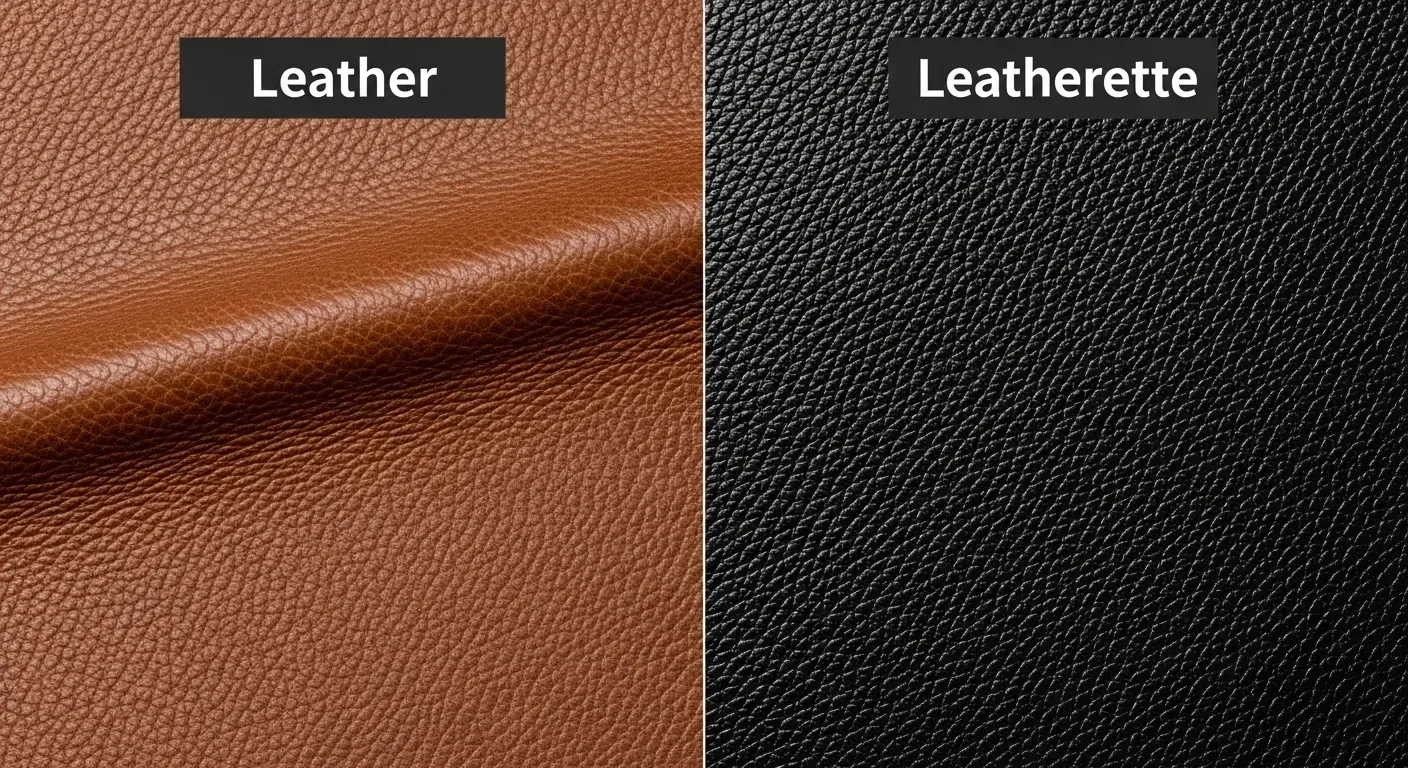
- Leather: Rich texture, natural imperfections
- Example: Grain patterns
- Example: Slight color variations
- Leatherette: Uniform surface, artificial shine
- Example: Smooth finish
- Example: Consistent color
3. Durability
- Leather: Very durable, lasts years
- Example: Leather boots over 10 years
- Example: Leather car seats for decades
- Leatherette: Less durable, prone to cracking
- Example: Faux sofa peeling
- Example: Synthetic shoes cracking
4. Maintenance
- Leather: Requires conditioning
- Example: Leather polish
- Example: Avoid water damage
- Leatherette: Easy to clean
- Example: Wipe with a damp cloth
- Example: Resistant to stains
5. Cost
- Leather: Expensive
- Example: Premium bags
- Example: Designer jackets
- Leatherette: Affordable
- Example: Budget furniture
- Example: Low-cost accessories
6. Breathability
- Leather: Breathable, comfortable
- Example: Shoes in summer
- Example: Car seats
- Leatherette: Non-breathable
- Example: Hot during the summer
- Example: Sweat accumulation
7. Environmental Impact
- Leather: Animal product, chemical tanning may harm the environment
- Example: Cowhide tanning
- Example: Leather waste disposal
- Leatherette: Synthetic, less animal harm but plastic-based
- Example: PU leather
- Example: PVC products
8. Ageing
- Leather: Develops patina, improves with age
- Example: Antique leather bags
- Example: Weathered leather jackets
- Leatherette: May peel or fade
- Example: Fading sofa surface
- Example: Cracking seats
9. Feel
- Leather: Soft, warm, premium feel
- Example: Leather gloves
- Example: Luxury handbags
- Leatherette: Smooth, less natural feel
- Example: Faux belts
- Example: Synthetic jackets
10. Smell
- Leather: Distinct natural smell
- Example: Genuine leather aroma in stores
- Example: Leather furniture scent
- Leatherette: Artificial chemical smell
- Example: New faux leather bag
- Example: Synthetic furniture
🔍 Nature and Behaviour
- Leather: Natural, breathable, durable, ages gracefully.
- Leatherette: Artificial, affordable, easy to clean, but less durable.
🤔 Why Are People Confused?
People confuse leather and leatherette because modern synthetics closely mimic real leather in appearance and texture. Without careful inspection, both may look premium.
📊 Comparison Table
| Feature | Leather | Leatherette |
| Origin | Animal hide | Synthetic (PU/PVC) |
| Durability | High | Moderate |
| Maintenance | Requires care | Easy to clean |
| Cost | Expensive | Affordable |
| Aging | Develops patina | May peel or fade |
| Feel | Soft, natural | Smooth, artificial |
| Breathability | Yes | No |
| Environmental | Animal product, tanning impact | Plastic-based, vegan-friendly |
| Similarity | Premium look | Mimics leather appearance |
⚖️ Which Is Better in What Situation?
Leather is better when you want longevity, a premium feel, and natural aesthetics. Ideal for luxury items like designer bags, jackets, or high-end furniture.
Leatherette is better when you want affordability, vegan-friendly options, and easy maintenance. Great for budget furniture, car interiors, or fashion accessories that are easy to clean.
🧠 Metaphors and Similes
- Leather: “Like a fine wine, it improves with age.”
- Leatherette: “Like plastic flowers looks perfect but lacks natural feel.”
🎭 Connotative Meaning
- Leather: Positive (luxury, quality)
- Example: “Leather boots last a lifetime.”
- Leatherette: Neutral to positive (practical, modern)
- Example: “A leatherette sofa is easy to maintain.”
🗣️ Idioms & Expressions
- “Leather-bound” (refers to quality books or luxury)
- “Fake it ‘til you make it” (fits leatherette imitation)
❓ FAQs
1. Is leatherette real leather?
No, it’s synthetic and mimics leather.
2. Which lasts longer?
Leather is more durable.
3. Is leatherette vegan?
Yes, made without animal products.
4. Can leatherette peel?
Yes, especially with age or heat.
5. Which smells better?
Leather has a natural aroma; leatherette smells artificial.
🌱 Usefulness in Daily Life
Leather is perfect for long-term investment items. Leatherette is useful for budget-friendly, low-maintenance, and vegan-conscious options.
✨ Final Words
Leather offers timeless quality, while leatherette offers practicality and ethical appeal. Your choice depends on budget, lifestyle, and preferences.
🧾 Conclusion
The difference between leather and leatherette lies in origin, durability, cost, and maintenance. Leather is natural, luxurious, and long-lasting, while leatherette is synthetic, affordable, and easy to care for.
By understanding the difference between leather and leatherette, you can make informed decisions when buying jackets, furniture, bags, or car interiors. Leather is for those who value tradition and durability; leatherette suits modern, ethical, and low-maintenance needs.