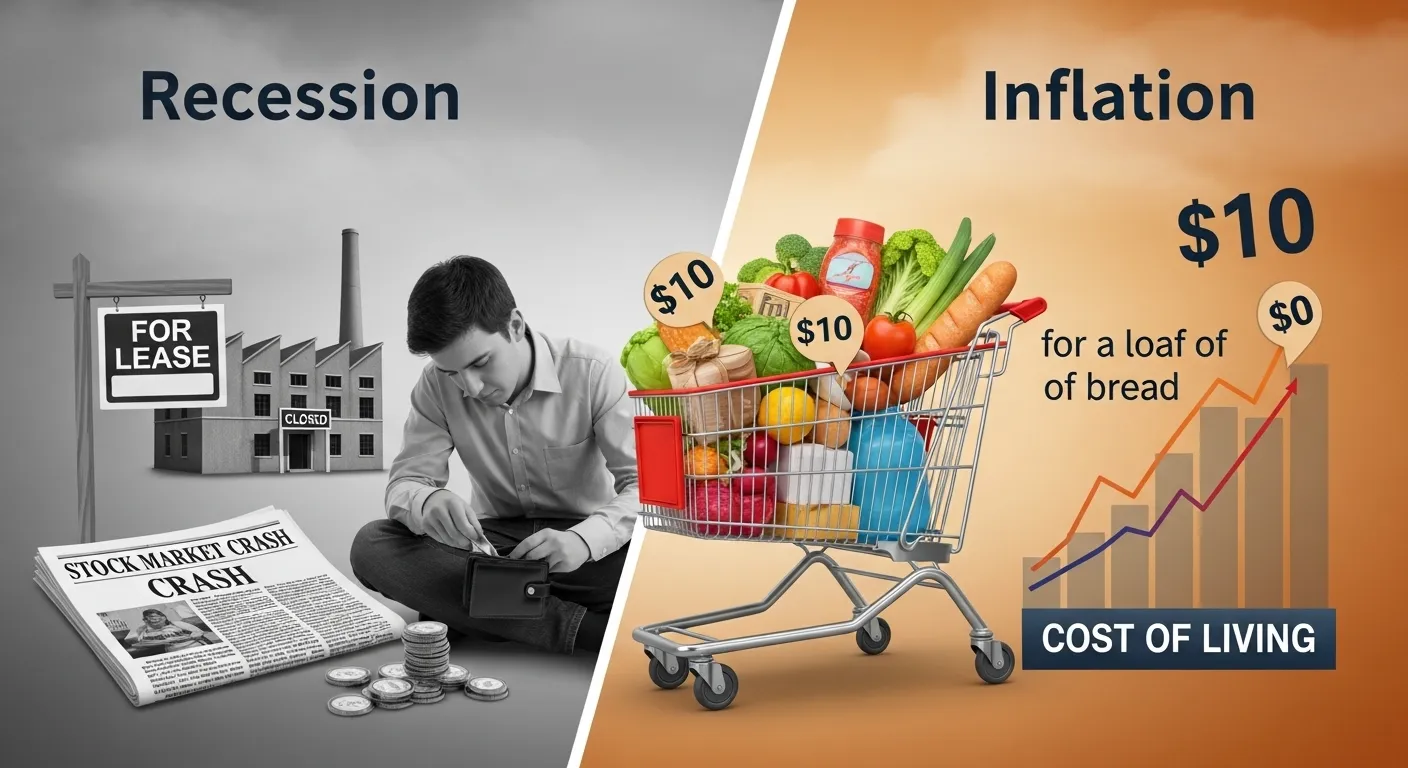
A few years ago, a small shop owner noticed something strange. Prices of goods kept rising, yet customers were buying less. He was confused, was the economy growing or shrinking? This real-life dilemma perfectly illustrates the difference between recession and inflation. While inflation refers to rising prices, a recession reflects a slowdown in economic activity. Understanding the difference between recession and inflation is crucial because both affect daily life, from grocery bills to job security. Many people mix up these terms, but the difference between recession and inflation lies in their causes, effects, and outcomes. In simple terms, inflation makes things expensive, while a recession makes money harder to earn. Recognizing the difference between recession and inflation helps individuals and businesses make smarter financial decisions.
Pronunciation (US & UK)
- Recession
- US: /rɪˈsɛʃən/
- UK: /rɪˈsɛʃən/
- Inflation
- US: /ɪnˈfleɪʃən/
- UK: /ɪnˈfleɪʃən/
Now that we’ve introduced the terms, let’s dive deeper into the core distinctions.
Key Difference Between Recession and Inflation
A recession is a period of economic decline marked by reduced GDP, job losses, and decreased spending.
Inflation, on the other hand, is the rate at which the general level of prices for goods and services rises.
Why Is It Important to Know Their Difference?
Understanding the difference between recession and inflation is essential for both learners and experts. For individuals, it helps in budgeting, saving, and investing wisely. For policymakers and economists, it guides decisions that stabilize the economy. In society, these concepts shape employment rates, cost of living, and overall financial stability. Without knowing the difference, people may misinterpret economic signals and make poor financial choices.
H2: Difference Between Recession and Inflation
1. Definition
- Recession: Economic decline over time.
- Example 1: Businesses shut down due to low demand.
- Example 2: GDP falls for two consecutive quarters.
- Inflation: Increase in prices over time.
- Example 1: Food prices rise every month.
- Example 2: Rent becomes more expensive annually.
2. Economic Activity
- Recession: Low economic activity.
- Example 1: Factories reduce production.
- Example 2: Fewer people go shopping.
- Inflation: High demand often drives activity.
- Example 1: Increased consumer spending.
- Example 2: High demand for housing.
3. Employment
- Recession: High unemployment.
- Example 1: Companies lay off workers.
- Example 2: Hiring freezes occur.
- Inflation: Employment may stay stable or rise.
- Example 1: More hiring in booming sectors.
- Example 2: Wage increases in competitive markets.
4. Purchasing Power
- Recession: Money value remains but less income.
- Example 1: People earn less.
- Example 2: Reduced bonuses.
- Inflation: Money loses value.
- Example 1: Same salary buys less.
- Example 2: Savings lose real value.
5. Cause
- Recession: Reduced demand or financial crises.
- Example 1: Banking collapse.
- Example 2: Drop in exports.
- Inflation: Excess demand or increased costs.
- Example 1: Rising fuel prices.
- Example 2: Supply shortages.
6. Government Response
- Recession: Stimulus spending, tax cuts.
- Example 1: Lower interest rates.
- Example 2: Public job programs.
- Inflation: Tight monetary policy.
- Example 1: Increase interest rates.
- Example 2: Reduce money supply.
7. Business Impact
- Recession: Profits decline.
- Example 1: Sales drop.
- Example 2: Expansion plans halt.
- Inflation: Costs increase.
- Example 1: Raw material prices rise.
- Example 2: Transportation becomes expensive.
8. Consumer Behavior
- Recession: People save more.
- Example 1: Cut luxury spending.
- Example 2: Delay big purchases.
- Inflation: People spend quickly.
- Example 1: Buy before prices rise further.
- Example 2: Stock up on essentials.
9. Duration
- Recession: Usually short-term cycles.
- Example 1: Lasts months to years.
- Example 2: Ends with recovery.
- Inflation: Can be ongoing if unmanaged.
- Example 1: Long-term price rise.
- Example 2: Persistent cost increases.
10. Economic Signal
- Recession: Weak economy.
- Example 1: Falling GDP.
- Example 2: Reduced investments.
- Inflation: Overheating economy (sometimes).
- Example 1: Rapid growth.
- Example 2: High consumer demand.
Nature and Behaviour
- Recession: Cyclical and contractionary. It slows down growth and reduces opportunities.
- Inflation: Gradual or rapid increase in prices. It can be mild or extreme (hyperinflation).
Why Are People Confused?
People often confuse recession and inflation because both affect money and the economy. Rising prices during inflation can reduce purchasing power, similar to income loss during a recession. Media discussions and economic complexity also contribute to confusion.
Table: Difference and Similarity
| Aspect | Recession | Inflation | Similarity |
| Meaning | Economic decline | Rising prices | Both affect economy |
| Impact | Job loss | High cost of living | Reduce financial comfort |
| Cause | Low demand | High demand/costs | Linked to economic cycles |
| Government Action | Stimulus | Rate hikes | Require policy response |
| Consumer Effect | Less spending | Reduced purchasing power | Affect daily life |
Which Is Better in What Situation?
A mild level of inflation is often considered healthy for an economy. It encourages spending and investment because people expect prices to rise. Businesses grow, and employment can increase. However, too much inflation becomes harmful, reducing purchasing power and creating instability.
On the other hand, a recession is generally undesirable but sometimes necessary to correct economic imbalances. It can reduce excessive inflation and stabilize prices. However, prolonged recessions lead to unemployment and hardship, making them more damaging overall.
Metaphors and Similes
- Recession: “The economy is in a deep winter.”
- Inflation: “Prices are rising like a balloon.”
Connotative Meaning
- Recession: Negative
- Example: “The company struggled during the recession.”
- Inflation: Neutral to negative
- Example: “Inflation made everyday items expensive.”
Idioms and Proverbs
- “Tighten one’s belt” (used in recession)
- Example: Families had to tighten their belts during the recession.
- “Cost an arm and a leg” (used in inflation)
- Example: Groceries cost an arm and a leg due to inflation.
Works in Literature
- The Great Depression: America 1929–1941 (History, Robert S. McElvaine, 1984)
- Lords of Finance (Economic History, Liaquat Ahamed, 2009)
Movies Related to the Topics
- The Big Short (2015, USA)
- Inside Job (2010, USA)
- Margin Call (2011, USA)
FAQs
1. What is the main difference between recession and inflation?
A recession is an economic decline, while inflation is the rising prices.
2. Can both happen at the same time?
Yes, this is called stagflation.
3. Which is worse?
Both are harmful, but severe recession often has broader impacts.
4. How does inflation affect savings?
It reduces the value of money over time.
5. How does a recession affect jobs?
It increases unemployment and reduces hiring.
How Both Are Useful for Surroundings
Inflation encourages spending and growth, while recession corrects economic excesses. Together, they help balance the economy over time.
Final Words
Recession and inflation are two powerful economic forces. Understanding their differences helps individuals make better financial decisions and prepares societies for economic changes.
Conclusion
In conclusion, the difference between recession and inflation lies in their nature and impact. While recession slows economic activity and increases unemployment, inflation raises prices and reduces purchasing power. Both play significant roles in shaping the economy and require careful management. By understanding these concepts, individuals can better navigate financial challenges and opportunities. Awareness of their differences empowers smarter decision-making and fosters economic resilience in both personal and professional life.