Imagine a person suddenly feeling their heart beating very fast while sitting quietly. They may feel dizzy, anxious, or short of breath. When doctors examine the heart rhythm, they may discover an abnormal, rapid heartbeat called SVT or VTach. Both conditions cause the heart to beat faster than normal, but they originate from different parts of the heart.
Understanding the difference between SVT and VTach is very important in medicine and health education. SVT, or supraventricular tachycardia, begins in the upper chambers of the heart, while VTach, or ventricular tachycardia, starts in the lower chambers. Although both involve rapid heart rhythms, the difference between SVT and VTach lies in their location, causes, and level of danger. Learning the difference between SVT and VTach helps medical students, doctors, and patients understand heart health and recognize serious cardiac conditions.
Key Difference Between the Both
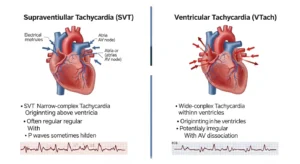
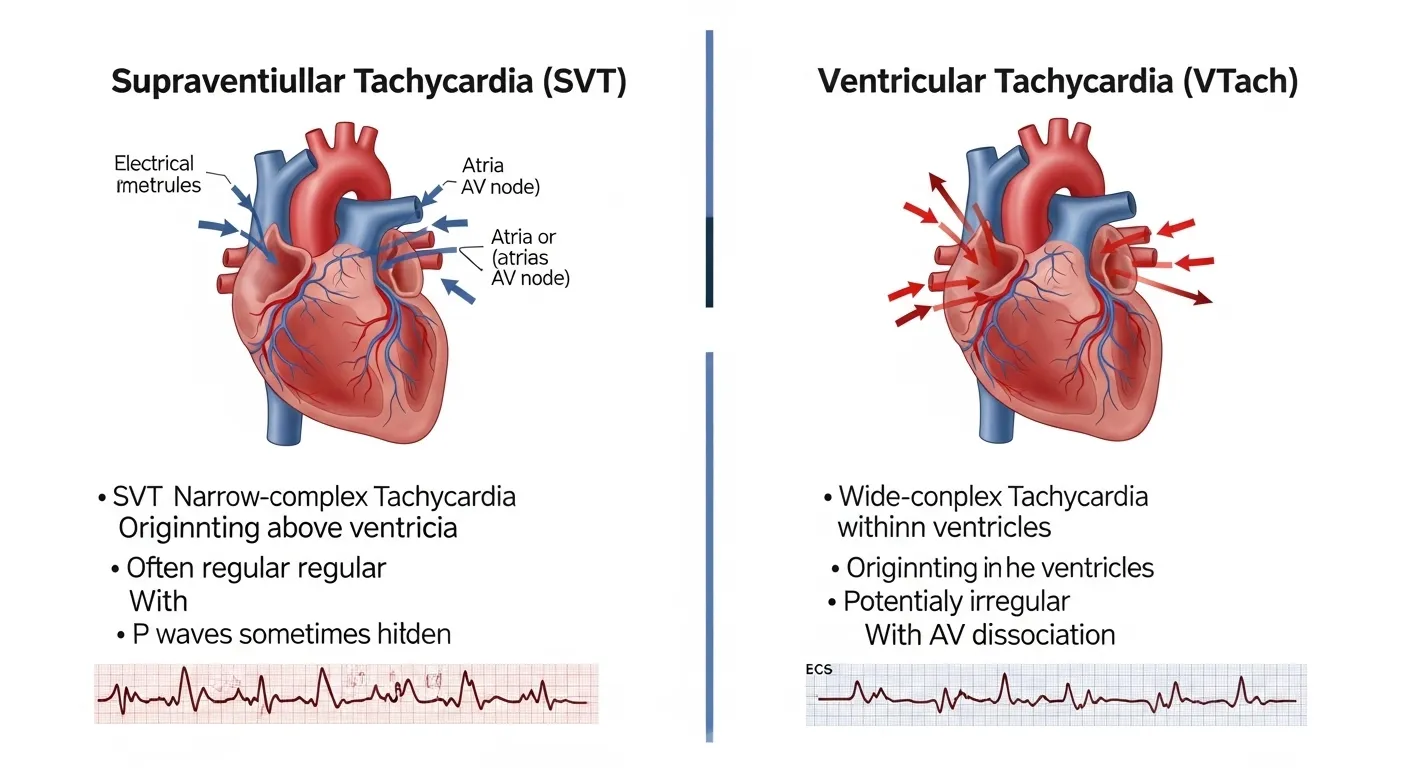
The main difference between SVT and VTach is that SVT originates in the upper chambers of the heart (atria), while VTach originates in the lower chambers of the heart (ventricles) and is generally more dangerous.
Why Is Their Difference Necessary to Know for Learners and Experts?
Understanding the difference between SVT and VTach is crucial for healthcare professionals and students studying cardiology. These conditions affect heart rhythm and require different treatments.
For learners and medical students, knowing the difference helps in diagnosing heart rhythm disorders correctly. For doctors and healthcare providers, it ensures that patients receive the right treatment quickly, which can save lives. In society, awareness of heart conditions helps people recognize symptoms early and seek medical care. Therefore, understanding the difference between SVT and VTach is important for improving heart health and preventing serious complications.
Pronunciation of the Keywords
SVT (Supraventricular Tachycardia)
- US: /ˌsuː.prə.venˈtrɪk.jə.lɚ ˌtæk.ɪˈkɑːr.di.ə/
- UK: /ˌsuː.prə.venˈtrɪk.jʊ.lə ˌtæk.ɪˈkɑː.di.ə/
VTach (Ventricular Tachycardia)
- US: /venˈtrɪk.jə.lɚ ˌtæk.ɪˈkɑːr.di.ə/
- UK: /venˈtrɪk.jʊ.lə ˌtæk.ɪˈkɑː.di.ə/
Linking Hook
Now that we understand their basic meaning and importance, let us explore the difference between SVT and VTach in detail with clear explanations and examples.
Difference Between SVT and VTach
1. Location in the Heart
SVT begins in the upper chambers of the heart (atria).
VTach begins in the lower chambers of the heart (ventricles).
Examples for SVT:
- Rapid signals start in the atria.
- Electrical activity above the ventricles causes SVT.
Examples for VTach:
- Rapid rhythm originates in the ventricles.
- Abnormal signals occur in the lower heart chambers.
2. Severity
SVT is usually less dangerous.
VTach is often life-threatening if untreated.
Examples for SVT:
- Some people experience occasional SVT episodes.
- SVT may stop on its own in some cases.
Examples for VTach:
- VTach can lead to cardiac arrest.
- Emergency treatment is often required.
3. Heart Rate
SVT usually causes heart rates between 150–220 beats per minute.
VTach may cause heart rates above 120 beats per minute and can be unstable.
Examples for SVT:
- The heart suddenly beats very fast but regularly.
- Episodes may last a few minutes.
Examples for VTach:
- The heart rhythm becomes dangerously fast.
- Blood circulation may decrease.
4. Causes
SVT often occurs due to abnormal electrical pathways in the heart.
VTach usually occurs due to heart disease or damage to heart muscles.
Examples for SVT:
- Stress or caffeine may trigger SVT.
- Some people have congenital electrical pathways.
Examples for VTach:
- Heart attacks can cause VTach.
- Cardiomyopathy may lead to VTach.
5. Symptoms
SVT symptoms are usually milder.
VTach symptoms are often severe and dangerous.
Examples for SVT:
- Rapid heartbeat and palpitations.
- Mild dizziness or anxiety.
Examples for VTach:
- Severe dizziness or fainting.
- Chest pain or loss of consciousness.
6. ECG Appearance
SVT shows narrow QRS complexes on an ECG.
VTach shows wide QRS complexes on an ECG.
Examples for SVT:
- ECG shows fast but narrow signals.
- Doctors recognize SVT patterns.
Examples for VTach:
- ECG shows wide abnormal signals.
- Ventricular rhythms appear irregular.
7. Treatment
SVT can often be treated with vagal maneuvers or medication.
VTach may require emergency treatment such as defibrillation.
Examples for SVT:
- Deep breathing techniques may stop SVT.
- Doctors may prescribe medications.
Examples for VTach:
- Electric shock may restore rhythm.
- Hospital treatment is often needed.
8. Risk Level
SVT generally has lower risk of sudden death.
VTach carries higher risk of sudden cardiac death.
Examples for SVT:
- Most patients recover quickly.
- Episodes may occur occasionally.
Examples for VTach:
- Untreated VTach can stop the heart.
- Immediate care is necessary.
9. Age Group
SVT often occurs in younger people or healthy individuals.
VTach is more common in older adults with heart disease.
Examples for SVT:
- Young adults may experience SVT episodes.
- Athletes sometimes develop SVT.
Examples for VTach:
- Older patients with heart damage develop VTach.
- People with heart disease face higher risk.
10. Overall Impact
SVT mainly affects heart rhythm without severe damage.
VTach can seriously affect heart function and blood circulation.
Examples for SVT:
- Symptoms may be uncomfortable but manageable.
- Medical monitoring is usually sufficient.
Examples for VTach:
- Blood flow may decrease rapidly.
- Emergency treatment is required.
Nature and Behaviour of Both
SVT is generally a fast but controlled heart rhythm that originates above the ventricles. It often occurs suddenly and may stop on its own or with simple treatment.
VTach is a more dangerous heart rhythm disorder that begins in the ventricles and can disrupt the heart’s ability to pump blood effectively.
Why People Are Confused About Their Use?
People often confuse SVT and VTach because both conditions involve rapid heartbeats (tachycardia). The symptoms may appear similar, such as palpitations and dizziness. Additionally, both conditions are detected using ECG tests, which can look complicated for non-medical individuals. However, their origin and seriousness differ greatly.
Table Showing Differences and Similarities
| Aspect | SVT | VTach | Similarity |
| Origin | Atria (upper chambers) | Ventricles (lower chambers) | Both cause rapid heartbeats |
| Severity | Usually mild | Often severe | Both affect heart rhythm |
| ECG Pattern | Narrow QRS | Wide QRS | Both were diagnosed with ECG |
| Risk | Lower risk | Higher risk | Both require medical attention |
| Treatment | Medication or maneuvers | Emergency treatment | Both treatable |
Which Is Better in What Situation?
Neither SVT nor VTach is “better” because both are abnormal heart rhythms. However, SVT is generally less dangerous and often manageable with medication or lifestyle adjustments. Many people with SVT live normal lives with proper monitoring and care.
VTach is more serious and requires immediate medical attention. Doctors focus on quickly restoring a normal heart rhythm to prevent complications such as cardiac arrest. Early diagnosis and treatment greatly improve patient outcomes.
How the Keywords Are Used in Metaphors and Similes
SVT metaphor
Example:
“SVT is like a car engine suddenly revving too fast.”
Simile example:
“The heart raced like an SVT episode during the panic.”
VTach metaphor
Example:
“VTach is like a powerful storm disrupting the heart’s rhythm.”
Simile example:
“The heart beat wildly like a VTach rhythm.”
Connotative Meaning
SVT
Positive: manageable medical condition
Example: “SVT episodes can be controlled with treatment.”
Neutral: heart rhythm disorder
Example: “Doctors diagnosed the patient with SVT.”
Negative: sudden, rapid heartbeat
Example: “SVT attacks can cause discomfort.”
VTach
Negative: dangerous heart rhythm disorder
Example: “VTach requires urgent medical care.”
Neutral: serious cardiac condition
Example: “Doctors monitor VTach carefully.”
Idioms or Proverbs Related to the Words
These medical terms do not have direct idioms, but related expressions exist.
“Heart skipping a beat”
Example: “The sudden rhythm change felt like the heart skipping a beat.”
“Heart racing”
Example: “During anxiety, the heart feels like it is racing.”
Works in Literature Mentioning the Keywords
- Cardiology Explained — Medical Education, Euan Ashley & Josef Niebauer, 2004
- Braunwald’s Heart Disease — Medical Textbook, Eugene Braunwald, 1980
Movies Related to the Theme
- Something the Lord Made — 2004, USA (medical breakthroughs in heart surgery)
- Flatliners — 1990, USA (medical themes involving heart activity)
Frequently Asked Questions
1. What is the main difference between SVT and VTach?
SVT starts in the upper chambers of the heart, while VTach starts in the lower chambers.
2. Which is more dangerous, SVT or VTach?
VTach is generally more dangerous and can be life-threatening.
3. Can SVT turn into VTach?
In rare cases, severe heart conditions may lead to more serious arrhythmias.
4. How are SVT and VTach diagnosed?
Doctors diagnose them using ECG or heart monitoring tests.
5. Can lifestyle affect SVT?
Yes, stress, caffeine, and lack of sleep can trigger SVT episodes.
How Both Are Useful for the Surroundings
Studying SVT and VTach helps medical professionals improve diagnosis and treatment of heart diseases. Awareness of these conditions helps communities recognize symptoms early and seek medical help quickly.
Final Words for Both
SVT and VTach are two types of rapid heart rhythm disorders with different levels of seriousness. Understanding their differences helps improve heart health awareness.
Conclusion
The difference between SVT and VTach mainly lies in their origin within the heart and their level of severity. SVT begins in the upper chambers of the heart and is usually less dangerous, while VTach originates in the lower chambers and can be life-threatening if not treated quickly. Both conditions cause rapid heartbeats and require medical attention, but their treatments and risks differ significantly. Understanding the difference between SVT and VTach helps medical students, healthcare professionals, and patients recognize symptoms and seek proper treatment for heart rhythm disorders.