Microorganisms are all around us, playing crucial roles in food production, medicine, and the environment. Among them, yeast and mold are two of the most commonly encountered fungi. Although both are fungi, they differ significantly in structure, reproduction, and uses. For example, baker’s yeast helps make bread fluffy, while molds like Penicillium are used to produce antibiotics or cheese. Understanding the difference between yeast and mold is essential for students, microbiologists, bakers, and anyone interested in food science or biology. This guide will explore their characteristics, differences, examples, and how they impact our daily lives.
Pronunciation
- Yeast: US /jiːst/, UK /jiːst/
- Mold: US /moʊld/, UK /məʊld/
Linking Hook: Let’s examine the key differences between yeast and mold to understand their unique features and applications.
H2 Difference Between Yeast and Mold
1. Classification
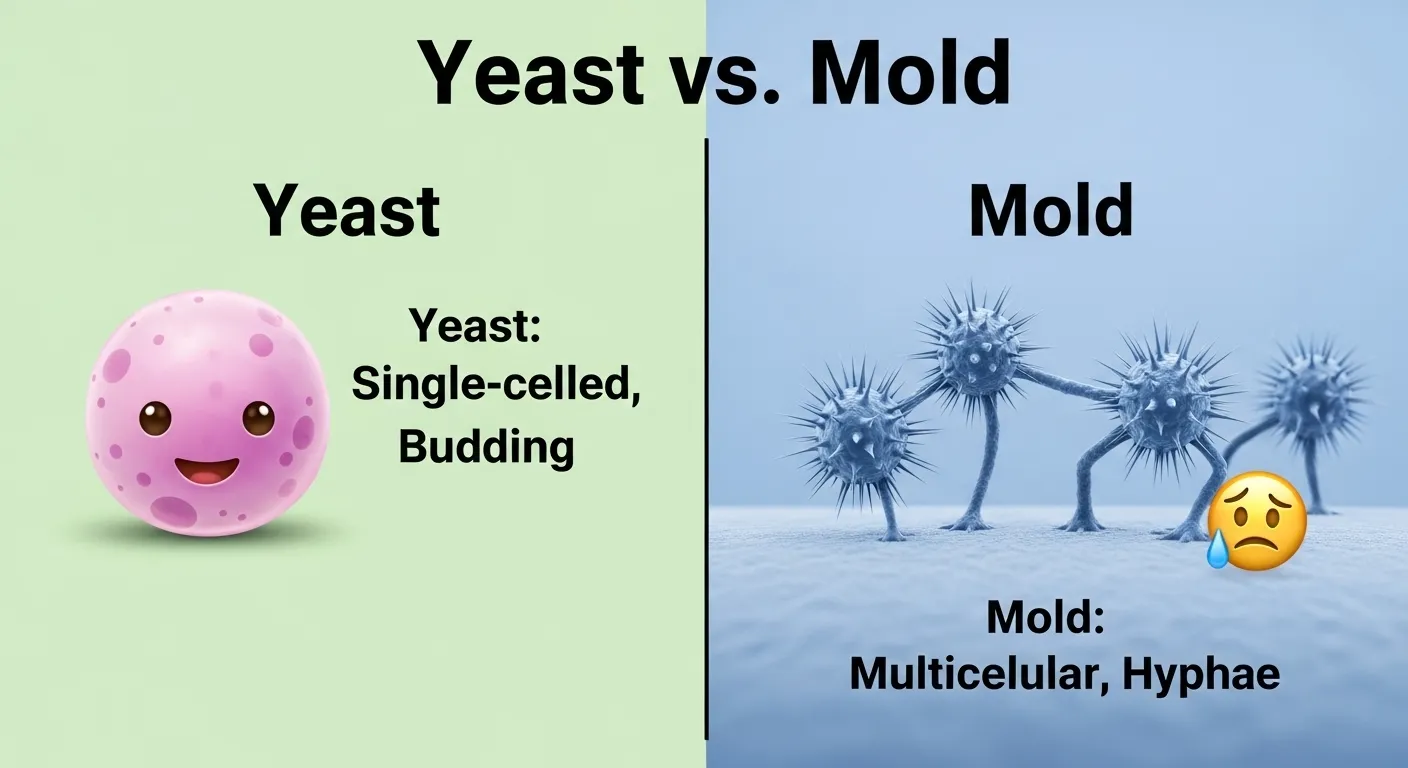
- Yeast: Unicellular fungi.
- Example 1: Saccharomyces cerevisiae used in bread-making.
- Example 2: Yeast used in brewing beer.
- Mold: Multicellular fungi forming hyphae.
- Example 1: Penicillium mold used in antibiotic production.
- Example 2: Bread mold (Rhizopus stolonifer).
2. Structure
- Yeast: Single-celled, round or oval.
- Example 1: Microscopically observed as single cells.
- Example 2: Colony appears smooth and creamy.
- Mold: Filamentous, forming networks called hyphae.
- Example 1: Visible fuzzy patches on bread.
- Example 2: Hyphal structure under microscope.
3. Reproduction
- Yeast: Asexual by budding; some sexual reproduction.
- Example 1: Bud forms on parent cell in baker’s yeast.
- Example 2: Brewing yeast multiplies via budding.
- Mold: Asexual via spores; sexual reproduction also occurs.
- Example 1: Mold releases spores in air for spreading.
- Example 2: Penicillium forms conidia for reproduction.
4. Growth Conditions
- Yeast: Requires sugar-rich environment, moisture, warmth.
- Example 1: Dough provides nutrients for yeast.
- Example 2: Fruit juices support yeast growth.
- Mold: Can grow in diverse environments, even low-nutrient areas.
- Example 1: Mold appears on old bread.
- Example 2: Bathroom walls may have mold growth.
5. Appearance
- Yeast: Smooth, creamy, uniform colonies.
- Example 1: Baker’s yeast appears as white, soft mass.
- Example 2: Beer yeast forms small clusters.
- Mold: Fuzzy, colored colonies (green, black, white).
- Example 1: Penicillium is green and powdery.
- Example 2: Black mold on food is dark and fuzzy.
6. Size
- Yeast: Microscopic, smaller than mold.
- Example 1: Single yeast cell ~5–10 µm.
- Example 2: Visible only in colony form.
- Mold: Larger, hyphal networks visible to naked eye.
- Example 1: Bread mold forms patches a few centimeters wide.
- Example 2: Mold on walls can spread extensively.
7. Metabolism
- Yeast: Fermentative metabolism; converts sugars to alcohol and CO₂.
- Example 1: Bread rises due to CO₂ from yeast fermentation.
- Example 2: Beer brewing produces ethanol.
- Mold: Mostly aerobic; decomposes organic matter.
- Example 1: Mold breaks down fruits and vegetables.
- Example 2: Produces enzymes for food processing.
8. Industrial Uses
- Yeast: Baking, brewing, bioethanol production.
- Example 1: Saccharomyces cerevisiae for bread.
- Example 2: Alcohol production in breweries.
- Mold: Antibiotics, cheese, enzyme production.
- Example 1: Penicillin from Penicillium mold.
- Example 2: Blue cheese development using mold.
9. Environmental Impact
- Yeast: Mostly beneficial, rarely pathogenic.
- Example 1: Fermentation improves food quality.
- Example 2: Biofuel yeast reduces carbon footprint.
- Mold: Can be beneficial or harmful; some produce toxins.
- Example 1: Mold used for antibiotics.
- Example 2: Black mold causes allergies and health issues.
10. Lifespan
- Yeast: Short-lived, multiplies rapidly.
- Example 1: Yeast doubles every 90 minutes in optimal conditions.
- Example 2: Fresh yeast has short shelf life.
- Mold: Can persist long; spores survive harsh conditions.
- Example 1: Mold spores remain viable for months.
- Example 2: Mold can survive freezing or dry conditions.
Nature and Behaviour
- Yeast: Unicellular, reproduces quickly, used in fermentation.
- Mold: Multicellular, grows as hyphae, can decompose materials.
Why People Are Confused
Both are fungi and can appear on food, leading to confusion. Yeast is usually microscopic and beneficial, while mold can be visible and sometimes harmful.
Table: Difference and Similarity
| Feature | Yeast | Mold | Similarity |
| Structure | Unicellular | Multicellular, hyphal | Both are fungi |
| Reproduction | Budding (mostly asexual) | Spores (asexual & sexual) | Both reproduce |
| Growth | Sugar-rich, moist environment | Varied environments | Both grow on organic matter |
| Appearance | Smooth, creamy colonies | Fuzzy, colored colonies | Both form colonies |
| Industrial Uses | Baking, brewing, biofuel | Antibiotics, cheese, enzymes | Both useful in industry |
Which is Better in What Situation?
Yeast is better for fermentation and food production where rapid, controlled growth is needed. Mold is better for producing antibiotics, enzymes, and decomposing organic waste. Each has its specialized application depending on the desired outcome.
Use in Metaphors and Similes
- Yeast: “Ideas can spread like yeast, multiplying and growing quickly.”
- Mold: “Corruption spread like mold, creeping silently over everything.”
Connotative Meaning
- Yeast: Generally positive; associated with growth and productivity.
- Mold: Can be positive (food, antibiotics) or negative (spoilage, health hazard).
Idioms or Proverbs
- “Yeast of the nation” – something that spreads and grows influence.
- “Moldy as old bread” – implies decay or deterioration.
Literature Featuring the Keywords
- The Yeast Infection Handbook (Health, 2018) – yeast discussion.
- Microbial Life (Science, 2015) – detailed exploration of molds.
Movies Featuring Yeast/Mold
- Matilda (1996, USA) – indirectly shows molds in school and kitchen scenes.
- Contagion (2011, USA) – microbiology concepts including fungi referenced.
FAQs
1. Is yeast a mold?
No, yeast is unicellular; mold is multicellular.
2. Can mold be used in food?
Yes, molds like Penicillium are used in cheese and antibiotics.
3. Is yeast harmful?
Generally no, but some species like Candida can be pathogenic.
4. Can mold and yeast grow together?
Yes, but molds usually dominate and can inhibit yeast growth.
5. Which grows faster?
Yeast grows faster in controlled sugar-rich environments, while mold spreads slower but persists longer.
How Both Are Useful for the Surroundings
Yeast is crucial in food production, fermentation, and biofuel. Mold helps in decomposition, antibiotics, and industrial enzymes, contributing to environmental sustainability and health.
Final Words
Yeast and mold, though related as fungi, serve different roles in nature, industry, and food production. Knowing their differences ensures safe use and optimal application.
Conclusion
Yeast and mold are both fungi but differ significantly in structure, reproduction, and application. Yeast is unicellular, grows quickly, and is widely used in baking and fermentation. Mold is multicellular, forms hyphae, and is essential in antibiotics, cheese, and decomposition. Understanding the difference between yeast and mold helps students, professionals, and food enthusiasts make informed decisions, avoid health hazards, and appreciate their roles in science and industry.