Imagine you want to buy a house. You meet someone who shows you homes and helps you choose. Then you hear another person called a broker. Now you feel confused. Are they the same? Who does what?
Many people mix up these two roles. Both help in buying and selling. Both work with clients. But their duties, power, and skills are not the same.
In this article, you will learn the difference between broker and salesperson in very simple English. You will see clear meanings, real-life examples, and an easy comparison table. By the end, you will know exactly who does what and who you should choose.
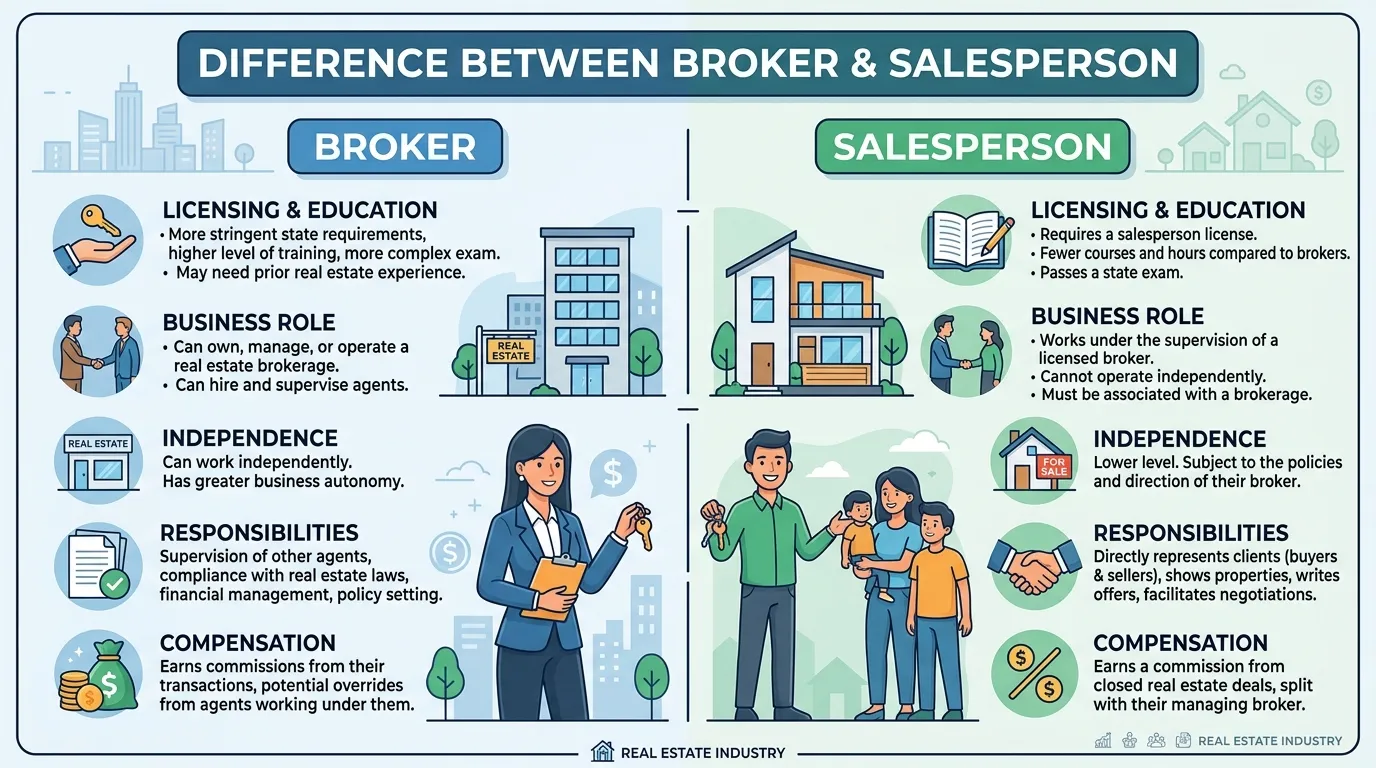
The difference between broker and salesperson is simple. A broker has a higher license and can work alone or manage others. A salesperson works under a broker and helps clients buy or sell products or property.
What Is Broker?
A broker is a professional with a higher-level license.
A broker can:
- Work alone
- Run a business
- Hire and manage salespeople
Simple Features:
- Advanced training
- Legal authority
- Can own an office
What a Broker Does:
- Handles big deals
- Checks legal documents
- Manages team members
Real-Life Example:
In real estate, a broker owns an office. They guide agents and make sure deals follow the law.
What Is Salesperson?
A salesperson is someone who sells products or services.
They usually work under a broker or company.
Simple Features:
- Basic license (in some fields)
- Works under supervision
- Focus on selling
What a Salesperson Does:
- Talks to clients
- Shows products or property
- Helps close deals
Real-Life Example:
A real estate salesperson shows houses to buyers and helps them choose the right one.
Difference Between Broker and Salesperson
Here is a simple table to understand the difference between broker and salesperson:
| Feature | Broker | Salesperson |
| Meaning | Licensed professional with authority | Based on the commission |
| Level | Higher | Lower |
| License | Advanced license | Basic license |
| Work Style | Can work alone | Works under broker |
| Role | Manager and decision maker | Helper and seller |
| Responsibility | Legal and business control | Client interaction |
| Income | Higher potential | Based on commission |
| Example | Real estate broker | Sales agent |
Key Differences Explained
Level of Authority
A broker has more power.
They can make decisions and run a business.
A salesperson follows rules set by the broker.
License and Training
Brokers need more education and training.
They must pass higher-level exams.
Salespersons need basic training.
Work Independence
Brokers can work alone.
They can start their own company.
Salespersons cannot work alone in some fields like real estate.
Job Role
Brokers manage and supervise.
Salespersons focus on selling and helping customers.
Earnings
Brokers often earn more.
They get a share from deals made by their team.
Salespersons earn from commission on their own sales.
Examples
Example 1: Real Estate
- Broker: Owns the office and manages agents
- Salesperson: Shows houses and helps buyers
Example 2: Insurance
- Broker: Connects clients with insurance companies
- Salesperson: Sells insurance plans
Example 3: Business Sales
- Broker: Handles big deals and agreements
- Salesperson: Talks to customers and closes sales
Importance of Knowing the Difference
Understanding the difference between broker and salesperson is very helpful.
It helps you:
- Choose the right professional
- Understand roles clearly
- Avoid confusion
If you need expert advice, you may go to a broker.
If you need help buying, a salesperson can assist you.
Benefits of Understanding Broker vs Salesperson
- Helps you make better choices
- Saves time and effort
- Improves business knowledge
- Reduces confusion
- Helps in career decisions
- Builds confidence
- Helps in smart buying
Common Mistakes People Make
Mistake 1: Thinking They Are the Same
They work together but have different roles.
Mistake 2: Ignoring Experience Level
Brokers usually have more experience.
Mistake 3: Not Knowing Who Is in Charge
The broker is usually the boss.
Mistake 4: Expecting Same Services
Brokers handle legal and big decisions. Salespersons focus on sales.
Real-Life Use
Where Brokers Are Used:
- Real estate offices
- Insurance firms
- Financial services
Where Salespersons Are Used:
- Shops
- Real estate
- Customer service
Who Uses Them:
- Buyers and sellers
- Companies and clients
Easy Trick to Remember the Difference
Here is a simple trick:
Broker = Boss
Salesperson = Seller
Think like this:
- Broker manages
- Salesperson sells
Which One Is Better?
There is no single answer.
It depends on your need.
Choose Broker When:
- You need expert advice
- You want legal support
- You deal with big decisions
Choose Salesperson When:
- You need help finding options
- You want someone to guide you step by step
Both are important and work together.
FAQs
1. What is the main difference between broker and salesperson?
A broker has a higher license and can manage others. A salesperson works under a broker.
2. Which is better, broker or salesperson?
It depends on your need. Brokers handle big tasks. Salespersons help with buying and selling.
3. Can a salesperson become a broker?
Yes, with more training and experience.
4. Do brokers earn more than salespersons?
Usually, yes, because they manage deals and teams.
5. Can a broker work alone?
Yes, brokers can run their own business.
6. Do salespersons need a license?
In some fields like real estate, yes.
7. Who should I contact to buy a house?
You usually work with a salesperson, but the broker oversees the deal.
Conclusion
The difference between broker and salesperson is clear when you understand their roles. A broker is a highly trained professional who can manage a business, handle legal matters, and guide others. A salesperson works under the broker and focuses on helping customers buy or sell products or property.
Both roles are important and support each other. Brokers lead and manage, while salespersons connect with customers and close deals. When you know this difference, you can choose the right person for your needs.
Just remember the simple idea: broker is the boss, and salesperson is the seller. This will help you never mix them up again.