The consent of the governed meaning is simple: a government has the right to rule only because the people agree to it. Power does not come from kings, force, or fear. It comes from the people. You may have heard this phrase in a history class or a news story and felt unsure about it. You are not alone. It sounds fancy, but the idea is easy to follow. Many people search for it before a test, during an election year, or after reading the Declaration of Independence. This article explains the phrase in plain words. You will learn where it came from, what it says, how it works today, who was left out at first, and how to use the term correctly. We will also clear up some common mistakes along the way.
Quick Answer in Plain Words
“Consent of the governed” means that people give a government its power by agreeing to be ruled by it. If the people stop agreeing, the government loses its right to rule. That is the heart of the idea.
Think of a class president. The students pick that person, so the student body gives the job its power. A class president who was never picked, and who bossed everyone around, would not have real authority. People would only obey out of fear or habit.
This idea is a big reason the United States exists. It also shapes how many countries think about fair and lawful government.
Consent of the Governed Meaning, Broken Into Three Parts

The phrase has three pieces, and each one matters.
The first piece is consent. Consent means saying yes freely. It is not the same as being forced, tricked, or scared into going along. When a person is made to obey with threats, that is not consent. It is just control.
The second piece is the governed. These are the people who live under a government’s rules. They follow the laws, pay the taxes, and use the public services. The word “of” in the phrase works like it does in “the vote of the people.” The governed are the ones who give consent.
The third piece is the government. This is the group of people and rules that run a country, state, or town. In this idea, the government does not own its power. The people lend it. Writers have long noted that the Declaration uses the word “instituted” for a reason: people set up a government and give it the powers they agree to, instead of having a government forced on them by might.
Where the Idea Came From

The idea did not appear out of nowhere. It grew over hundreds of years, and many thinkers added to it.
The person most linked to it is John Locke, an English philosopher. In 1689, he published his Second Treatise of Government. Locke argued that all people are born free and equal. Because of that, no one has the right to rule another person without that person’s consent. He also said that rulers get their lawful power through an agreement among the people they govern.
This way of thinking is called the social contract. In a social contract, people agree to follow common rules. In return, the government protects their lives, freedom, and property. Consent is the people’s side of that deal. If the government breaks its side, the deal is off.
Locke was not the only voice. Earlier debates in England, during the 1600s, also argued that people should have a say in who rules them. Some writers trace even older roots, but the exact first use of the phrase is hard to pin down, so it is best to say that the idea built up over time.
Locke’s thinking spread across the Atlantic. One scholarly collection of founding documents says the argument of 1689 became the starting point for the argument of 1776. That brings us to the Declaration of Independence.
What the Declaration of Independence Says
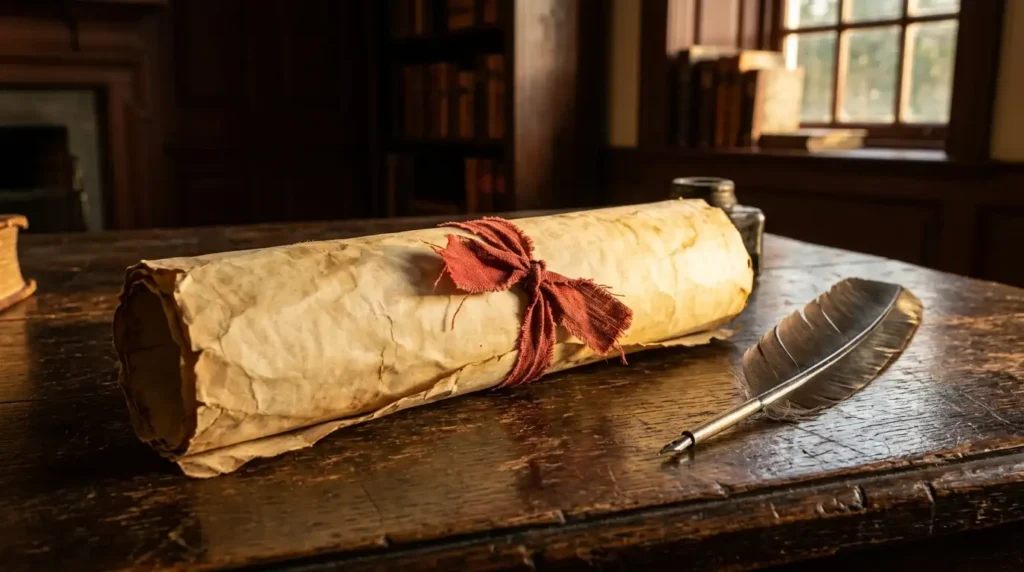
The phrase “consent of the governed” appears in the second paragraph of the Declaration of Independence, written mostly by Thomas Jefferson in 1776. The document is where Americans most often meet this phrase.
The key line says that governments are set up among people, “deriving their just powers from the consent of the governed.” In simple terms, a government’s fair and rightful powers come from the people’s agreement.
The next part of the Declaration is just as important. It says that when a government harms the rights of the people, the people may change it or end it and set up a new one. This is sometimes called the right of the people to alter or abolish their government.
That was the whole argument for independence. Jefferson and the other writers claimed that Britain had lost the colonists’ consent. The colonists had no seats in Parliament, yet they faced taxes and laws made far away. So the Declaration lists many complaints and then states that the colonies were free to govern themselves. One study guide puts it this way: Jefferson argued that Britain had lost the colonists’ consent and could be replaced.
How Consent Works in Everyday Life
You may wonder how millions of people can “consent” to anything. They cannot all sit in one room and vote on every law. So modern countries use tools that let people give or take back consent in practical ways.
Elections are the biggest tool. When citizens vote, they choose who will make laws for them. If leaders do a poor job, voters can choose new ones. That is consent in action.
Other tools matter too. Citizens can serve on juries, which gives ordinary people a role in justice. They can write to their lawmakers, sign petitions, attend town meetings, and join peaceful protests. Free speech and a free press help as well, because people need honest information to decide if to support their leaders.
Locke also spoke of a quieter kind, often called tacit or implied consent. This means a person agrees without saying so, simply by living under a government and enjoying its protection. Some thinkers like this idea. Others say it is weak, because most people cannot easily move away. This debate is still alive today.
Consent of the Governed Compared to Related Ideas
Several ideas sit close to this one. Students often mix them up, so this table sets them side by side.
| Idea | Simple meaning | How it connects |
| Consent of the governed | The people agree to be ruled, and that gives government its power | The main idea of this article |
| Social contract | An agreement between people and government, with duties on both sides | The theory that explains why consent matters |
| Popular sovereignty | The people hold the final power in a country | Very close to consent; often used as a partner term |
| Natural rights | Basic rights people have from birth, like life and liberty | The rights governments are meant to protect |
| Legitimacy | A government’s fair and accepted right to rule | What consent creates |
Who Counted as “the Governed”?
This is the hardest part of the story, and an honest article should say so. The Declaration says nothing about exactly who “the people” are. One scholarly essay notes plainly that the Declaration does not tell us who the people are.
In 1776, large groups of people were governed but had no vote. Women could not vote in most places. Enslaved people had no say and no freedom. Native Americans were treated as outsiders. In many states, men without enough property could not vote either. So while the idea was bold, it was not applied to everyone.
Over time, the country worked to close the gap. The table below shows some key steps.
| Year | Change | What it did |
| 1865 | 13th Amendment | Ended slavery |
| 1868 | 14th Amendment | Defined citizenship and promised equal protection |
| 1870 | 15th Amendment | Said the vote cannot be denied because of race |
| 1920 | 19th Amendment | Gave women the right to vote |
| 1965 | Voting Rights Act | Moved to stop unfair barriers at the polls |
| 1971 | 26th Amendment | Lowered the voting age to 18 |
What Happens When Consent Is Lost
A government can lose consent in many ways. It might ignore the law, silence critics, cheat in elections, or fail to protect basic rights. When that happens, trust drops.
People can then respond in different ways. Most of the time, they use peaceful tools: voting leaders out, protesting, taking cases to court, or demanding reforms. In rare and extreme cases, history shows that people have broken away from a ruler entirely, as the American colonists did in 1776.
A recent Brookings discussion described the idea this way: political power is fair only when the governed freely give it, and they can take it back when their rights are violated. The same discussion raised a modern question. When many people stop voting or stop trusting their leaders, is that a quiet form of pulling back consent? Thinkers do not all agree on the answer, and it is a fair topic for debate.
It also helps to know that a government can look strong and still lack consent. Force can hold a country together for a while. But as one summary of Locke’s thinking notes, even a very harsh government cannot keep a society together by force alone.
Common Mistakes People Make
The first mistake is thinking consent means everyone must agree on everything. It does not. Real countries have loud disagreements. Consent is about accepting the basic system and its fair rules, such as elections and courts, even when your side loses.
The second mistake is thinking one vote ends the matter. Consent is not a one-time signature. It is ongoing. People can renew it or pull it back as time passes.
The third mistake is mixing up consent with silence. Just because people stay quiet does not always mean they agree. Fear can keep people quiet, which is why free speech matters so much.
The fourth mistake is treating the phrase as only about 1776. The idea started before then and still shapes arguments today about voting, fairness, and trust in leaders.
The fifth mistake is believing the Declaration defined exactly who could consent. As we saw above, it did not, and that gap caused real harm for many years.
Real-Life Examples
A town council that holds public meetings, takes questions, and then votes openly is a simple example of consent at work. Residents see how decisions are made, and they can vote out members they dislike.
A national election is a bigger example. Millions of people choose leaders, and losing candidates usually accept the result. That peaceful handoff is one of the clearest signs that consent is working.
A school offers a friendly example too. When a student council writes rules and students help vote on them, most students follow them willingly. Rules that students had no part in often get more pushback.
There are also examples of the opposite. In places where rulers jail critics or rig votes, leaders may still hold power, but they lack the people’s true agreement. Such governments often claim to speak for the people, yet the people cannot freely say yes or no.
Why the Idea Still Matters Today
This idea is not just for history books. It shows up whenever people ask if a law is fair, if an election was honest, or if leaders are listening.
It also gives us a simple test for any government. Ask: Did the people freely choose it? Can they remove it peacefully? Does it protect their rights? If the answers are yes, consent is strong. If the answers are no, consent is weak.
For students, knowing the consent of the governed meaning helps with tests on the Declaration, the Constitution, and civics. For adults, it helps in making sense of the news and in deciding how to take part in public life. If you vote, volunteer, or just stay informed, you are part of the process that gives a government its power.
FAQs
What is the consent of the governed in simple words?
It means a government can only rule fairly if the people agree to it. The people give the power, and they can take it back if the government treats them badly.
Where does the phrase “consent of the governed” come from?
It is in the Declaration of Independence, written in 1776. The idea behind it came largely from English thinker John Locke, who wrote about it in 1689.
Who wrote about consent of the governed?
Thomas Jefferson put the phrase into the Declaration. John Locke developed the main ideas behind it. Other writers and debates in 1600s England also helped shape it.
Is consent of the governed the same as popular sovereignty?
They are close but not identical. Popular sovereignty says the people hold the final power. Consent of the governed explains how that power is handed to a government. Be careful, because popular sovereignty also has a narrower meaning in U.S. history about territories.
How do people give consent today?
Mostly through elections, but also through juries, petitions, public meetings, free speech, and peaceful protest. Even following laws can be seen as a quiet form of consent.
Did everyone get to consent in 1776?
No. Women, enslaved people, Native Americans, and many men without property were left out. Later amendments and laws widened the circle, though people still debate how fully the promise has been kept.
Conclusion
The consent of the governed meaning comes down to one strong idea: power belongs to the people, and governments borrow it. That thought traveled from Locke’s writing in 1689 to Jefferson’s pen in 1776, and it still guides how we judge leaders today. It does not mean everyone agrees on everything. It means the system should be fair, open, and open to change. The story also has an honest side, because many people were left out at first, and it took long struggles to widen the circle. So here is some practical advice. When you hear a leader or a law in the news, ask if the people had a real voice. Then use your own voice: stay informed, speak up, and vote when you can.