You get a message. It says “ihh.” Nothing else. Now you are staring at your phone, wondering if your friend is upset, grossed out, or just being silly. You are not alone. Many people search for the ihh meaning in text because the word looks like a typo, yet it shows up in chats, comments, and captions more often than you might think.
In this guide, you will learn what “ihh” most likely means, where the sound may come from, and how tone changes everything. You will also see real-life examples, common mistakes, and easy tips for replying. One honest note first: “ihh” is not in any big dictionary, and some web pages just guess its meaning. We will separate what is solid from what is shaky.
Quick Answer: What Does Ihh Mean in Text?
Ihh is a short, informal reaction people type in texts and chats. Most of the time it shows a small burst of disgust, surprise, or “uh-oh,” much like “eww” or “yikes.” It has no official definition, so tone and context matter most.
Think of it as a sound, not a real word. When you say “ew” out loud, you do not mean anything deep. You are just showing a feeling fast. “Ihh” works the same way on a screen. It can mean “that’s gross,” “oh no,” “that’s awkward,” or “I’m not sure about this.” The exact feeling depends on what the person was talking about right before they typed it.
Here is the short version in plain words. If someone sends “ihh” after a gross story, it means “ew.” If they send it after bad news, it can mean “uh-oh.” If they send it after something cringey, it means “that is awkward.” And if the chat gives no clue at all, the best move is to simply ask.
Ihh Meaning in Text: The Main Definition
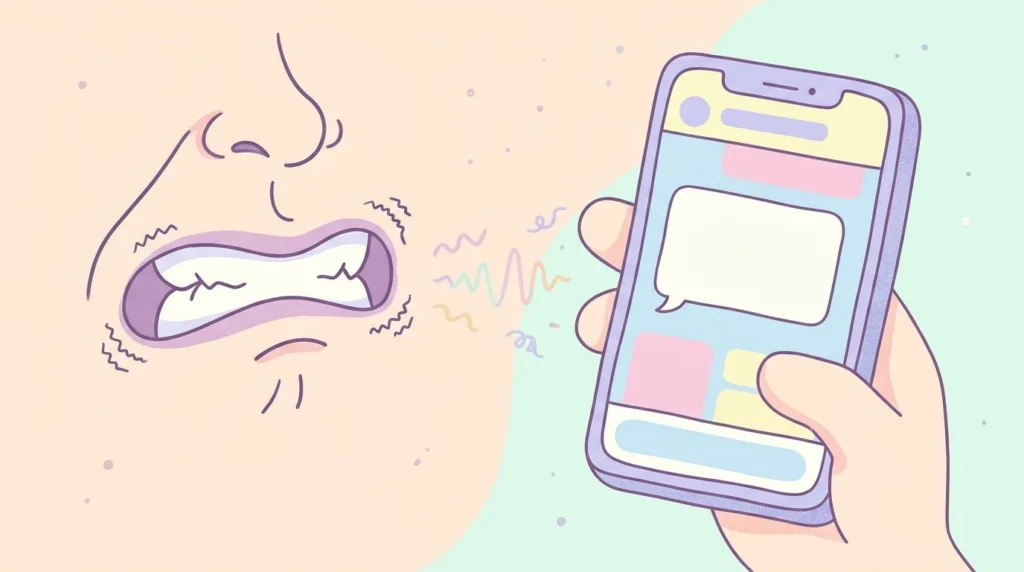
In grammar, “ihh” is an interjection. An interjection is a word or sound that shows a feeling. “Wow,” “ouch,” “hey,” and “yay” are all interjections. They do not need a full sentence around them. They stand on their own.
The “ihh” sound is quick and a little shaky, like a tiny shiver. Picture yourself seeing a spider on the wall. You might scrunch up your face and say “ih!” That is the feeling people are trying to type. The extra “h” at the end stretches the sound, so it looks like a short breath of disgust or surprise.
Because it is a sound, there is no single correct spelling. You may also see “ih,” “ihhh,” “ihhhh,” or “ihh!” They all point to the same idea. More letters usually mean a stronger feeling. “Ih” is a small wince. “Ihhhhh” is a full-body shudder.
So when you think about the ihh meaning in text, do not look for hidden letters or secret code. Look at the feeling. The writer wants you to hear a reaction, not read a phrase.
Where Does Ihh Come From?

This is where we need to be careful. I could not find a trustworthy source, such as a dictionary or a language study, that proves where texting “ihh” began. So anything stronger than a guess would be made up.
What we can say is that people have always written down sounds the way they hear them. English already has many reaction sounds, like “ugh,” “ick,” “eww,” and “blech.” “Ihh” fits right into that group.
Other languages may have helped shape it too. In German, “ih” is a common sound for disgust, as in “Ih, wie eklig!” which means “Ew, how gross!” In Portuguese, “ih” is often used to show surprise or worry, a bit like “uh-oh” or “oops.” Because many people text in more than one language, these habits can easily slip into English chats. That is a likely idea, not a proven fact.
So the safest story is this: “ihh” seems to be a spelled-out sound that grew naturally in casual messages. It was not invented by one person or one app.
Does Ihh Stand for Something?
If you search online, you will find pages that say “ihh” is short for “I here,” “I know,” or some other phrase. These pages do not agree with each other, and none of them show proof like a quote from a dictionary or a study. Many look like auto-written content made to catch search traffic. I would not trust them.
Real text abbreviations, like “LOL” or “BRB,” spread because millions of people use them the same way, and reliable sources record them. “Ihh” does not have that kind of record as an acronym.
There is one more thing to know. When you see IHH in capital letters outside a chat, it may mean something very different. The table below shows the main options.
| Possible meaning | Where you might see it | How sure can we be? |
| A reaction sound like “ew” or “uh-oh” | Casual texts, chats, and comments | Most likely, based on how similar sounds are used |
| “I here,” “I know,” and other acronym guesses | Low-quality websites | Not reliable, because pages disagree |
| IHH Healthcare | Business and hospital news | Real, but unrelated to texting |
| IHH gene (Indian hedgehog) | Science and medicine | Real, but unrelated to texting |
| IHH Humanitarian Relief Foundation | News about aid groups | Real, but unrelated to texting |
If the message comes from a friend and sits in a normal chat, treat it as a reaction sound.
How People Use Ihh in Real Chats
The best way to understand a slang word is to see it in action. Here are some common situations, with made-up examples that match how people usually text.
| Situation | Example message | What “ihh” shows |
| Something gross | “Found a hair in my soup. Ihh.” | Disgust |
| An awkward moment | “I waved at him and he was waving at someone else. Ihh.” | Cringe or embarrassment |
| Bad or scary news | “Ihh, the test is tomorrow?” | Worry |
| Playful teasing | “You still like him? Ihh!” | Silly shock |
| Not liking something | “Ihh, I can’t stand that song.” | Disapproval |
Notice that the word often sits at the start or the end of a message. At the start, it works like a quick gasp before the main thought. At the end, it works like a final shudder after the story.
Also notice that “ihh” rarely stands for anything mean on its own. Most of the time, it is about a thing or a situation, not about the person reading it. Still, it can sting if the person thinks your “ihh” is aimed at them. That is why tone and timing matter so much.
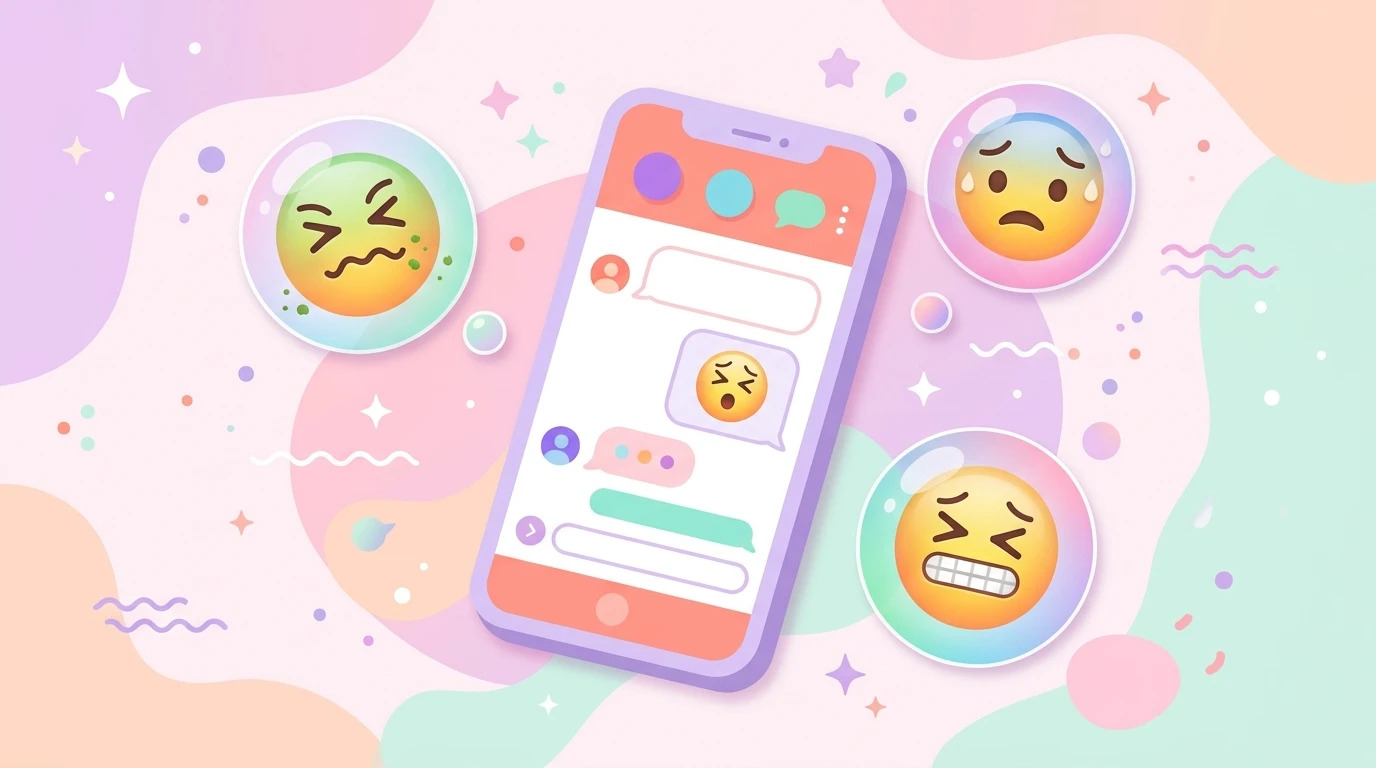
It also helps to look at the emojis nearby. A sick face or a grimace points to disgust. A laughing face points to a joke. A worried face points to an “uh-oh.” Emojis act like a sign that tells you how to read the sound.
Ihh vs. Similar Reaction Words
“Ihh” is not the only reaction sound out there. Here is how it compares to some close cousins.
| Word | Usual feeling | Best time to use it |
| Ihh | Disgust, worry, or cringe | A quick, light reaction to something gross or awkward |
| Eww | Clear disgust | When something is truly yucky |
| Ugh | Annoyance or tiredness | When you are fed up or bored |
| Yikes | Shock or concern | When something looks risky or embarrassing |
| Ick | A sudden turn-off or dislike | When something gives you the creeps |
| Oops | A small mistake | When you or someone else slipped up |
If you want to be easily understood by everyone, “eww” or “yikes” are safer. “Ihh” is more personal. It feels a bit like a friend’s inside voice, so it works best with people who already text in a casual style with you.
Grammar and Correct Usage
Because “ihh” is a sound, it does not follow strict grammar rules. Still, a few habits help your message land the way you want.
Use lowercase for a relaxed feeling. Capital letters, as in “IHH,” can look like shouting, or like an acronym, which may confuse people. Add an exclamation mark if you want more energy, like “ihh!” A comma works well when the sound starts a sentence, like “ihh, that’s so weird.”
You can stretch the sound for effect. “Ihhhh” says the feeling is bigger. But do not overdo it. Ten extra letters can look more silly than shocked.
Keep “ihh” out of formal writing. School essays, work emails, and job applications need clear words, such as “that is unpleasant” or “I am concerned.” This rule is not about “ihh” being bad. It is just that reaction sounds belong in casual spaces, like chats with friends, family group texts, and social media comments.
Common Mistakes People Make With Ihh
Even simple slang can go wrong. Here are the mistakes I see most often.
The first mistake is hunting for a secret meaning. People see “ihh,” assume it is an acronym, and try to decode it. That usually leads to wrong answers, and sometimes to awkward replies. Remember, it is a sound.
The second mistake is ignoring the context. The same “ihh” can mean “gross,” “uh-oh,” or “how awkward.” If you only look at the word and skip the lines before it, you will guess wrong.
The third mistake is taking it personally. If you share good news and someone replies “ihh,” it may feel like an insult. But it could be a worried reaction to a part of the story, such as a scary detail. When in doubt, ask a gentle question instead of getting upset.
The fourth mistake is using it in the wrong place. Sending “ihh” to your boss, your teacher, or someone you just met may look rude or confusing.
The fifth mistake is trusting random websites. Some pages state a firm meaning with no proof. If a source cannot show where it got its facts, be careful.
Tips for Using and Replying to Ihh
When you receive “ihh,” start by reading the message above it. Most of the time the answer is right there. A gross story, a funny fail, or a scary update will tell you which feeling the person meant.
If you still feel unsure, ask in a friendly way. You could send, “Ihh like gross or ihh like uh-oh?” That keeps things light and clears up the confusion fast.
If you want to use it yourself, follow these simple ideas. Pair it with a few words so the feeling is obvious, like “ihh, that smell.” Add an emoji when the topic could be read two ways. Use it with friends, not strangers. And save it for moments that really call for a quick reaction, because using it all the time makes it lose its punch.
Here are a few easy replies you can try. If a friend sends “ihh” after a gross story, you can say, “Right?! So gross.” If it comes after bad news, try, “I know, it’s stressful. Want to talk?” If it comes with teasing, you can answer, “Hey, stop it!” with a laughing emoji. These replies show that you got the feeling, even if you did not know the exact spelling.
Current Usage and Trends
I could not find reliable data, such as a survey or a slang tracker, that shows how often people use “ihh” today. So I will not invent numbers or claim it is “trending.”
What is clear is how slang works in general. Texters often stretch letters, drop vowels, and spell sounds so messages feel more like real speech. That is why you see “noooo,” “omggg,” and “ewww” all over social media. “Ihh” fits that same pattern.
Because slang changes quickly, the meaning of “ihh” can also shift from group to group. One friend circle may use it for disgust. Another may use it for “yikes.” If you want the most accurate answer for your own chat, the people in that chat are your best source.
FAQs
1. What does ihh mean in text? It is most often a quick reaction sound that shows disgust, worry, or awkwardness, like “eww” or “uh-oh.” The exact meaning depends on the conversation.
2. Is ihh an acronym? There is no reliable proof that it is. Some websites claim it stands for phrases like “I here” or “I know,” but they disagree with each other and show no evidence.
3. Is ihh rude? Not by itself. It is usually a reaction to a situation, not an attack. Still, it can feel unkind if the other person thinks it is aimed at them, so tone and context matter.
4. How is ihh different from eww? “Eww” clearly means disgust. “Ihh” is softer and can also show worry or cringe. Think of it as a shorter, more casual cousin of “eww.”
5. Can I use ihh in a work email? It is best to avoid it. Formal messages need clear words. Save “ihh” for casual chats with friends or family.
6. What should I do if I do not understand an ihh message? Read the earlier messages for clues, check the emojis, and if it is still unclear, ask the person what they meant.
Conclusion
Now you know the ihh meaning in text. It is a short reaction sound, not a hidden code. Most of the time it shows disgust, worry, or a cringe feeling, much like “eww,” “yikes,” or “uh-oh.” Its exact meaning comes from the chat around it, from the emojis, and from the person who sent it.
We also saw that no reliable source proves where it began, and that acronym explanations online are not trustworthy. That is why honest guessing beats confident but made-up answers.
Here is the practical advice. Read the context first. Do not take it personally right away. Ask if you are unsure. And use “ihh” with friends, not in formal messages. When in doubt, a quick “what do you mean?” saves a lot of confusion.