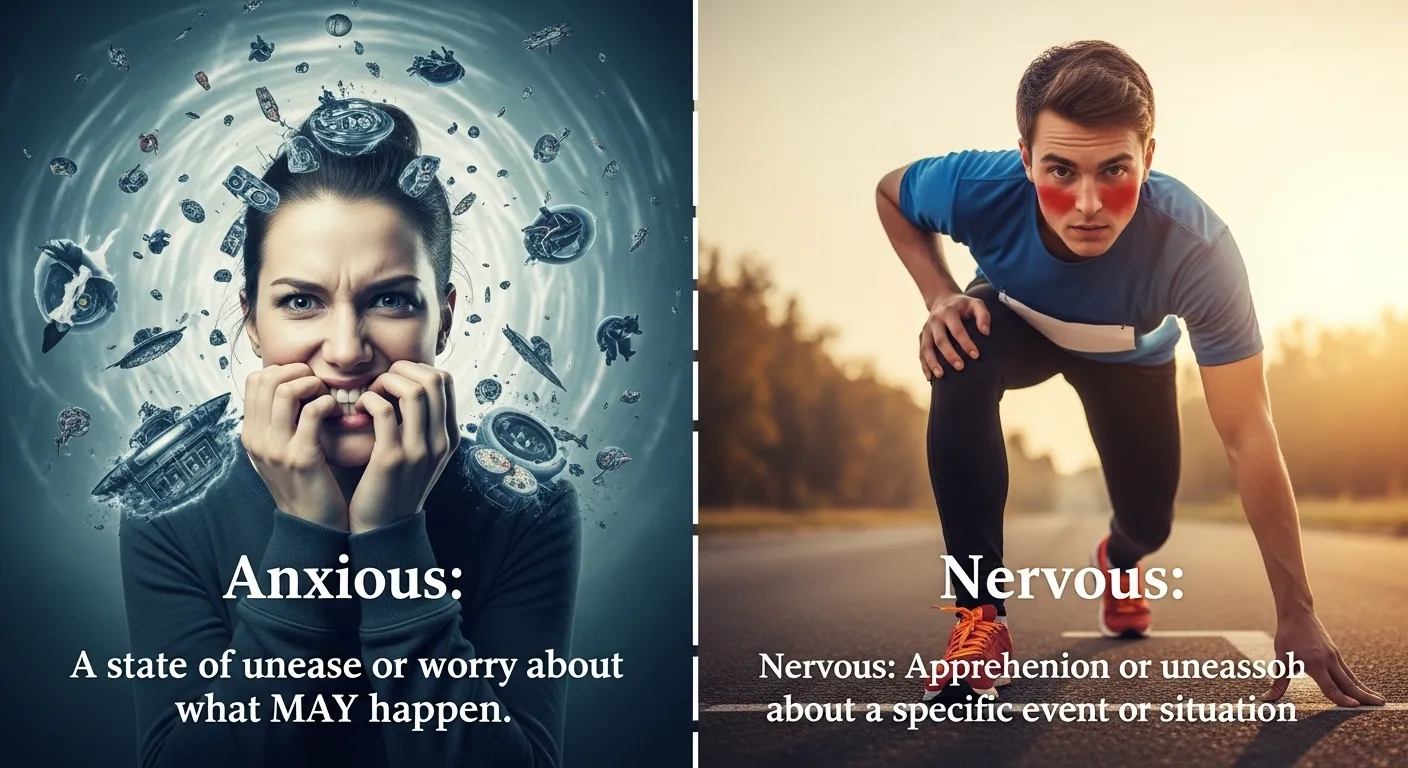
Have you ever felt uneasy before an exam or while waiting for important news? You might say, “I feel anxious” or “I feel nervous.” But are these feelings the same? Many people use these words interchangeably, which creates confusion. Understanding the difference between anxious and nervous is important for better communication and emotional awareness.
While both emotions involve worry and discomfort, they are not the same. Nervousness is usually short-term and linked to a specific situation, while anxiety can be deeper and last longer. This small difference can have a big impact on how we understand our feelings.
In this detailed guide, we will explore anxious vs nervous, their meanings, features, examples, and key differences in a simple and easy way.
Quick Comparison Table: Anxious vs Nervous
| Feature | Anxious | Nervous |
| Definition | A deeper, long-lasting feeling of worry | A short-term feeling of unease |
| Duration | Long-term or ongoing | Temporary |
| Cause | Sometimes unclear or internal | Usually specific situation |
| Intensity | Can be strong and overwhelming | Usually mild to moderate |
| Control | Harder to control | Easier to manage |
| Type | Constant worry about the future | Normal emotional response |
| Example | Constant worry about future | Feeling uneasy before a speech |
What is Anxious?
Simple Definition
Being anxious means feeling a strong, ongoing sense of worry or fear, often without a clear reason.
Meaning of Anxious
Anxiety is like a cloud that stays with you for a long time. It may not always have a clear cause, but it affects your thoughts and feelings.
Key Features of Anxious
- Long-lasting feeling
- Can occur without a clear reason
- Affects daily life
- Can be intense
- May be linked to anxiety disorders
Example of Anxious
- Worrying about the future all the time
- Feeling uneasy even when nothing is wrong
- Overthinking small situations
What is Nervous?
Simple Definition
Being nervous means feeling slightly worried or uneasy about a specific situation.
Meaning of Nervous
Nervousness is like a quick reaction. It comes before an event and usually goes away once the situation ends.
Key Features of Nervous
- Short-term feeling
- Caused by a specific event
- Mild to moderate intensity
- Common and normal
- Easy to control
Example of Nervous
- Before giving a speech
- Before an exam or interview
- Meeting someone new
Key Differences Between Anxious and Nervous
Understanding the difference between anxious and nervous becomes clear with these points:
1. Duration
- Anxious: Lasts for a long time
- Nervous: Short-lived
2. Cause
- Anxious: May not have a clear reason
- Nervous: Triggered by a specific situation
3. Intensity
- Anxious: Strong and overwhelming
- Nervous: Mild and manageable
4. Impact
- Anxiety: Can affect daily life
- Nervous: Usually does not interfere much
5. Control
- Anxious: Harder to manage
- Nervous: Easier to control
6. Nature
- Anxious: Can be a mental health condition
- Nervous: Normal emotional response
7. Duration After Event
- Anxious: Continues even after the situation ends
- Nervous: Disappears quickly
8. Physical Symptoms
- Anxious: Rapid heartbeat, sweating, restlessness
- Nervous: Slight tension or butterflies in the stomach
9. Real-Life Example
- Anxious: Constant fear about future career
- Nervous: Feeling uneasy before a presentation
Similarities Between Anxious and Nervous
Despite their differences, these feelings share some similarities:
- Both involve worry or fear
- Both are emotional responses
- Both can cause physical symptoms
- Both are part of human behavior
- Both can occur in stressful situations
These similarities often cause confusion in the anxious and nervous difference discussion.
Pros and Cons
Anxious Pros
- Can make you more alert
- Helps prepare for challenges
Anxious Cons
- Can affect mental health
- Causes stress and fatigue
- May lead to anxiety disorders
Nervous Pros
- Motivates better performance
- Keeps you focused
- Natural reaction
Nervous Cons
- Can reduce confidence
- May affect performance slightly
When to Use Anxious vs Nervous
Use “Anxious” When:
- The feeling is long-lasting
- There is no clear reason
- It affects your daily life
- The worry feels intense
Use “Nervous” When:
- The feeling is temporary
- It is linked to a specific event
- It goes away after the event
- The intensity is mild
Common Mistakes
- Using both words as the same
They are similar but not identical - Saying “anxious” for small situations
“Nervous” is more appropriate - Ignoring duration
Time is a key difference - Overusing “anxious” in casual talk
It may not always be correct - Not recognizing anxiety issues
Long-term anxiety may need help
FAQs
1. What is the main difference between anxious and nervous?
Anxious is long-term and deeper, while nervous is short-term and linked to a specific situation.
2. Is being nervous a form of anxiety?
Yes, nervousness is a mild and temporary form of anxiety.
3. Can anxiety happen without a reason?
Yes, anxiety can occur without a clear cause.
4. Which is stronger: anxious or nervous?
Anxiety is usually stronger and more intense.
5. Is nervousness normal?
Yes, it is a normal stress reaction.
6. When should I worry about anxiety?
If it lasts long and affects daily life, it may need attention.
7. Can nervousness turn into anxiety?
Yes, frequent nervousness can sometimes develop into anxiety.
Conclusion
The difference between anxious and nervous is simple but important. Nervousness is a short-term feeling linked to specific situations, while anxiety is deeper, longer-lasting, and sometimes more serious.
Understanding anxious vs nervous helps you describe your emotions correctly and manage them better. If your feelings are temporary, you are likely nervous. But if they stay for a long time and affect your life, it may be anxiety.
Being aware of this difference can improve your mental well-being and communication.