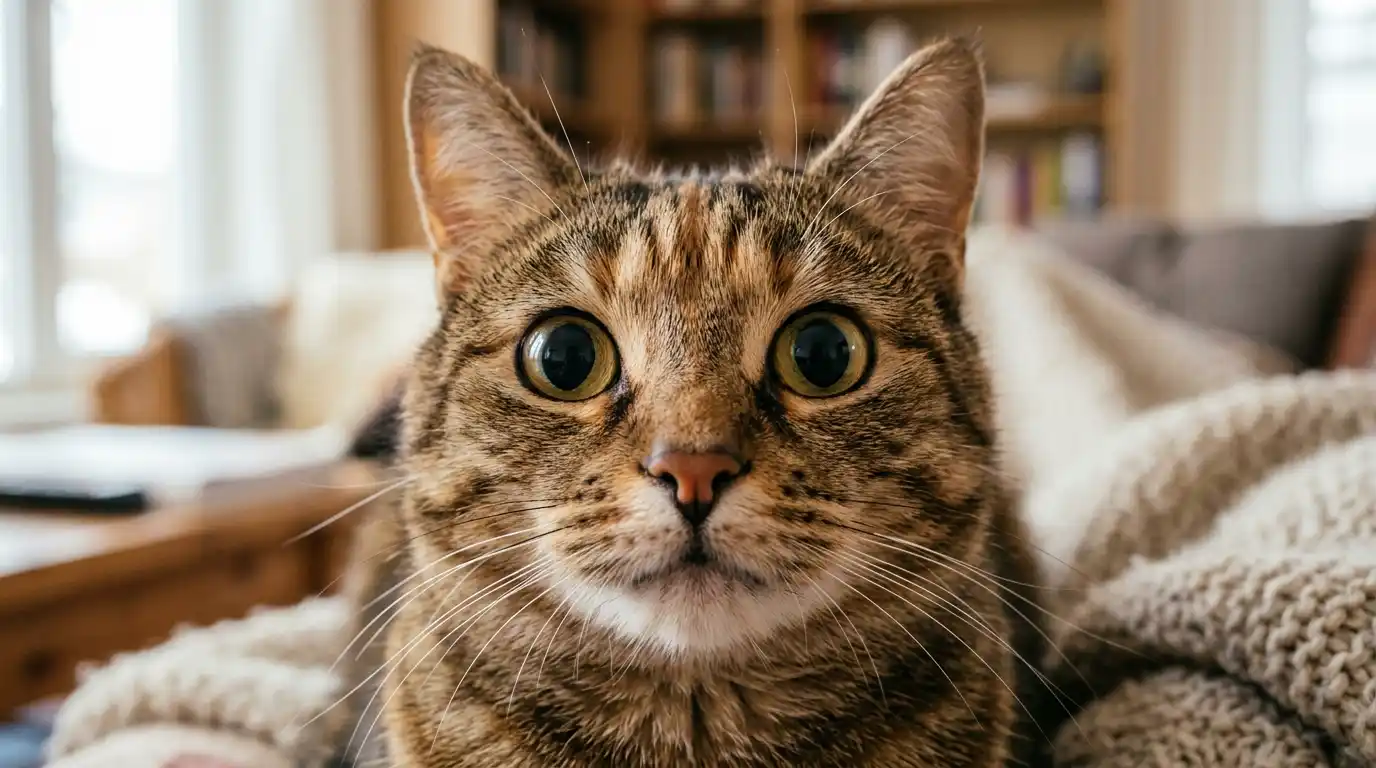
Have you ever looked at your cat and noticed their pupils change size in just a few seconds? Cat pupil size meaning is simple: it shows how your cat feels and what their eyes are doing to see better. Big round pupils often mean excitement, fear, or low light. Thin slit pupils often mean your cat is calm, alert, or in bright light. Reading these signs helps you understand your cat’s mood in real time.
Cats can’t talk to us with words, but their eyes speak loudly if you know what to look for. Many cat owners notice pupil changes but don’t know what they mean, and that can lead to confusion or even missed warning signs. In this article, you’ll learn what different pupil sizes mean, how light affects them, what sudden changes could signal, and when a trip to the vet might be a good idea.
Quick Answer
A cat’s pupil size mostly changes for two reasons: light levels and emotions. In bright light, pupils shrink into thin vertical slits to protect the eyes. In dim light, pupils grow round and wide to let in more light for better night vision. Emotionally, wide pupils can mean fear, excitement, playfulness, or aggression, while narrow pupils often show a relaxed or focused cat. Context always matters, so look at the whole cat, not just the eyes.
Why Cat Pupils Change Shape and Size

Cats have a special eye structure that lets their pupils change more dramatically than human eyes. Human pupils stay round no matter the light level, just growing or shrinking a bit. Cat pupils, on the other hand, can go from a nearly invisible slit to a huge, almost perfectly round circle within seconds.
This ability comes from the muscles around a cat’s iris, the colored part of the eye. These muscles are shaped in a way that lets them squeeze the pupil into a tall, narrow slit or stretch it wide open. This flexibility helps cats see well in both bright daylight and near darkness, which matters a lot for an animal that hunts at dawn and dusk.
Because cats are natural predators and also prey to bigger animals, their eyes evolved to catch tiny movements and gather as much light as possible at night. Wide pupils in dim settings let in more light, sharpening night vision. Narrow slits in bright light protect sensitive eye structures from too much glare.
What Different Pupil Sizes Mean

Cat eyes send different signals depending on how open or closed the pupils are. Here’s a simple breakdown of common pupil shapes and what they usually mean.
| Pupil Shape | Common Meaning |
| Thin vertical slits | Bright light, calm and relaxed mood, or focused attention |
| Slightly narrowed, oval-ish | Content, resting, mildly alert |
| Medium, relaxed round shape | Neutral mood, normal indoor lighting |
| Wide and round (dilated) | Low light, excitement, fear, playfulness, or sudden surprise |
| Very large, almost black eyes | Strong emotion such as fear, aggression readiness, or intense excitement |
It helps to remember that pupil size alone doesn’t tell the full story. A cat with wide pupils in a dark room is probably just adjusting to low light, not necessarily scared. But a cat with wide pupils in bright daylight, paired with a puffed-up tail or flattened ears, is likely feeling stressed or threatened.
How Lighting Affects Cat Pupils
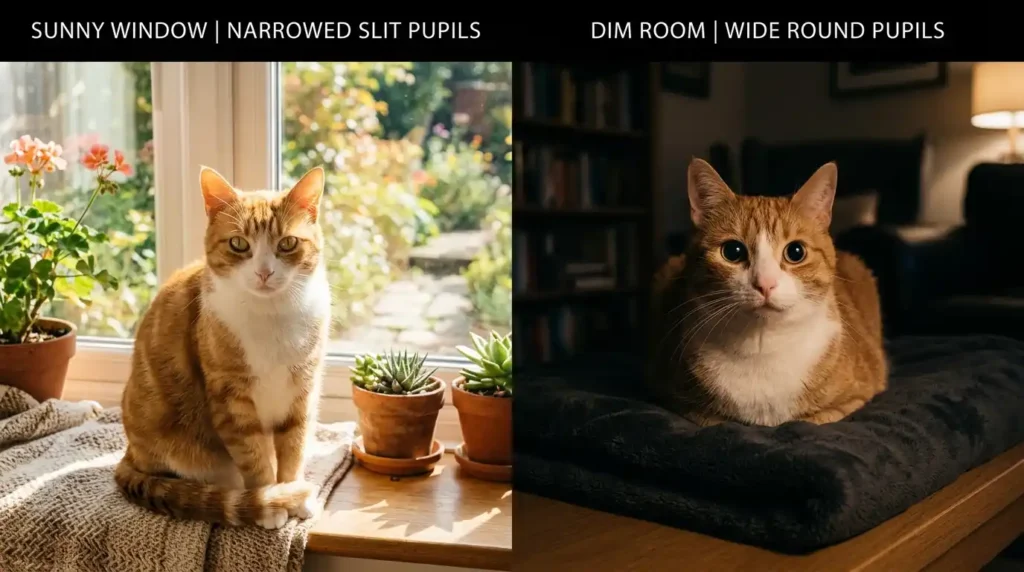
Lighting is the most common reason a cat’s pupils change size, and it happens automatically without your cat even thinking about it. This reaction is called the pupillary light reflex, and it exists to protect the eye and control how much light reaches the retina.
In a sunny backyard or a room with bright overhead lights, you’ll usually see your cat’s pupils shrink to thin vertical lines. This narrow shape reduces the amount of light entering the eye, protecting delicate inner structures from damage. At night or in a dim room, the same cat’s pupils will widen into big round circles, letting in as much available light as possible.
This is also why cat eyes seem to “glow” in photos or in the dark. Behind a cat’s retina is a layer called the tapetum lucidum, which reflects light back through the eye. Combined with a widely dilated pupil at night, this creates that classic glowing-eye effect you might see when a flash photo catches your cat by surprise.
Emotional Meanings Behind Pupil Changes
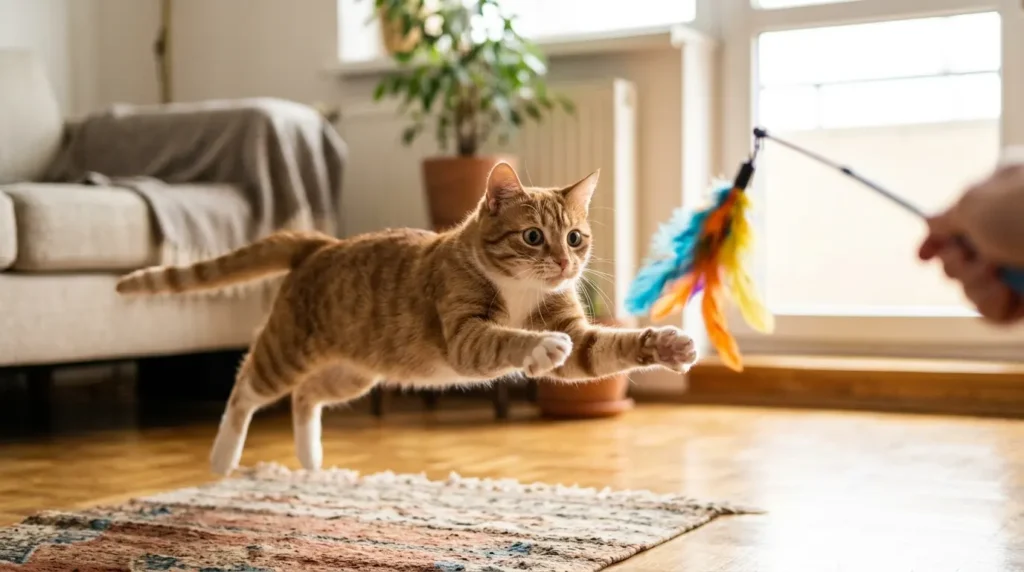
Beyond lighting, pupil size is closely tied to a cat’s emotional state. This happens because the same part of the nervous system that controls fight-or-flight reactions also controls pupil muscles. When a cat feels a strong emotion, chemical signals in the body cause pupils to widen almost instantly.
Wide, dilated pupils can show up during play, especially if your cat is chasing a toy or pouncing on something exciting. This is often paired with a wiggling tail tip or crouched hunting posture. Fear can cause the same wide-eyed look, but it usually comes with other stress signs like flattened ears, a low body position, or hissing.
Aggression is trickier because cats can show either dilated or narrowed pupils depending on the type of aggression. A cat preparing to attack out of fear often has huge, round pupils. A cat that is confidently aggressive, such as during a territorial standoff, may actually narrow its pupils while staring intensely at the target.
Calm, relaxed cats usually show pupils that match the lighting around them, without extreme dilation or extreme narrowing. If your cat is lounging in a sunbeam with soft, narrow pupils and a relaxed body, that’s a sign of comfort and trust.
Real-Life Examples of Pupil Changes
Understanding pupil size becomes easier when you picture it in everyday situations. Below is a table showing common scenarios and what a cat’s pupils typically do in each one.
| Situation | Typical Pupil Response |
| Sitting by a sunny window | Thin vertical slits |
| Watching a bird outside | Slightly enlarged, focused pupils |
| Startled by a loud noise | Sudden, wide dilation |
| Playing with a feather toy | Wide, excited pupils |
| Meeting a new cat or dog | Wide pupils if nervous, narrow if confident |
| Getting gentle chin scratches | Relaxed, medium pupils that may narrow into slits |
| Visiting the vet | Often wide due to stress |
These examples show that pupil size is a quick, honest signal of what’s happening in a cat’s mind and environment. Watching for these patterns over time will help you understand your own cat’s normal reactions, making it easier to notice when something seems off.
When Pupil Changes Might Signal a Health Problem
While most pupil changes are completely normal, some patterns can point to a health issue that needs attention. It’s worth knowing the difference between everyday mood shifts and signs that something medical might be going on.
One warning sign is anisocoria, which means the two pupils are different sizes from each other. If one pupil stays large while the other stays normal or small, even after checking the lighting, this could point to an eye injury, high blood pressure, a neurological issue, or other underlying conditions. This is not something to wait out at home.
Another sign to watch for is pupils that stay constantly dilated no matter the lighting or mood, especially if paired with bumping into objects, unusual clumsiness, or vision changes. This pattern sometimes shows up in older cats and can be linked to vision loss, high blood pressure, or other health concerns that a veterinarian should check.
Pupils that react very slowly to light changes, or don’t seem to react at all, can also be a red flag. Healthy cat eyes usually respond within a second or two when moving between bright and dim areas.
If you notice any of these unusual patterns, especially if they appear suddenly or come with other symptoms like squinting, discharge, cloudiness, or behavior changes, it’s best to schedule a vet visit. Catching eye or health problems early often leads to better outcomes.
Tips for Reading Your Cat’s Pupils Accurately
Learning to read pupil signals takes a little practice, but a few simple habits make it much easier. These tips can help you become more confident in understanding what your cat’s eyes are telling you.
- Always check the lighting first before assuming an emotional cause, since light is the most common reason pupils change.
- Look at the whole body, not just the eyes. Ears, tail position, and posture give a fuller picture of mood.
- Watch for sudden changes, since a quick shift from narrow to wide often signals surprise or alarm.
- Compare both eyes to make sure they match in size and reaction speed.
- Get to know your own cat’s normal pupil behavior in different rooms and lighting so you can spot anything unusual faster.
- Avoid shining bright lights directly into your cat’s eyes just to test them, as this can cause discomfort.
Over time, these small observations add up to a much better understanding of your cat’s comfort level, mood, and even health.
FAQs
Why do my cat’s pupils get big when I pet them?
This can mean your cat is enjoying the attention and feels a rush of positive excitement, similar to how pupils widen during play. It can also mean they’re slightly overstimulated, so watch for tail flicking or ear changes too.
Is it normal for one pupil to be bigger than the other?
No, this is not considered normal and is called anisocoria. It can point to an eye injury or an underlying health issue, so a vet visit is recommended if you notice this.
Do cat pupils change size when they are sick?
Yes, illness, pain, high blood pressure, and certain neurological conditions can all affect pupil size or how quickly pupils react to light. Unusual pupil behavior paired with other symptoms is worth mentioning to a vet.
Why are my cat’s pupils huge at night?
This is a completely normal response to low light. Wide pupils let in more available light, helping your cat see better in dim conditions.
Can stress cause a cat’s pupils to dilate?
Yes, stress and fear commonly cause pupils to widen quickly. This is part of the body’s natural fight-or-flight response.
Should I worry if my cat’s pupils look different in every photo?
Not usually. Pupil size naturally changes based on lighting in each room or moment the photo was taken, so different photos often show different pupil sizes without any cause for concern.
Conclusion
Cat pupil size meaning comes down to two main factors: light and emotion. Thin slits usually mean bright light or a calm, focused cat, while wide round pupils often point to dim lighting, excitement, fear, or playfulness. Watching your cat’s pupils alongside their body language gives you a much clearer picture of how they’re feeling in any given moment. Most pupil changes are completely normal and simply show your cat’s eyes doing their job. However, uneven pupils, constant dilation, or slow light reactions are worth mentioning to your veterinarian. By paying attention to these small but meaningful signals, you’ll build a stronger understanding of your cat and be better prepared to notice when something needs extra care.