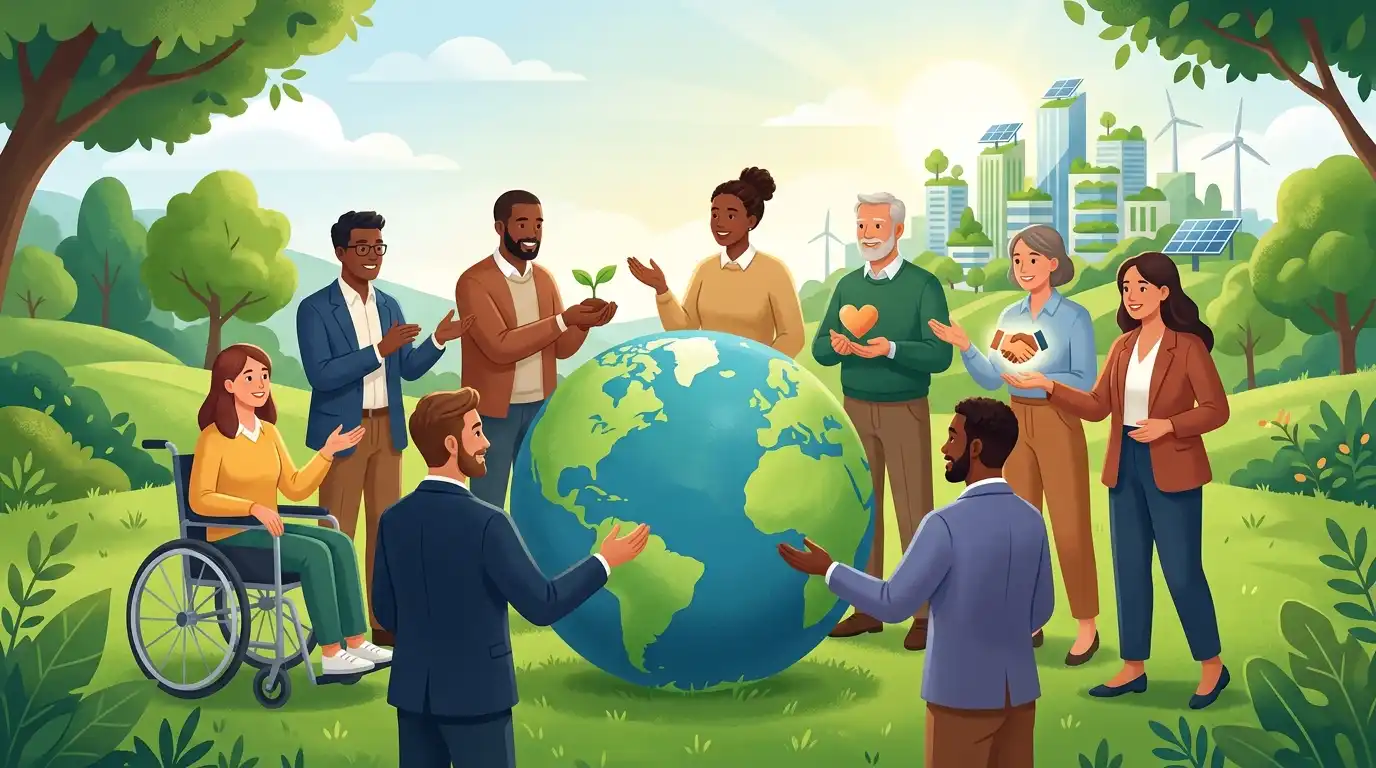
CSR meaning in business is simple: it stands for corporate social responsibility, which is how a company works to do good for people, communities, and the planet while it earns money. Maybe you saw the term in a news story, a job post, or a class. Many people search for it because it sounds big, but the idea is easy to understand. Companies are part of society. What they do affects workers, neighbors, customers, and nature. In this guide, you will learn what CSR means, why it matters, the main types, real examples, the benefits, and the risks, like greenwashing. You will also see how even a small shop can start. By the end, you will be able to explain CSR to anyone.
What Is CSR Meaning in Business?

CSR is short for corporate social responsibility. In plain words, it means a business takes responsibility for how its choices affect the world around it. A company with a strong CSR approach does not only ask, “How much money can we make?” It also asks, “Are we treating people fairly? Are we hurting the planet? Are we helping the places where we work?”
Think of a bakery on your street. The owner pays workers a fair wage. None of that is required by law, but all of it helps the community. That is CSR in action, even if she never uses the term.
CSR goes beyond following the rules. Every company must obey laws about pay, safety, and pollution. CSR starts where the law stops. It is the extra effort a business makes because it believes it is the right thing to do, and because it knows trust is good for business over time.
You may also hear a few other names for the same idea. Some people say corporate citizenship, sustainable business, or responsible business. They are not all exactly the same, but they overlap a lot. The core idea stays the same: a company should be a good neighbor.
Why Companies Care About CSR
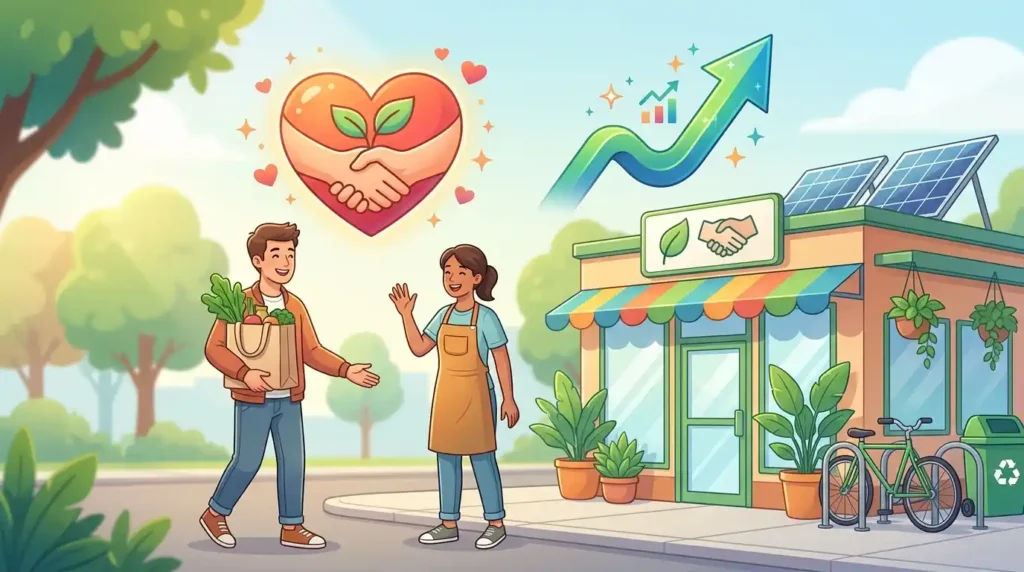
You might wonder why a business would spend time and money on CSR. The answer is that it often pays off, and not only in dollars.
First, people care. Many shoppers like to buy from brands that match their values. Workers feel the same way. A person choosing between two job offers may pick the company that treats people well and gives back. That helps firms hire and keep good staff.
Second, trust is hard to earn and easy to lose. A company known for honest and fair behavior gets more patience when something goes wrong. A company with a bad reputation gets none.
Third, there is pressure from outside. Investors, banks, and big customers now ask companies about their effect on the environment and society. Some countries also have rules that make large companies report on these topics. So CSR is no longer just a nice extra. For many firms, it is part of doing business.
Finally, there is risk. Businesses that ignore pollution, unsafe work, or unfair pay can face fines, lawsuits, and angry headlines. Good CSR habits help a company spot these problems early, before they grow.
The Four Main Types of CSR

CSR can look different from one company to the next. Most programs fit into four broad groups. The table below gives a quick view.
| Type of CSR | What It Focuses On | Simple Example |
| Environmental | Protecting nature and cutting waste | Using solar power or recycled packaging |
| Ethical and Fair Practice | Treating workers and partners fairly | Paying fair wages, checking supplier factories |
| Philanthropic | Giving money, goods, or time | Donating to a food bank or a school |
| Economic | Growing in a smart, honest way that lasts | Hiring locally, paying taxes honestly, buying from small suppliers |
Let us look at each one a little closer.
Environmental CSR is about the planet. A company might cut its energy use, reduce trash, save water, or lower the gases that warm the Earth. It might also choose materials that cause less harm. Many firms set goals, such as using only clean power by a certain year.
Ethical CSR is about fairness. This covers safe workplaces, fair pay, equal chances for all workers, and honest dealings with customers. It also reaches into the supply chain. If a clothing brand buys fabric from another country, ethical CSR means checking that the workers there are treated well too.
Philanthropic CSR is the type most people know. It is giving. A business might donate money, give products to people in need, or let workers take paid time off to volunteer. It is helpful, but experts say it works best when it connects to the company’s real work and is not just a one-time check.
Economic CSR means running the business in a way that helps the local economy and can last for many years. That includes creating jobs, paying suppliers on time, and avoiding shady money practices.
Some writers add a fifth group, such as human rights or community work. The labels change, but the goals are the same.
A Short History of CSR
The idea that business has duties to society is old, but the modern term grew in the twentieth century. In 1953, an economist named Howard Bowen wrote a book called Social Responsibilities of the Businessman. Many scholars call him an early voice in this field.
The idea was not welcomed by everyone. In 1970, the economist Milton Friedman wrote a famous article arguing that a company’s main social duty is to use its resources to make profit within the rules of the game. His view still shapes debate today.
In 1991, professor Archie Carroll shared a well-known model, often called the CSR pyramid. It says a company has economic, legal, ethical, and philanthropic duties, and it should try to meet all four.
The years that followed brought more structure. The United Nations launched the Global Compact in 2000 to encourage companies to follow ten principles on human rights, labor, the environment, and fighting corruption. In 2010, the International Organization for Standardization published ISO 26000, a guide on social responsibility. Unlike some of its other standards, it is advice, not something a company can be certified for.
Today, CSR often sits alongside newer terms like ESG and sustainability. The words have changed, but the question is the same one Bowen asked more than seventy years ago: what does business owe to society?
Real-Life CSR Examples
Examples make the idea clearer. Here are a few well-known cases, along with a note that every company has strengths and weaknesses.
Patagonia, the outdoor clothing brand, is often named as a leader in environmental CSR. It has long supported environmental groups, and in 2022 its founder moved ownership of the company into a trust and a nonprofit, so that profits not reinvested in the business go toward fighting climate change.
Ben & Jerry’s, the ice cream maker, has a written social mission. It speaks out on social issues and works to buy certain ingredients through fair trade programs.
Microsoft announced in 2020 that it wanted to become carbon negative by 2030, meaning it plans to remove more carbon from the air than it releases. Goals like this are bold, and the real test is if the company reaches them.
Unilever, the consumer goods giant, ran a long-term sustainability plan for years that set targets on health, waste, and fair living for people in its supply chain. It is a good example of tying CSR to everyday products.
TOMS Shoes became famous for its “one for one” idea, where each pair sold meant a pair given away. The company later changed its approach and shifted toward giving a share of profits to grassroots groups. That story shows that CSR ideas can grow and change as people learn what works best.
Small companies do this too. A local plumber who trains young workers, a cafe that composts its coffee grounds, or a print shop that sponsors a school team are all practicing CSR on a smaller scale.
CSR vs. ESG vs. Philanthropy
People often mix up these three terms. They are related, but they are not the same thing. The table below shows the main differences.
| Term | Main Meaning | Who Mostly Uses It | Key Question |
| CSR | A company’s overall effort to act responsibly | Company leaders, workers, customers | “How are we helping society?” |
| ESG | Environmental, social, and governance measures | Investors, banks, rating groups | “How does this affect risk and value?” |
| Philanthropy | Giving money or time to good causes | Companies, families, groups | “Who can we help with our gifts?” |
CSR is the big picture. It is the company’s attitude and actions. ESG is more like a scorecard. Investors use it to judge how a company handles environmental, social, and leadership issues. Philanthropy is just one tool inside CSR.
Put another way, CSR is the story a company tells about how it behaves, and ESG is the data that shows if the story is true.
Benefits of CSR for Businesses and Communities
When done well, CSR can help many groups at once.
For the company, it can build a stronger brand and more loyal customers. It may also lower costs. For example, using less energy and creating less waste often saves money. Workers who feel proud of their employer tend to stay longer, which cuts the cost of hiring and training new people.
For workers, CSR can mean safer jobs, fair pay, and a sense of purpose. Many people want their work to mean something, and a clear mission can give them that.
For communities, CSR can bring jobs, donations, cleaner air and water, and support for schools and local groups.
For the planet, even small steps add up when thousands of companies take them.
It is worth being honest here. Studies on if CSR always increases profit give mixed results, and the effect depends on the company, the industry, and how well the plan is carried out. CSR is not a magic trick. It works best when it is real, steady, and tied to what the company actually does.
Criticism, Risks, and Common Mistakes
CSR has fans, but it also has critics. Knowing the common problems will help you spot good CSR from bad.
The biggest problem is greenwashing. This is when a company makes itself look kinder or greener than it truly is. It might run bright ads about one small eco-friendly product while its main business keeps causing harm. Customers and watchdog groups are quick to notice, and the damage to trust can be big.
Another mistake is treating CSR as a public relations trick. If a company gives to charity but underpays its workers, people will see the gap. Real CSR starts inside the company.
A third mistake is having no plan. Random acts of kindness are nice, but without goals, a budget, and a way to check results, it is hard to know if anything is working.
Some critics, following Friedman’s old argument, say business should focus on profit and leave social problems to governments. Others say companies are too powerful to ignore their effect on society. Both sides raise fair points, which is why the debate continues.
Here are a few more pitfalls to avoid:
- Making big promises with no way to measure them.
- Picking causes that have nothing to do with the business.
- Ignoring suppliers and partners who cause harm.
- Talking about CSR once a year and forgetting it the rest of the time.
The fix for most of these is honesty. Share both your wins and your struggles. People trust a company that admits it is still learning far more than one that claims to be perfect.
How to Build a CSR Plan Step by Step
Building a CSR plan does not need to be hard. Start with listening. Talk to your workers, customers, suppliers, and neighbors. Ask what matters most to them and where your company has the biggest effect.
Next, pick a few clear focus areas. A company cannot fix everything. A food business might focus on waste and fair sourcing. A tech firm might focus on energy use and digital skills for young people. Choose areas that fit your work and your strengths.
Then set goals you can measure. “Be greener” is vague. “Cut packaging waste by 20 percent in two years” is clear. Give each goal an owner, a deadline, and a budget.
After that, put the plan into action and bring your team along. CSR works best when workers at every level take part, not just the bosses.
Finally, track your progress and share it honestly. Many firms publish a yearly report. Some use frameworks such as the Global Reporting Initiative standards to organize their data. Review the results, learn from mistakes, and improve the plan each year.
CSR Ideas for Small Businesses
You do not need a big budget to practice CSR. Small businesses have an advantage because they are close to their communities. Here are some simple ideas.
Buy from local suppliers when you can. This keeps money in your area and often cuts shipping pollution. Reduce waste by switching to reusable or recycled materials. Turn off equipment when it is not in use.
Treat your workers well. Fair pay, flexible hours when possible, and clear respect go a long way. Offer training so staff can grow.
Give back in ways that fit. Sponsor a youth team, host a food drive, or offer your skills for free to a local charity. Let workers choose some of the causes, since people care more about what they help pick.
Be open with your customers. Tell them what you are doing, and what you are still working on. Small, honest steps beat big, empty claims every time.
How Companies Measure CSR Success
Measuring CSR can be tricky because some results are hard to count. Still, there are useful ways to track progress.
Many companies count things like energy used, waste cut, hours volunteered, money donated, and worker safety rates. Others run surveys to see how workers and customers feel. Some look at how often they are praised or criticized in the news.
Outside groups can help too. Certifications and rating tools let a company compare itself with others. One example is B Corp certification, where a company is judged on its effect on workers, community, and the environment. It takes work to earn, which is why it carries weight.
The best advice is to measure what matters, not just what is easy. A big donation total looks nice, but it says little if the company’s own operations cause harm.
Current Trends in CSR
CSR keeps changing. Here are a few trends worth knowing, with a reminder that rules and numbers shift often, so check current sources before making decisions.
Climate action is a main focus. More companies are setting goals to cut their carbon emissions and are being asked to show proof. Supply chain honesty is another hot area, with more attention on where products come from and how workers are treated.
Reporting rules are also growing in some places. The European Union, for example, created new sustainability reporting rules for many companies, though the details have been under review and may change. Other regions are building their own standards.
At the same time, there is more public pushback against greenwashing. Regulators in several countries are watching marketing claims more closely. The message for businesses is clear: if you make a claim, be ready to prove it.
Technology plays a role too. Better data tools make it easier to track energy use and supplier practices. Fair and careful use of artificial intelligence is also becoming a part of the conversation about responsible business.
FAQs
What does CSR stand for in business?
CSR stands for corporate social responsibility. It means a company takes responsibility for how its actions affect people, communities, and the environment, and tries to do good while making a profit.
Is CSR required by law?
In most places, CSR itself is voluntary. However, companies must follow laws on pay, safety, and pollution. Some countries also require large companies to report on certain social and environmental topics.
What are examples of CSR?
Examples include using clean energy, paying fair wages, giving to charity, letting workers volunteer, buying from local suppliers, and checking that supplier factories treat workers well.
What is the difference between CSR and ESG?
CSR is a company’s overall effort to act responsibly. ESG is a set of measures that investors use to judge how a company handles environmental, social, and leadership issues. ESG is more like a scorecard.
Does CSR help a company make money?
It can, through stronger trust, loyal customers, lower costs, and happier workers. But research shows mixed results, and the benefit depends on how real and well planned the CSR efforts are.
Can small businesses do CSR?
Yes. Small businesses can buy local, cut waste, treat workers well, and support local causes. You do not need a big budget. You need honest, steady effort.
Conclusion
Now you know the CSR meaning in business: it is a company’s promise to care about people, communities, and the planet while it earns a profit. It covers the environment, fair treatment, giving, and smart long-term growth. We looked at its history, real examples, the difference between CSR and ESG, and the danger of greenwashing.
The main lesson is that real CSR is about actions, not slogans. Companies earn trust when they set clear goals, measure results, and share the truth, including the hard parts. If you run a global brand or a corner shop, you can start small. Pick one area that fits your work, set one goal you can measure, and keep going. Over time, those steady steps can help your business, your workers, and your community grow stronger together.