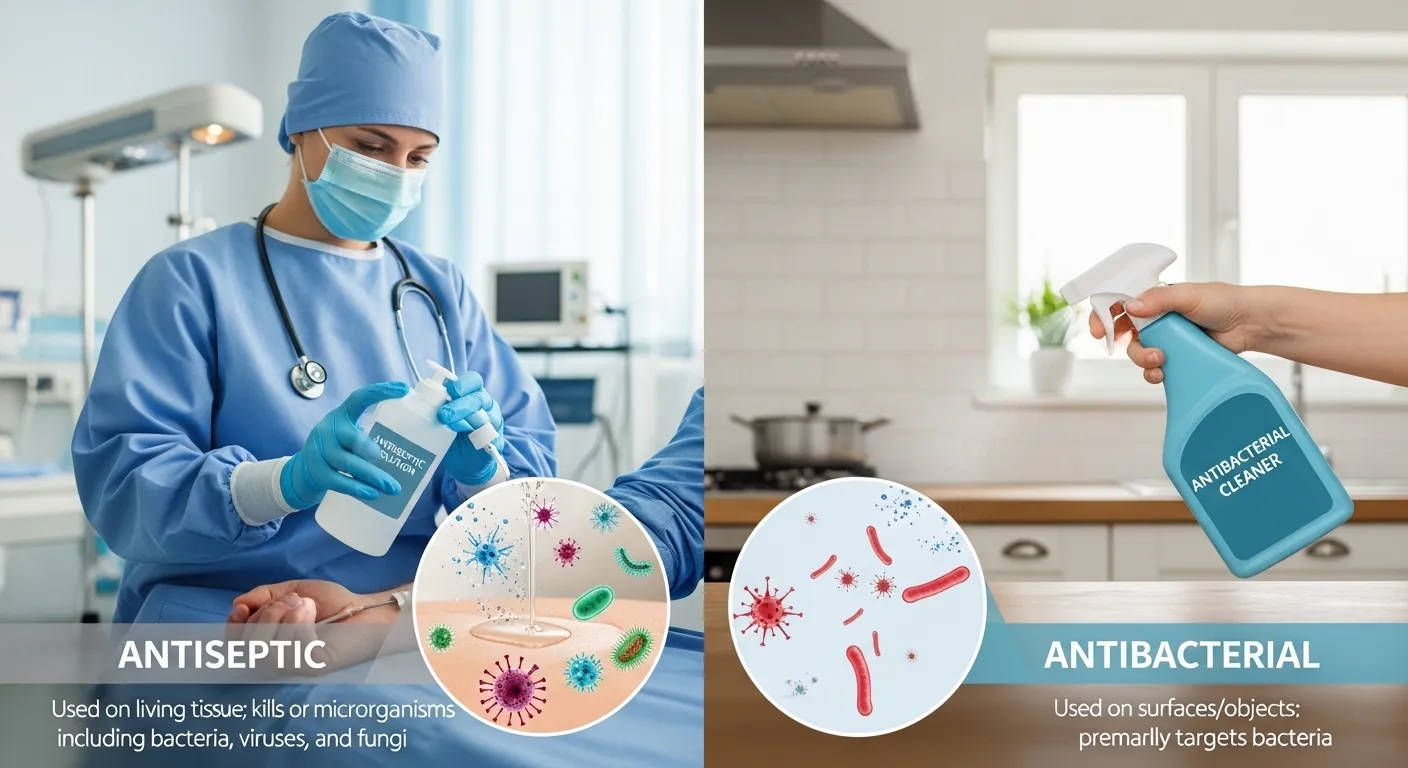
Last week, Sara accidentally cut her finger while chopping vegetables. She quickly reached into the medicine cabinet and found two options: an antiseptic liquid and an antibacterial cream. For a moment, she hesitated. Aren’t they the same thing?
This confusion is incredibly common. Both antiseptics and antibacterial products are used to fight germs, and both are found in homes, hospitals, and first-aid kits. But despite their similar purpose, they work differently and are used in different situations.
Understanding the difference between antiseptics and antibacterials can help you treat wounds properly, prevent infections, and make smarter healthcare choices.
Quick Answer
- Antiseptic: Kills or inhibits a wide range of microorganisms (bacteria, viruses, fungi) on living tissues like skin.
- Antibacterial: Specifically targets bacteria only.
In short, antiseptic = broader protection, while antibacterial = bacteria-focused.
What is an Antiseptic?
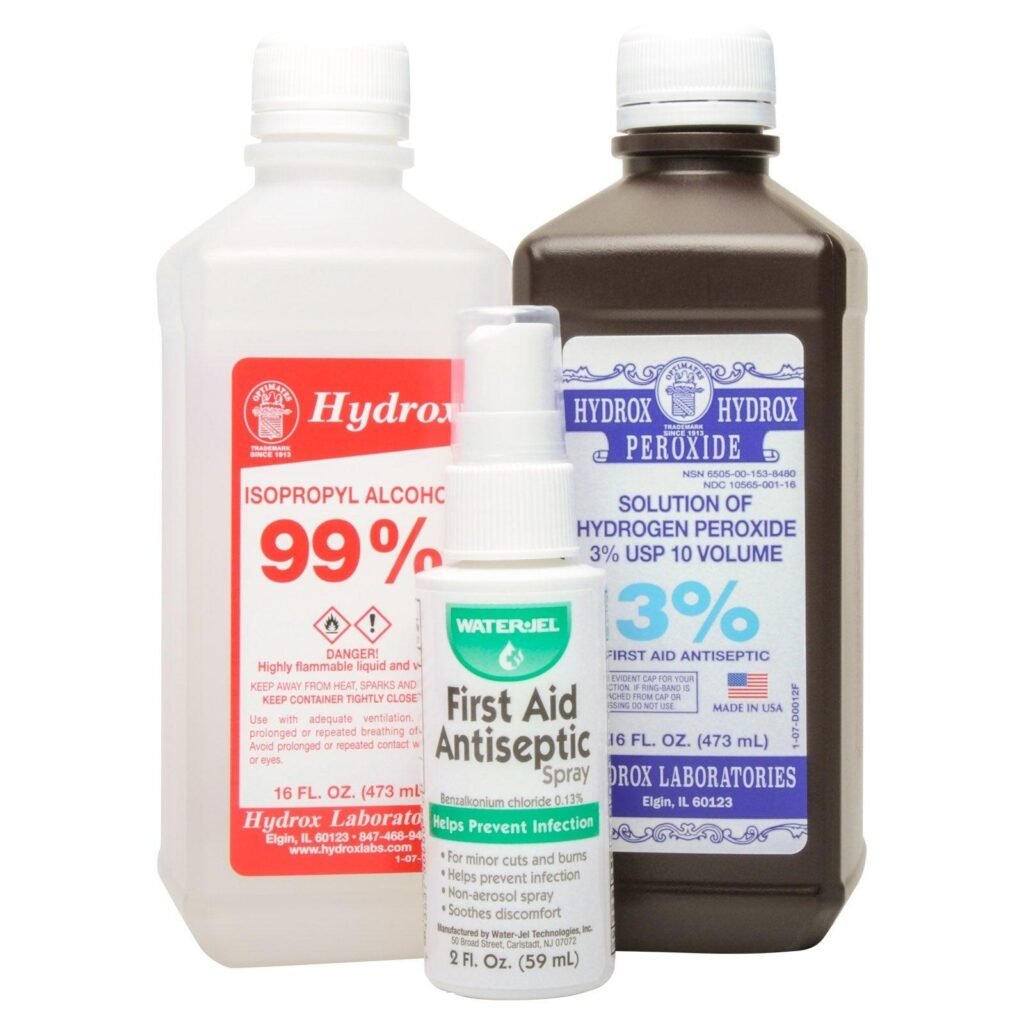
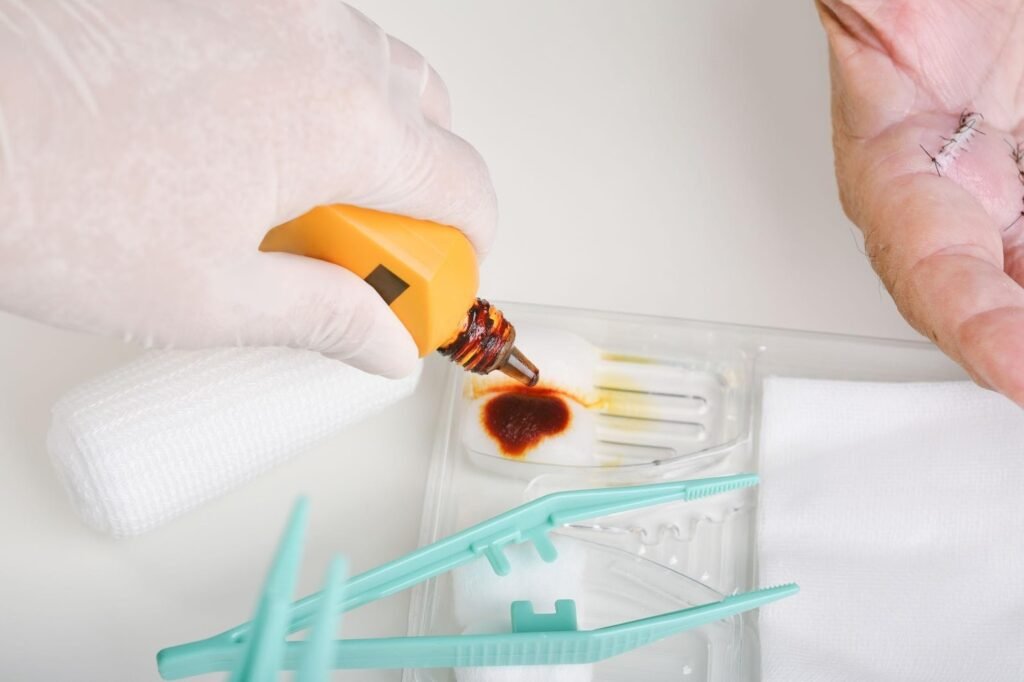
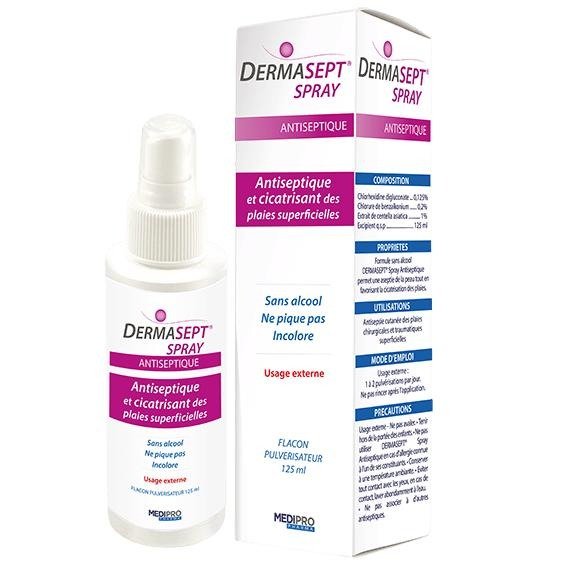
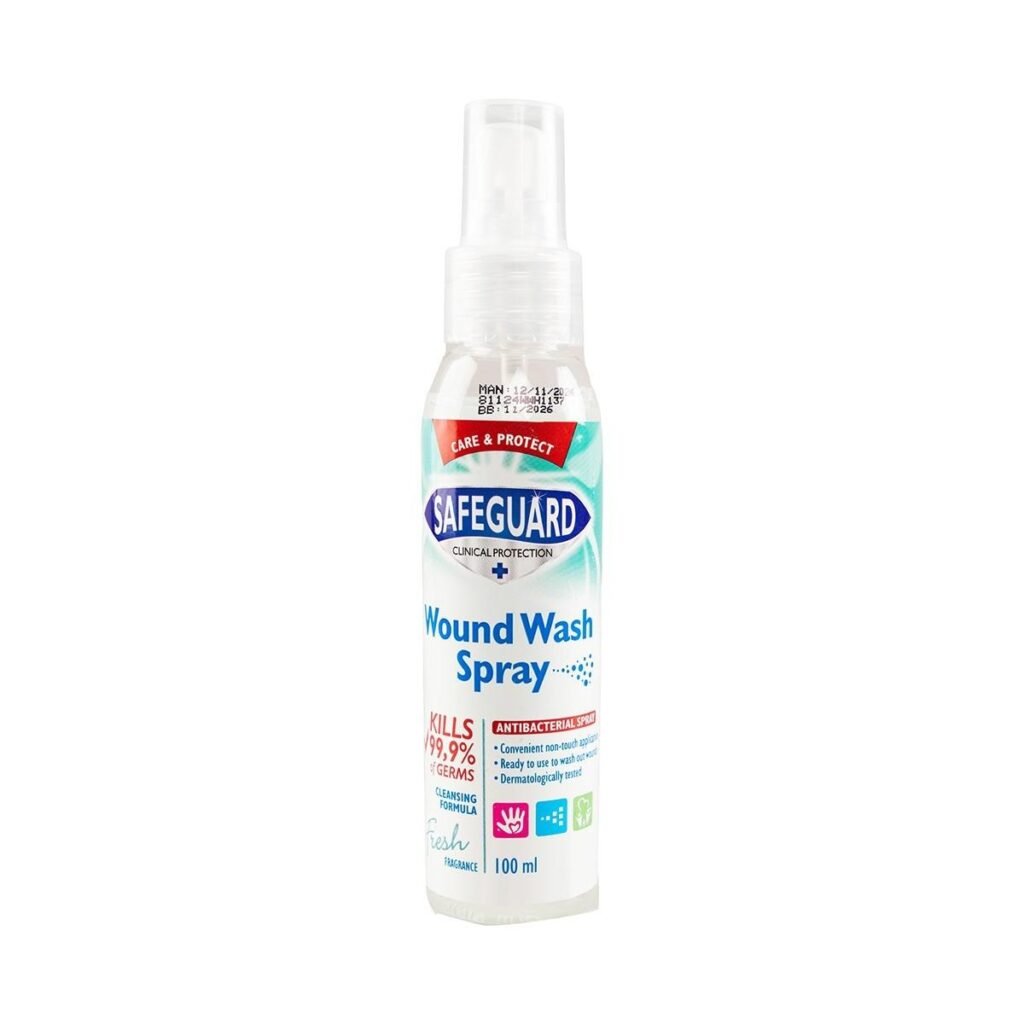
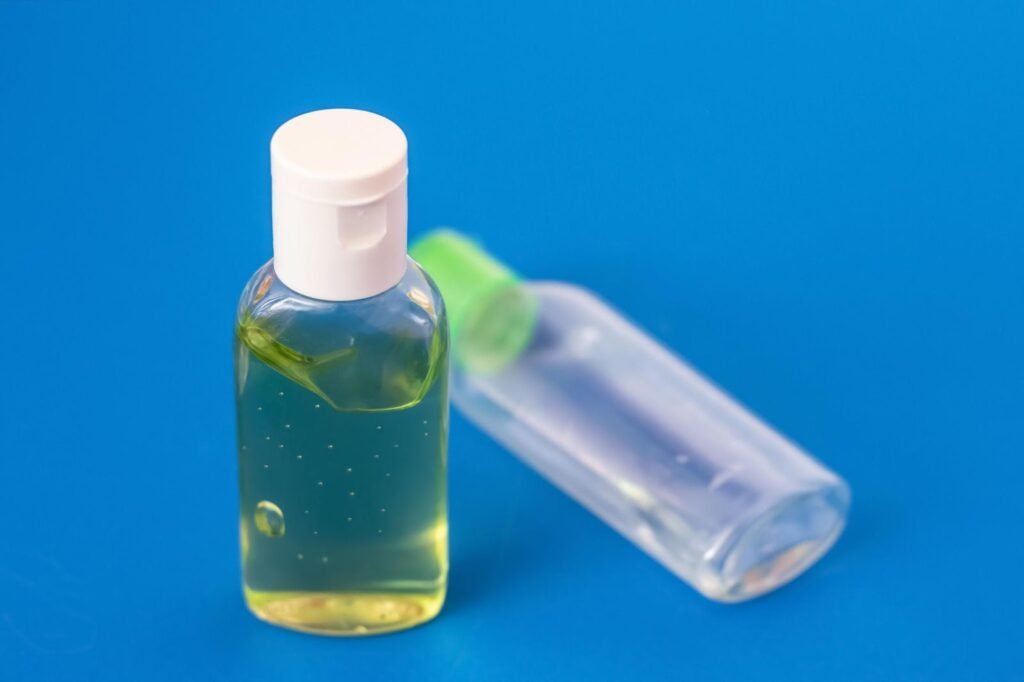
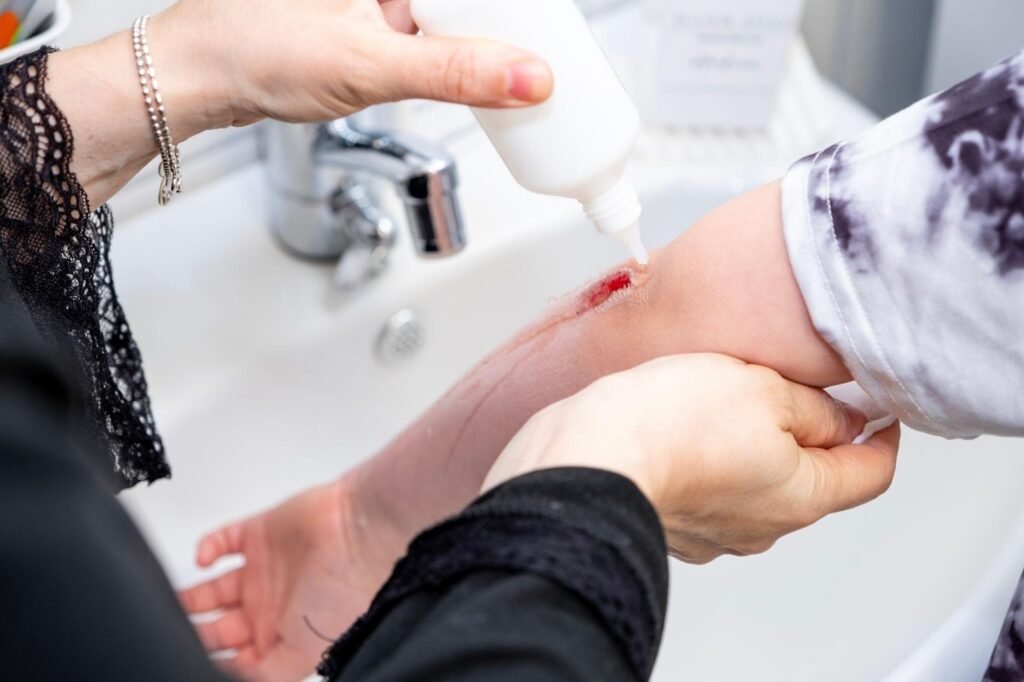
An antiseptic is a substance used on living tissues (like skin) to prevent infection by killing or stopping the growth of microorganisms.
Key Features of Antiseptics:
- Works against bacteria, viruses, and fungi
- Safe for use on skin and wounds
- Used in first aid and medical settings
- Helps prevent infection
Common Examples:
- Iodine solution
- Hydrogen peroxide
- Alcohol-based solutions
Real-World Example:
When you clean a cut with antiseptic liquid before applying a bandage, you’re protecting it from multiple types of germs not just bacteria.
What is an Antibacterial?
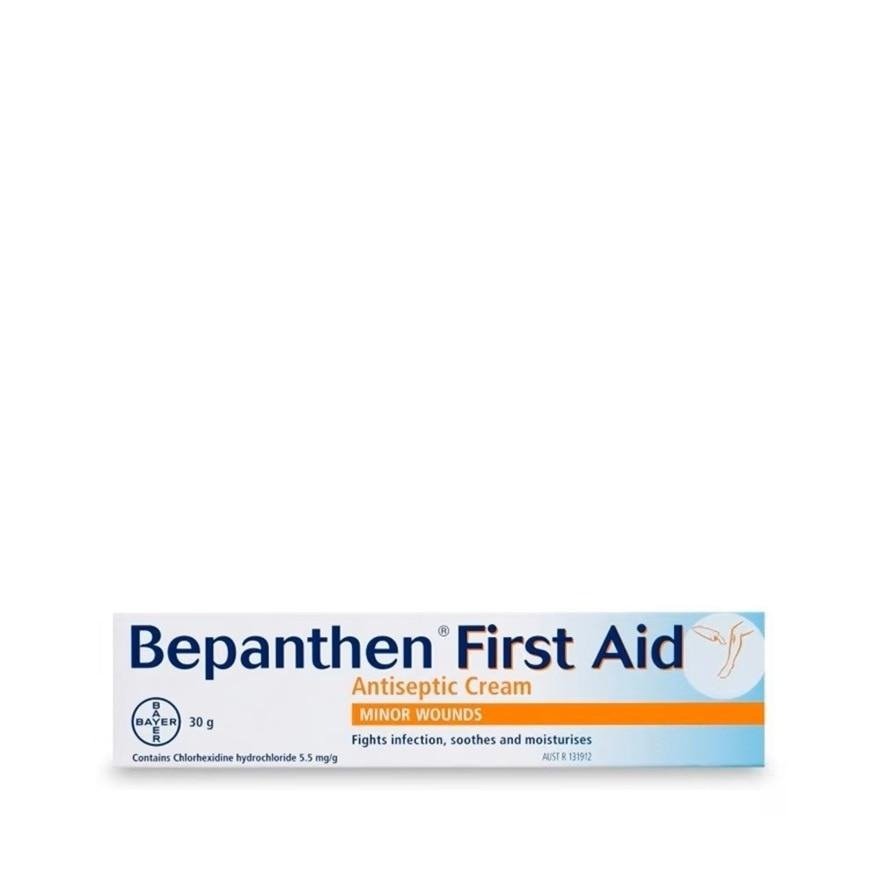
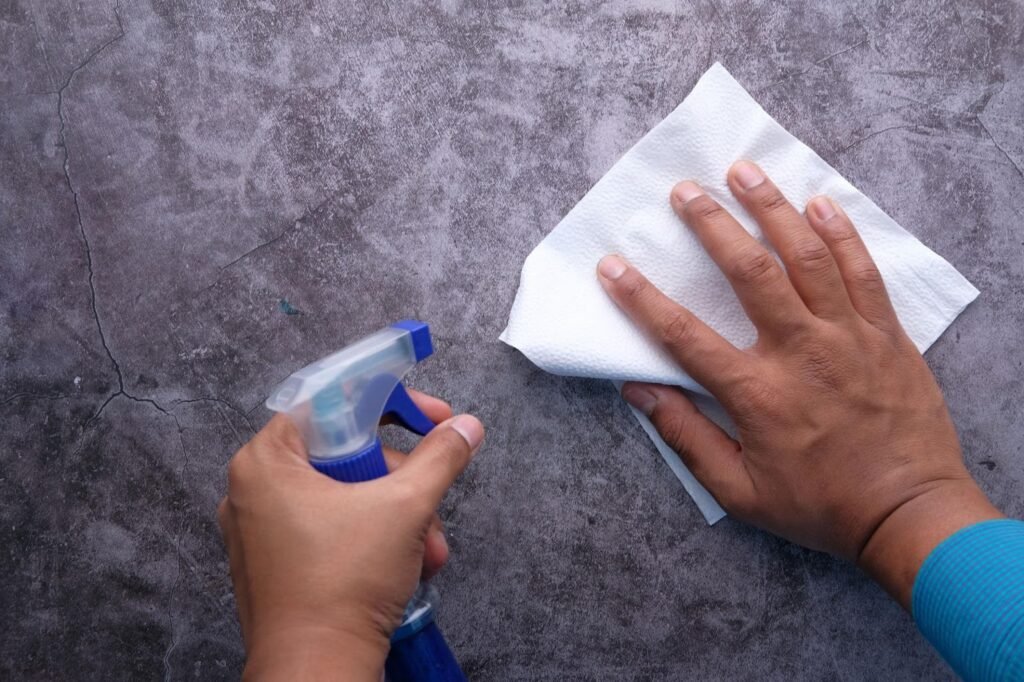
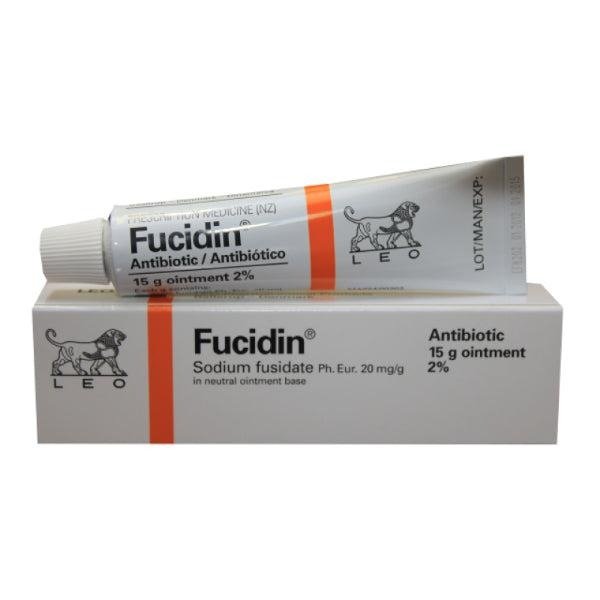
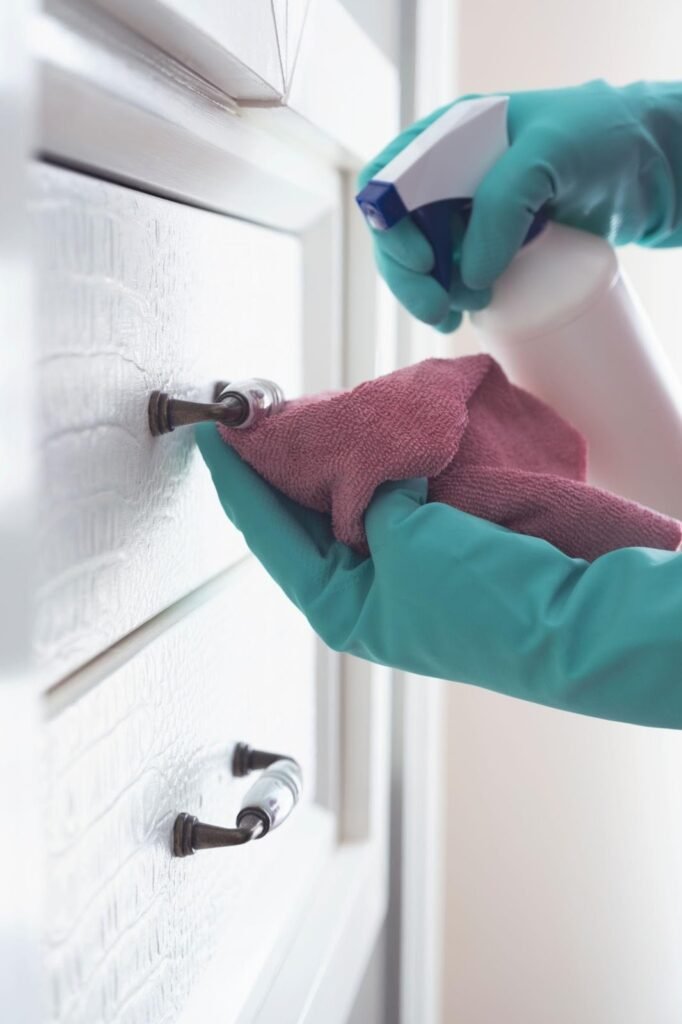
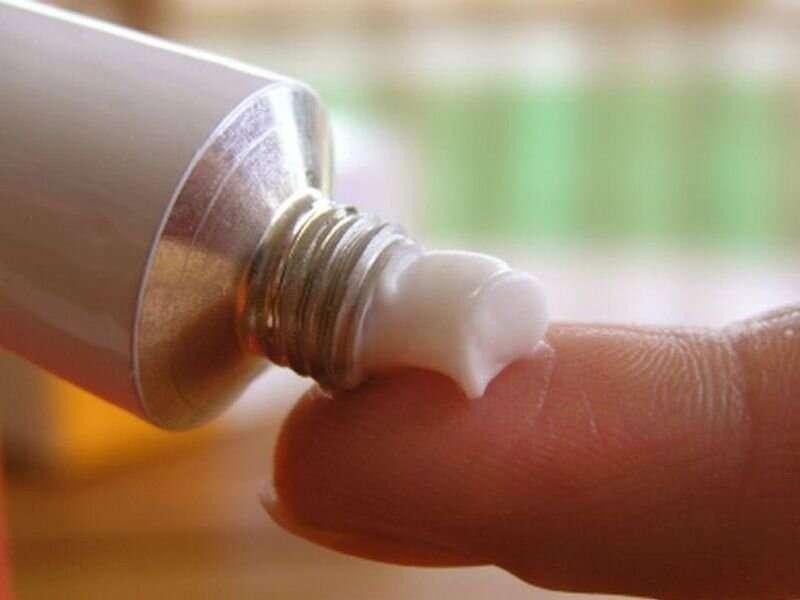
An antibacterial product is designed specifically to kill or inhibit bacteria.
Key Features of Antibacterial Products:
- Targets bacteria only
- Available in creams, soaps, and medicines
- Used for infections caused by bacteria
- Not effective against viruses or fungi
Common Examples:
- Antibiotic creams
- Antibacterial soaps
- Certain prescription medications
Real-World Example:
Applying an antibacterial cream to a wound helps prevent bacterial infection, but it won’t protect against viruses or fungi.
Antiseptic vs Antibacterial: Key Differences
| Feature | Antiseptic | Antibacterial |
| Target Germs | Bacteria, viruses, fungi | Bacteria only |
| Usage Area | Living tissue (skin, wounds) | Skin, surfaces, or internal use |
| Scope | Broad-spectrum | Narrow (bacteria-focused) |
| Purpose | Prevent infection | Treat/prevent bacterial infections |
| Examples | Iodine, alcohol | Antibiotic creams, antibacterial soap |
| Effectiveness | Wider protection | Specific to bacteria |
Why People Confuse Them
The confusion happens because:
- Both are used to fight germs
- Both are found in first-aid kits
- Marketing often uses the terms loosely
When to Use Antiseptic vs Antibacterial
Use Antiseptic When:
- Cleaning fresh cuts or wounds
- Preparing skin before injections
- Preventing infection from multiple germs
Use Antibacterial When:
- Treating bacterial infections
- Using medicated creams or ointments
- Washing hands with antibacterial soap (in specific cases)
Pros and Cons of Antiseptics
Advantages:
- Broad protection against many germs
- Essential for first aid
- Reduces infection risk quickly
Disadvantages:
- May irritate sensitive skin
- Overuse can damage healthy tissue
- Not always needed for minor issues
Pros and Cons of Antibacterial Products
Advantages:
- Effective against bacterial infections
- Targeted treatment
- Widely available
Disadvantages:
- Doesn’t work on viruses or fungi
- Overuse can lead to resistance (especially antibiotics)
- Not always necessary for routine cleaning
Real-Life Scenarios
Scenario 1: Minor Cut
- Best Choice: Antiseptic
- Reason: Protects against all types of germs
Scenario 2: Bacterial Skin Infection
- Best Choice: Antibacterial cream
- Reason: Targets bacteria specifically
Scenario 3: Daily Hand Cleaning
- Best Choice: Regular soap (often enough)
- Antibacterial soap only when necessary
Important Note on Antibiotic Resistance
Overusing antibacterial products especially antibiotic creams or medicines—can lead to antibiotic resistance, making bacteria harder to treat in the future. This is why they should be used carefully and only when needed.
Internal Linking Suggestions
For a health or medical blog, link this article to:
- “Difference Between Antibiotic and Antiviral”
- “How to Treat Minor Cuts at Home”
- “Difference Between Disinfectant and Antiseptic”
- “Best First Aid Tips Everyone Should Know”
FAQs
1. Is antiseptic the same as antibacterial?
No. Antiseptics work against a wider range of microorganisms, while antibacterials target only bacteria.
2. Can I use antibacterial instead of antiseptic?
Not always. Antibacterial products won’t protect against viruses or fungi.
3. Which is better for wounds?
Antiseptic is usually better for cleaning wounds initially.
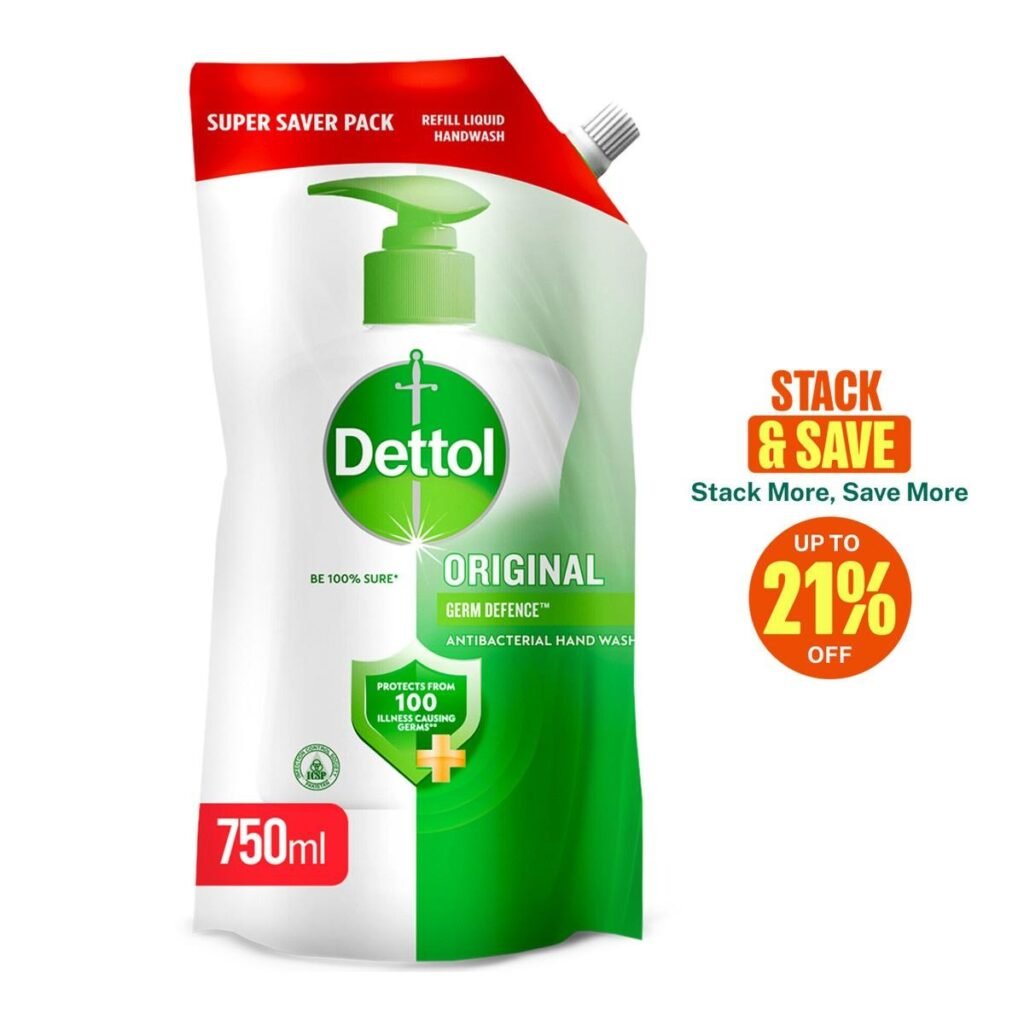
4. Is Dettol antiseptic or antibacterial?
Dettol is primarily an antiseptic, though it also has antibacterial properties.
5. Are antibacterial soaps necessary?
In most cases, regular soap is enough unless there’s a specific need.
Conclusion
The difference between antiseptic and antibacterial comes down to scope and purpose. Antiseptics offer broad protection against multiple types of germs, making them ideal for first aid and wound care. Antibacterial products, on the other hand, are more targeted and effective specifically against bacteria.
Knowing when to use each can help you stay safe, avoid infections, and make better healthcare decisions