When Mr. Khan turned 60, his colleagues threw him a small farewell party. After decades of working in a government office, he was finally stepping into a new phase of life, retirement. As the celebrations ended, someone casually asked, “So, how’s your pension plan?”
Mr. Khan smiled but paused for a second. Like many people, he had always used the terms pension and retirement interchangeably. But that moment made him realize they aren’t the same thing. Retirement is the stage of life he was entering, while a pension was the financial support that would sustain him during that stage.
This confusion is extremely common. Understanding the difference between a pension and retirement is crucial for financial planning, especially if you want a secure and stress-free future.
Quick Answer
- Retirement is the stage of life when you stop working permanently.
- A pension is a regular income you receive after retirement.
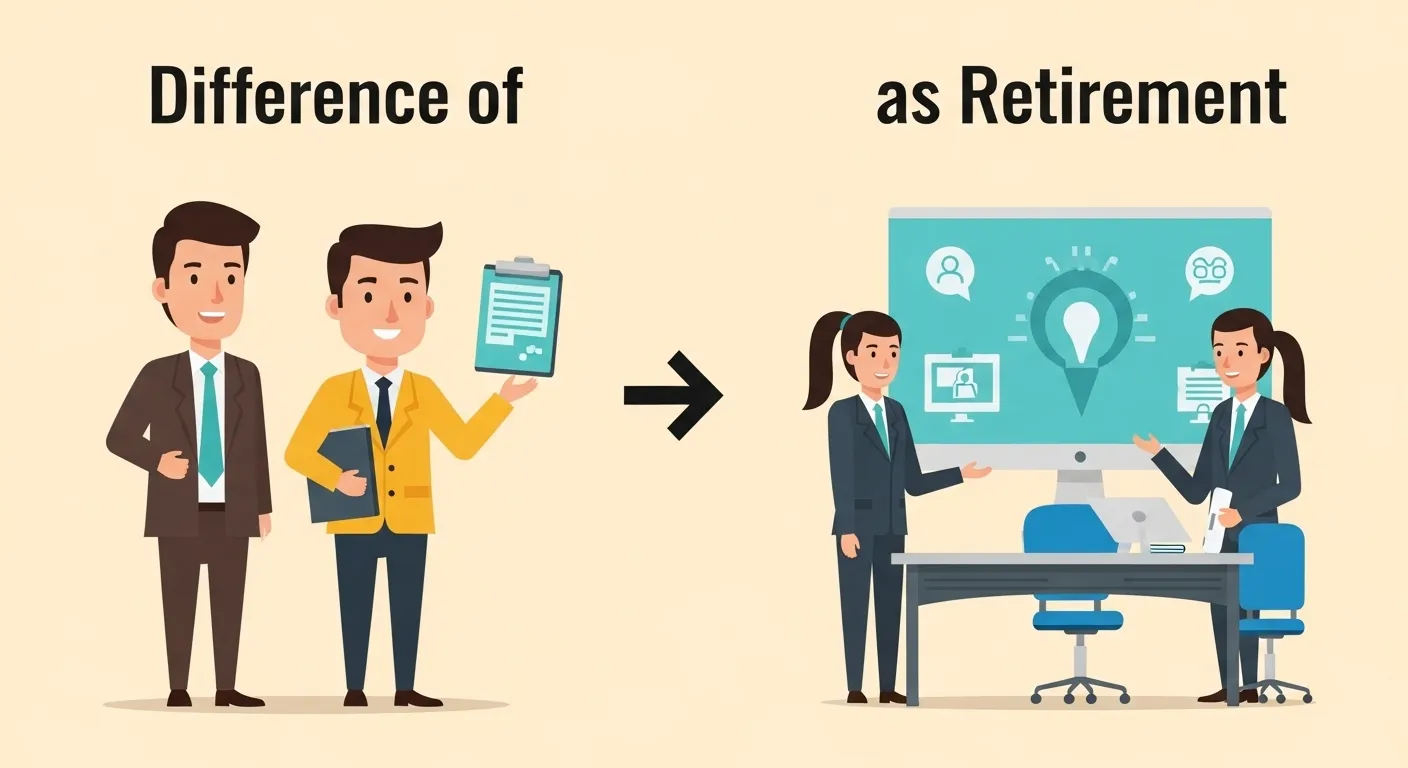
In simple terms, retirement is a life phase, while a pension is a source of income during that phase.
What is Retirement?
Retirement refers to the time when a person leaves the workforce permanently, usually after reaching a certain age or financial stability.
Key Features of Retirement:
- Marks the end of your professional career
- Typically occurs between ages 55–65 (varies by country and job)
- Focus shifts from earning to enjoying life
- May include hobbies, travel, or family time
Real-World Example:
A teacher who has worked for 30 years decides to stop working at age 60. From that day onward, they are considered retired, regardless of how they earn money afterward.
What is a Pension?
A pension is a steady stream of income provided to a person after they retire. It ensures financial stability when regular employment income stops.
Key Features of a Pension:
- Paid monthly or regularly
- Usually funded by employers, the government, or personal contributions
- Continues for life (in many cases)
- May include survivor benefits
Real-World Example:
A retired government employee in Pakistan receives a monthly pension from the government, helping cover living expenses like food, bills, and healthcare.
Pension vs Retirement: Key Differences
Here’s a clear comparison to understand both concepts:
| Feature | Pension | Retirement |
| Definition | Regular income after work | Life stage after leaving work |
| Nature | Financial benefit | Personal/lifestyle phase |
| Purpose | Provides financial support | Marks end of career |
| Timing | Begins after retirement | Occurs when you stop working |
| Source | Employer, government, or savings | Personal decision or policy |
| Dependency | Depends on contributions or plan | Independent of income source |
| Example | Monthly government pension | A person no longer working |
Types of Pensions
Understanding pensions becomes easier when you know their types:
1. Defined Benefit Pension
- Fixed monthly payment after retirement
- Based on salary and years of service
2. Defined Contribution Plan
- You and/or your employer contribute money
- Final amount depends on investment performance
3. Government Pension
- Provided to public sector employees
- Common in countries like Pakistan
4. Private Pension Plans
- Managed by financial institutions
- Individuals invest during working years
Why People Confuse Pension and Retirement
The confusion happens because:
- Both are closely connected
- Pension starts when retirement begins
- Conversations often use them interchangeably
But remember: one is a phase (retirement), the other is income (pension).
When to Use a Pension vs Retirement
Use “Retirement” When:
- Talking about life after work
- Discussing lifestyle changes
- Planning when to stop working
Example:
“I plan to take early retirement at 55.”
Use “Pension” When:
- Talking about income after retirement
- Discussing financial planning
- Referring to monthly payments
Example:
“My pension covers my monthly expenses.”
Pros and Cons of Retirement
Advantages:
- Freedom from job stress
- More time for family and hobbies
- Opportunity to travel and relax
Disadvantages:
- Loss of regular salary
- Possible boredom or lack of routine
- Financial pressure if not planned well
Pros and Cons of Pension
Advantages:
- Provides financial security
- Regular and predictable income
- Reduces dependency on others
Disadvantages:
- May not be enough for all expenses
- Not available in all jobs
- Depends on policy and contributions
Real-Life Scenario: Pension vs Retirement
Let’s look at two individuals:
Case 1: Government Employee
Ali retires at 60 and receives a monthly pension.
- Retirement: He stops working
- Pension: He gets a regular income
Case 2: Private Worker Without Pension
Sara retires at 58 but has no pension. She relies on savings and investments.
- Retirement: Same as Ali
- Pension: None
This shows that retirement can exist without a pension, but having a pension makes retirement more secure.
Importance of Planning for Both
To live comfortably, you need to plan for:
1. Retirement Age
- Decide when you want to stop working
2. Retirement Income
- Pension, savings, or investments
3. Lifestyle Goals
- Travel, hobbies, healthcare
Without proper planning, retirement can become financially stressful.
Internal Linking Suggestions
If you’re building a finance or education blog, link this article to:
- “Difference Between Savings and Investment”
- “Difference Between Salary and Wages”
- “Difference Between Insurance and Assurance”
- “How to Plan for Retirement Early”
FAQs
1. Is a pension the same as retirement?
No. Retirement is a life stage, while a pension is income received after retirement.
2. Can you retire without a pension?
Yes, many people rely on savings, investments, or family support instead of pensions.
3. At what age do people retire?
It varies, but commonly between 55 and 65, depending on the country and profession.
4. Is the pension guaranteed?
Not always. It depends on the type of pension plan and policies.
5. What happens if you have no pension?
You’ll need alternative income sources like savings, investments, or part-time work.
Conclusion
The difference between pension and retirement is simple but important. Retirement is the moment you step away from your working life, while a pension is what helps you sustain that new phase financially.
Understanding this distinction allows you to plan smarter, avoid confusion, and ensure a comfortable future. Whether you’re early in your career or nearing retirement, it’s never too soon or too late to start planning.