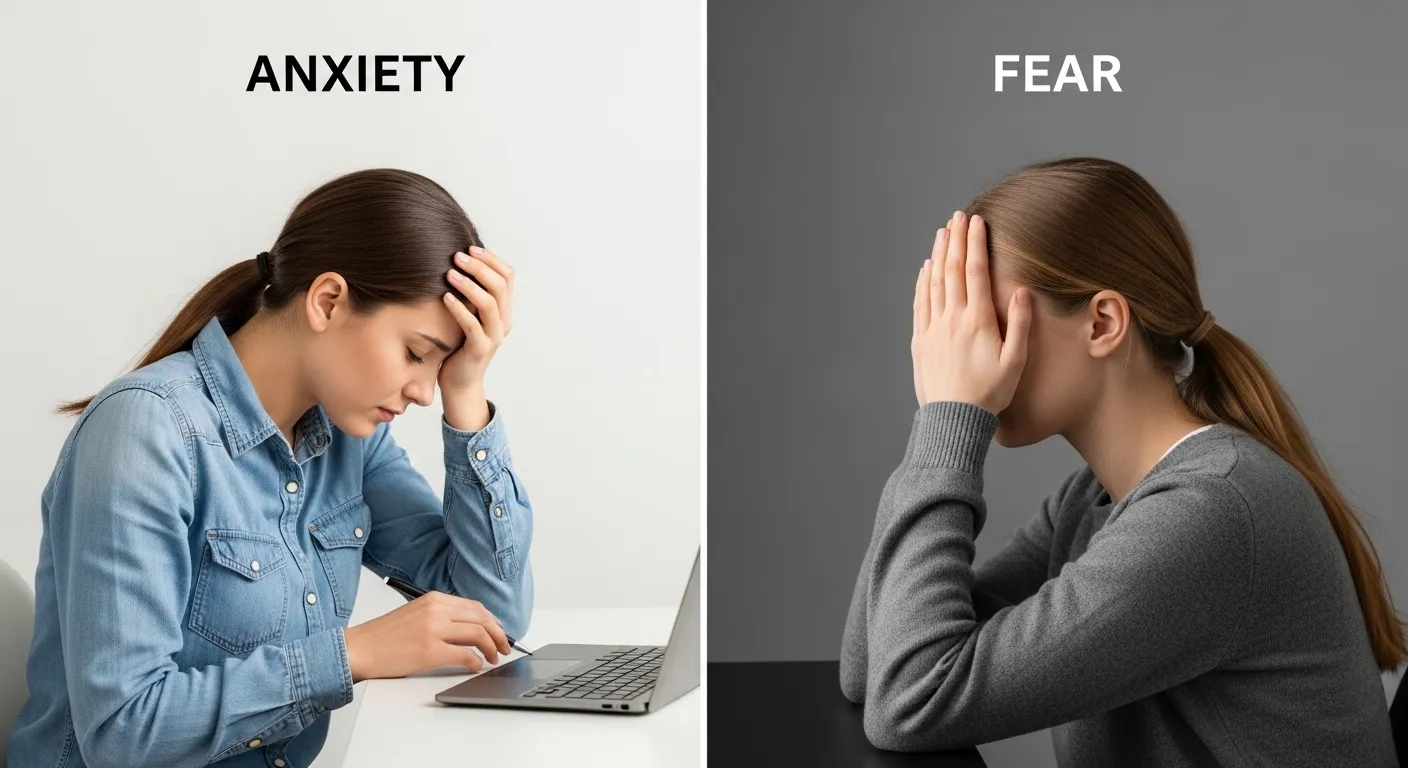
Imagine walking alone at night and suddenly hearing footsteps behind you. Your heart races instantly; that’s fear. Now imagine worrying all day about something that might happen in the future; that’s anxiety. Although they feel similar, there is a clear difference between anxiety and fear.
The difference between anxiety and fear lies in their cause and timing. Fear is a response to an immediate, real danger, while anxiety is a response to a possible or future threat. Understanding the difference between anxiety and fear helps people manage emotions, improve mental well-being, and respond appropriately to situations. Learning the difference between anxiety and fear is important for students, professionals, and anyone interested in emotional health.
Key Difference Between the Two
The main difference is their trigger.
Fear is caused by a real and immediate threat, while anxiety is caused by worry about something that may happen in the future.
Why Their Difference Is Necessary to Know
Knowing the difference helps in emotional control and mental health management. Fear can protect you from danger, while anxiety can become overwhelming if not managed properly. Understanding the difference between anxiety and fear helps individuals recognize their feelings and take appropriate action, such as calming techniques or seeking support when needed.
Pronunciation (US & UK)
Anxiety
- US: /æŋˈzaɪ.ə.t̬i/
- UK: /æŋˈzaɪ.ə.ti/
Fear
- US: /fɪr/
- UK: /fɪə/
Before exploring further, let’s examine the detailed difference between anxiety and fear.
Difference Between Anxiety and Fear
1. Definition
Anxiety is a feeling of worry or unease about the future.
Fear is a reaction to a present threat.
Anxiety Examples
- Worrying about an exam.
- Stress about a job interview.
Fear Examples
- Seeing a dangerous animal.
- Hearing a loud explosion.
2. Cause
Anxiety is caused by uncertainty.
Fear is caused by immediate danger.
Anxiety Examples
- Thinking about possible failure.
- Anticipating bad outcomes.
Fear Examples
- Fire, accidents, or threats.
- Sudden danger.
3. Time Focus
Anxiety is future-oriented.
Fear is present-oriented.
Anxiety Examples
- “What if something goes wrong?”
- Concern about tomorrow.
Fear Examples
- Reacting to something happening now.
- Immediate response.
4. Duration
Anxiety can last for a long time.
Fear is usually short-lived.
Anxiety Examples
- Ongoing stress.
- Persistent worry.
Fear Examples
- Quick reaction.
- Ends when danger passes.
5. Physical Response
Both cause physical reactions, but fear is more intense.
Anxiety Examples
- Restlessness.
- Muscle tension.
Fear Examples
- Rapid heartbeat.
- Fight-or-flight response.
6. Intensity
Anxiety is usually mild to moderate but persistent.
Fear is intense but brief.
Anxiety Examples
- Constant uneasiness.
- Low-level stress.
Fear Examples
- Sudden panic.
- Strong emotional reaction.
7. Purpose
Anxiety prepares for possible danger.
Fear protects from immediate harm.
Anxiety Examples
- Encourages planning.
- Helps avoid risks.
Fear Examples
- Triggers quick action.
- Ensures survival.
8. Control
Anxiety can be harder to control.
Fear is easier to resolve once danger is gone.
Anxiety Examples
- Persistent thoughts.
- Overthinking.
Fear Examples
- Stops after safety is restored.
- Clear cause.
9. Disorders
Excess anxiety can lead to Anxiety disorder.
Extreme fear can lead to Phobia.
Anxiety Examples
- Generalized anxiety disorder.
- Panic disorder.
Fear Examples
- Fear of heights.
- Fear of spiders.
10. Real vs Imagined
Anxiety is often about imagined scenarios.
Fear is about real situations.
Anxiety Examples
- Imagining failure.
- Worry without immediate cause.
Fear Examples
- Facing real danger.
- Immediate threat.
Nature and Behaviour
Anxiety: Ongoing mental state of worry about uncertain future events.
Fear: Immediate emotional response to a real and present danger.
Why People Are Confused About Their Use
People often confuse anxiety and fear because both involve stress and similar physical reactions. However, their triggers and timing are different.
Table: Difference and Similarity Between Anxiety and Fear
| Feature | Anxiety | Fear | Similarity |
| Cause | Uncertainty | Real danger | Emotional responses |
| Time | Future | Present | Trigger body reactions |
| Duration | Long-lasting | Short-lived | Affect behavior |
| Intensity | Moderate | High | Can feel overwhelming |
| Purpose | Preparation | Protection | Survival-related |
Which Is Better in What Situation?
Anxiety (100 words)
Anxiety can be helpful in situations that require planning and preparation. For example, feeling anxious before an exam can motivate a student to study harder and perform better. However, too much anxiety can become harmful and lead to stress or mental health issues. Managing anxiety through relaxation techniques, time management, and support can make it beneficial rather than overwhelming.
Fear (100 words)
Fear is essential for survival because it helps individuals respond quickly to danger. It triggers the body’s fight-or-flight response, allowing a person to escape or protect themselves from harm. Fear is useful in emergency situations where immediate action is needed. Unlike anxiety, fear usually disappears once the danger is gone, making it a short-term but powerful emotion.
Use in Metaphors and Similes
- “Fear hit him like a lightning bolt.”
- “Anxiety is like a storm that never settles.”
Connotative Meaning
Anxiety
- Negative: Worry, stress
- Neutral: Emotional state
Fear
- Negative: Panic, danger
- Positive: Protection and survival
Idioms or Proverbs
“Face your fears” – confront what scares you
Example: She decided to face her fears and speak in public.
“Fear of the unknown” – worry about uncertain situations
Example: His anxiety came from the fear of the unknown.
Works in Literature
- “The Anxiety and Phobia Workbook” – Edmund J. Bourne
- Focuses on managing anxiety and fear
Movies Related to Emotions
- Inside Out – Explores emotions including fear and anxiety
- A Quiet Place – Highlights fear and survival
Frequently Asked Questions
1. Are anxiety and fear the same?
No, anxiety is future-based, while fear is present-based.
2. Which is stronger?
Fear is usually more intense but shorter.
3. Can anxiety be helpful?
Yes, in small amounts it can motivate preparation.
4. Can fear become anxiety?
Yes, repeated fear can lead to ongoing anxiety.
5. How can I manage anxiety?
Through relaxation, exercise, and professional support if needed.
How Both Are Useful for the Surroundings
Both anxiety and fear help humans survive and adapt. Fear protects from immediate danger, while anxiety prepares for future challenges.
Final Words
Anxiety and fear are different emotions but both play important roles in human life.
Conclusion
Understanding the difference between anxiety and fear helps individuals manage their emotions more effectively. Fear is a natural response to immediate danger and helps ensure survival, while anxiety is a response to uncertain future events and helps with preparation. Although they may feel similar, their causes, timing, and effects differ significantly. Recognizing the difference between anxiety and fear allows for better emotional awareness, healthier coping strategies, and improved mental well-being.