Have you ever thought about starting a business like a famous fast-food chain or retail brand? If yes, you’ve probably heard the terms franchisor and franchisee. But many people feel confused about what they really mean. Understanding the difference between franchisor and franchisee is very important before entering the world of franchising.
The confusion happens because both work together in the same business model. One owns the brand, while the other runs the business using that brand. They depend on each other, but their roles, responsibilities, and risks are different.
In this complete guide, we will explain the franchisor vs franchisee, their meanings, features, examples, and key differences in simple words. By the end, you’ll clearly understand how this business system works.
Quick Comparison Table: Franchisor vs Franchisee
| Feature | Franchisor | Franchisee |
| Definition | Owner of the brand and business model | Person who buys the right to use the brand |
| Role | Licenses brand and system | Operates the business |
| Control | High control over rules and standards | Must follow franchisor guidelines |
| Investment | Develops brand and system | Invests money to start outlet |
| Profit Source | Franchise fees and royalties | Business profits |
| Risk Level | Lower operational risk | Higher financial risk |
| Example | McDonald’s company | Individual McDonald’s outlet owner |
What is a Franchisor?
Simple Definition
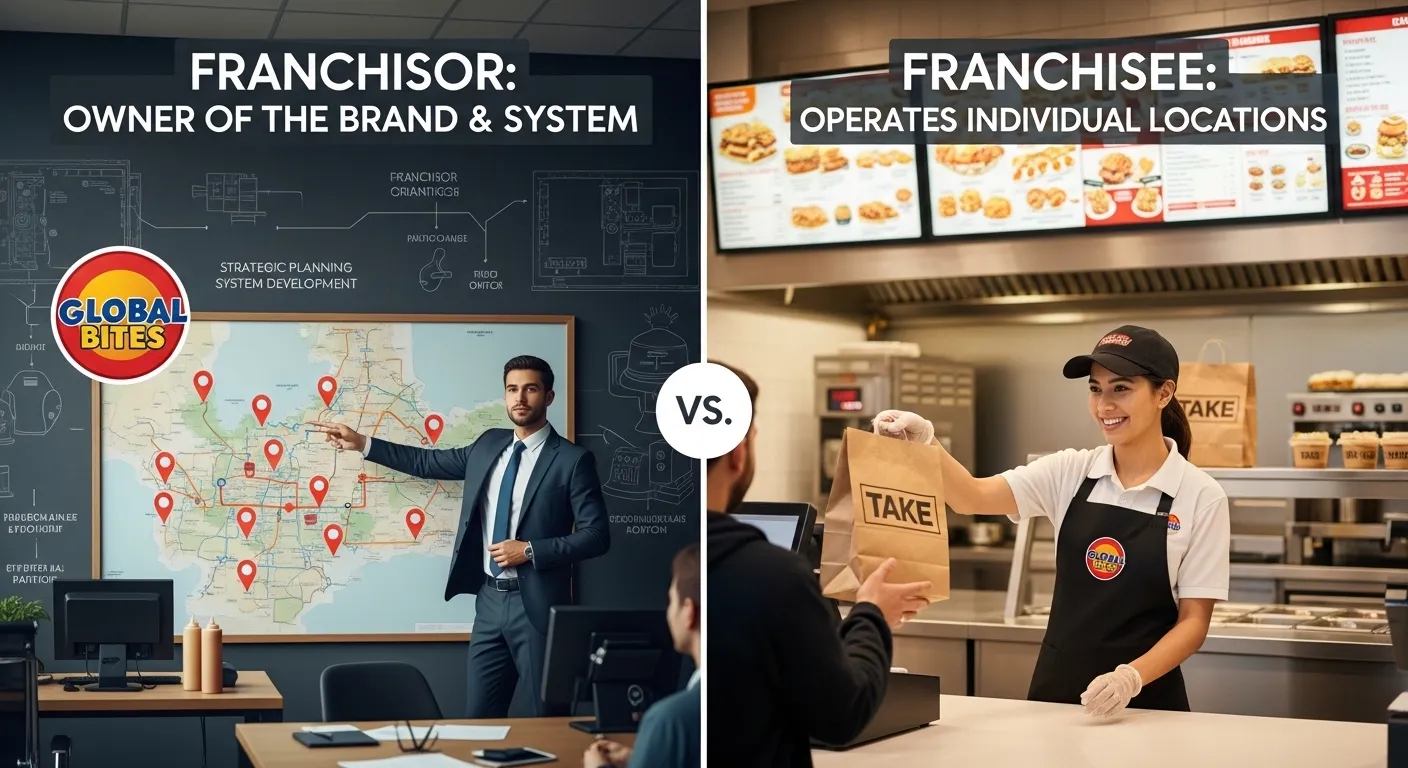
A franchisor is a person or company that owns a brand and allows others to use its business model.
Meaning of Franchisor
Think of the franchisor as the “boss” of the system. They create the brand, products, and rules. Then they allow others to run businesses under their name.
Key Features of Franchisor
- Owns the brand name and trademark
- Provides training and support
- Sets business rules and standards
- Receives fees and royalties
- Expands business through franchise network
Example of Franchisor
- McDonald’s (the company itself)
- KFC brand owner
- Subway headquarters
What is a franchisee?
Simple Definition
A franchisee is a person who buys the right to use a franchisor’s brand and operates a business.
Meaning of Franchisee
Think of the franchisee as the “operator.” They run the daily business using the franchisor’s system.
Key Features of Franchisee
- Pays initial franchise fee
- Follows franchisor rules
- Runs daily operations
- Shares revenue through royalties
- Uses an established brand name
Example of Franchisee
- Local McDonald’s outlet owner
- A person running a Subway store
- Someone operating a KFC branch
Key Differences Between Franchisor and Franchisee
Understanding the difference between franchisor and franchisee becomes easy with these points:
1. Ownership
- Franchisor: Owns the brand
- Franchisee: Owns the outlet
2. Role
- Franchisor: Provides system and support
- Franchisee: Runs the business
3. Investment
- Franchisor: Invests in brand development
- Franchisee: Invests in opening the business
4. Control
- Franchisor: Sets rules
- Franchisee: Follows rules
5. Income Source
- Franchisor: Earns royalties and fees
- Franchisee: Earns profits from sales
6. Risk
- Franchisor: Lower operational risk
- Franchisee: Higher financial risk
7. Decision-Making
- Franchisor: Makes strategic decisions
- Franchisee: Handles daily operations
Similarities Between Franchisor and Franchisee
Even though they are different, they also share some similarities:
- Both work together in a business system
- Both aim to make a profit
- Both depend on brand success
- Both follow a legal agreement
- Both contribute to business growth
These similarities often create confusion in the discussion of the franchisor and franchisee differences.
Pros and Cons
Franchisor Pros
- Expands business quickly
- Earns passive income through royalties
- Less involvement in daily operations
Franchisor Cons
- Less control over individual outlets
- Brand reputation depends on franchisees
- Requires a strong management system
Franchisee Pros
- Uses an established brand
- Lower risk than starting from scratch
- Training and support provided
Franchisee Cons
- Must follow strict rules
- Pays fees and royalties
- Limited creative freedom
When to Choose Franchisor vs Franchisee
Choose Franchisor When:
- You have a strong business idea or brand
- You want to expand your business
- You prefer earning through licensing
Choose Franchisee When:
- You want to start a business with less risk
- You prefer a ready-made system
- You are willing to follow rules
Common Mistakes
Here are common mistakes people make:
- Thinking franchisee owns the brand
The brand always belongs to the franchisor - Ignoring agreement terms
Legal contracts are very important - Expecting full freedom
Franchisees must follow strict rules - Underestimating costs
Franchise fees and setup costs can be high - Choosing the wrong franchise
Not all franchises are profitable
FAQs
1. What is the main difference between a franchisor and a franchisee?
A franchisor owns the brand, while a franchisee runs the business using that brand.
2. Who makes more money: franchisor or franchisee?
It depends. Franchisors earn from multiple outlets, while franchisees earn from one location.
3. Can a franchisee become a franchisor?
Yes, if they create their own brand and expand it.
4. Is franchising a good business model?
Yes, it reduces risk but requires investment and rule-following.
5. Do franchisees own their business?
They own the outlet but not the brand.
6. What fees does a franchisee pay?
Initial fee, royalty fee, and sometimes marketing fees.
7. Is the franchisor responsible for losses?
Usually, no, franchisees handle their own financial risks.
Conclusion
The difference between franchisor and franchisee is simple: the franchisor creates and owns the brand, while the franchisee runs the business using that brand.
If you want to expand a business, becoming a franchisor is a great option. But if you want to start with less risk and a proven system, becoming a franchisee is a smart choice.
Understanding the franchisor vs franchisee comparison helps you make better business decisions and avoid costly mistakes.