
If a groundhog sees its shadow on February 2, the old tradition says winter will last six more weeks. That is the groundhog sees a shadow meaning in one sentence. If the groundhog does not see a shadow, spring is said to be on its way early.
Every year, millions of people watch the news on this morning and wonder what the furry weather forecaster decided. Maybe you are planning a trip, a garden, or just a cozy day at home. Maybe your kids asked a question you could not answer. Either way, you are in the right place. In this article, you will learn what the shadow means, where the tradition began, how often the groundhog is right, and why people still love this quirky holiday.
Groundhog Sees Shadow Meaning Explained in Plain English
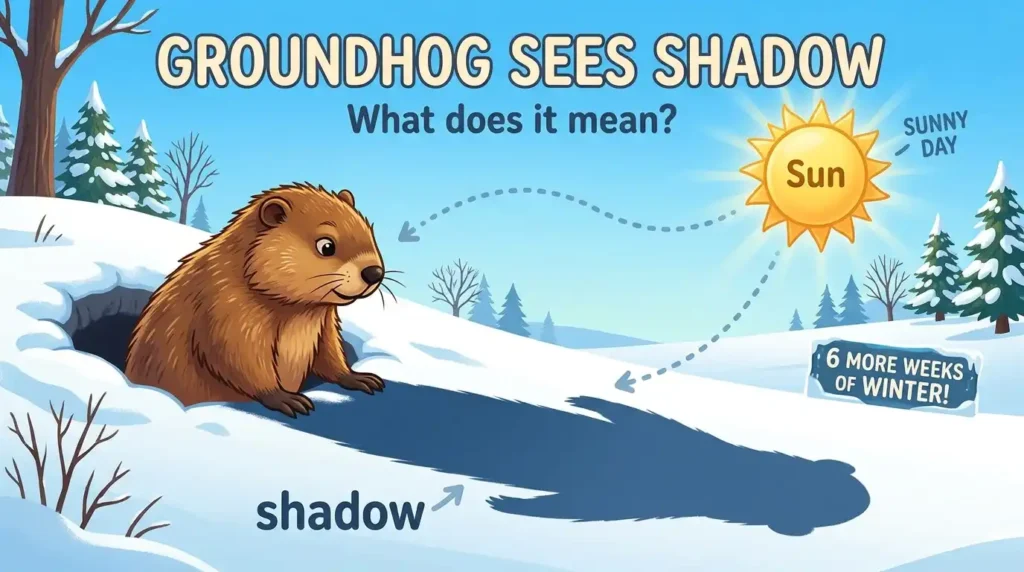
The idea is simple. On Groundhog Day, a groundhog comes out of its burrow. If the day is sunny, the groundhog sees its own shadow. The tradition says the groundhog gets scared and runs back inside. That means winter will go on for six more weeks.
Think of it like a game with two outcomes. A shadow means more cold, snow, and heavy coats. No shadow means the cold should fade soon, and spring should show up early.
The shadow itself is just a clue about the weather. A shadow only appears when the sun is shining, so a sunny morning means a shadow. A cloudy morning means no shadow. The old belief says a clear, bright day in early February is a sign that cold air is still hanging around. Clouds, on the other hand, were thought to mean milder weather ahead.
It is a fun idea, and it has been around for a very long time. But as you will see later, the groundhog is not a trusted weather expert.
What Happens When the Groundhog Does Not See a Shadow
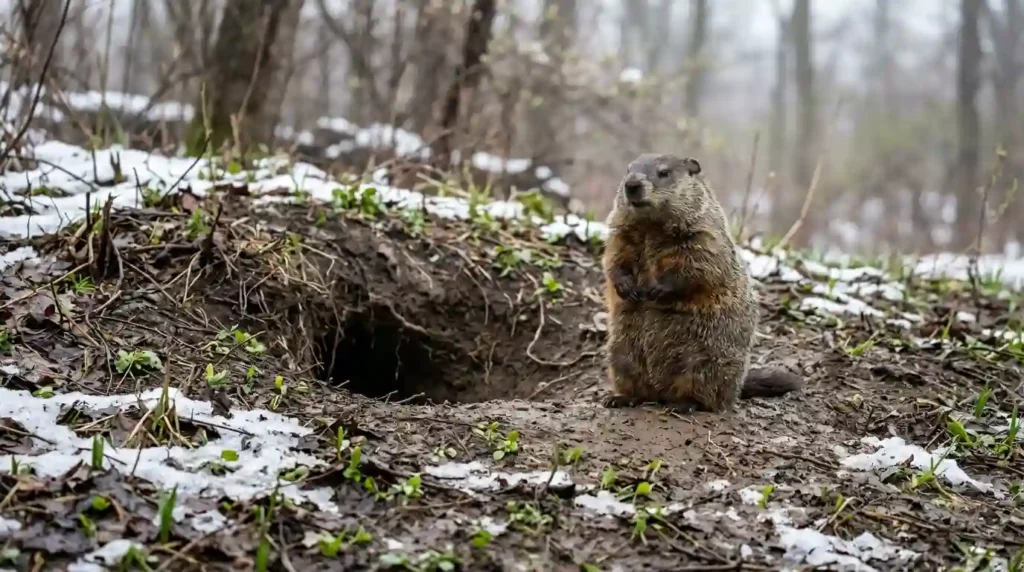
Many people forget the second half of the tradition. When the groundhog comes out and sees no shadow, the story says spring is coming early. In that case, the groundhog is said to stay outside, feeling safe and happy.
This is the outcome most people hope for. Nobody wants six more weeks of ice on the car and cold mornings. So when the news says “no shadow,” you may hear cheers.
The funny part is that no shadow is rare for the most famous groundhog. Punxsutawney Phil has seen his shadow far more often than not, according to the club that cares for him. That means “six more weeks of winter” is the usual headline.
Here is a quick side-by-side look at both outcomes.
| What Happens | Weather That Morning | Old Tradition Says | Common Headline |
| Groundhog sees its shadow | Sunny or clear | Six more weeks of winter | “Winter will last longer” |
| Groundhog sees no shadow | Cloudy or overcast | Early spring | “Spring is coming soon” |
Where the Tradition Came From
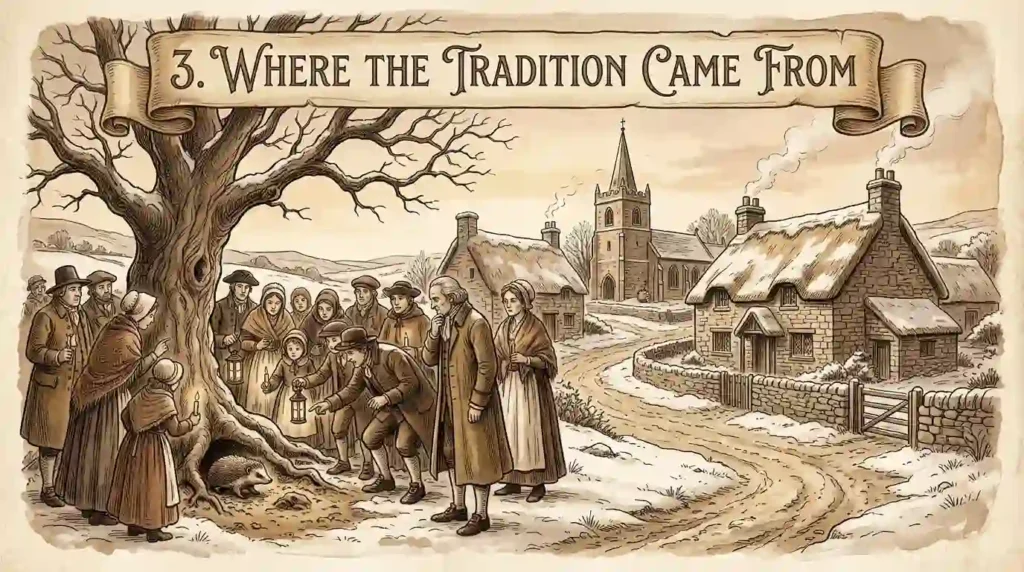
The roots of Groundhog Day go back hundreds of years, long before anyone in America met a groundhog. The story starts with a holiday called Candlemas, which falls on February 2. It is a Christian holiday that comes about forty days after Christmas.
In parts of Europe, people noticed that the weather on Candlemas seemed to say something about the rest of winter. A sunny Candlemas was often seen as a bad sign. It meant a long, cold stretch might still be coming. A cloudy one was seen as a good sign. Old sayings and short rhymes spread this idea from village to village.
In Germany, the tradition added an animal. Some people watched for a badger or a hedgehog to see if it cast a shadow. When German settlers moved to Pennsylvania, they brought this custom with them. There were no hedgehogs there, but there were plenty of groundhogs. The groundhog became the new weather prophet.
The first official Groundhog Day in Punxsutawney, Pennsylvania, took place on February 2, 1887. A local newspaper editor named Clymer Freas helped make the town’s groundhog famous. Since then, the event has grown from a small local party into a national tradition.
How Punxsutawney Phil Makes His Prediction
The most famous Groundhog Day happens in a small town called Punxsutawney, Pennsylvania. Early on February 2, a crowd gathers at a spot called Gobbler’s Knob. People wear coats, hats, and warm smiles, even when it is freezing.
A group called the Inner Circle runs the show. Its members wear top hats and formal coats. They lead the event, and they are the only ones who get to “talk” with Phil.
Here is how the story goes. Phil is brought out of his stump home at sunrise. According to the legend, Phil speaks to the club president in a special language called “Groundhogese.” The president then reads a prediction out loud from a scroll. Of course, this part is all in good fun. It is part of the show, and the crowd loves it.
The club also tells a charming tale about Phil’s age. They say that one sip of a special “groundhog punch” each summer gives him seven more years of life. That is how they explain why Phil has been around since 1886. In real life, groundhogs live only a handful of years, so this is a playful legend and not a fact. Many different groundhogs have likely played the part over time.
The event is also free and popular. Thousands of visitors travel to the town, and millions more watch online or on TV.
Does the Shadow Really Predict the Weather?
Now for the big question. Is the groundhog right? The short answer is no, not very often.
Several studies have looked at how well groundhogs predict the weather. The numbers vary depending on how you count and which years you check. But many of them land at roughly 40 percent or lower for Punxsutawney Phil. That is about the same as flipping a coin, or sometimes a bit worse.
There are a few reasons the shadow does not work as a forecast.
First, the weather is complicated. It depends on wind, ocean heat, air pressure, and many other things. One animal looking at the ground in one small town cannot tell us what those things will do across a whole country.
Second, the weather on one morning in one place does not control the weather far away. Winter in Florida is very different from winter in Minnesota. A single groundhog in Pennsylvania cannot speak for both.
Third, six weeks after February 2 lands in the middle of March. Spring officially starts around March 20 in the Northern Hemisphere. So “six more weeks of winter” is not far from what we expect anyway. Winter is almost over by then, no matter what the groundhog says. That makes the prediction sound more powerful than it is.
Real forecasters use satellites, computers, and weather data. For long-range planning, they look at official outlooks from groups like the National Weather Service and NOAA.
Here is a simple comparison of the groundhog and a modern forecast.
| Feature | Groundhog Prediction | Modern Weather Forecast |
| Tools used | A shadow and a tradition | Satellites, radar, computer models |
| Area covered | One spot, then claimed for everyone | Local and regional detail |
| Accuracy | Roughly 40 percent or lower in many studies | Much higher for short-term forecasts |
| Main purpose | Fun and community | Safety and planning |
| Updates | Once a year | Many times a day |
Why Groundhogs Come Out in February
If groundhogs are asleep all winter, why do they show up in early February at all? There is a real scientific reason, and it has nothing to do with the weather.
Groundhogs, also called woodchucks, hibernate during the cold months. Their heartbeat slows, and their body temperature drops. They live off the fat they stored in the fall.
But in late winter, things start to change. Mating season gets close. Male groundhogs may leave their burrows for a short time. They check out the area and look for female groundhogs. After that, many go back to sleep for a while.
So when a groundhog pops up in early February, it is usually not checking for shadows. It is following natural instincts. This is a nice fact to share with kids. The real animal has its own reasons for stepping outside.
Warm weather can also wake groundhogs up. A mild spell may bring one out early, and a cold snap may send it back down. That is another reason why groundhog behavior is a poor guide for a long forecast.
Other Famous Weather Groundhogs
Phil gets the most attention, but he is not the only one. Many towns across North America have their own furry forecasters. Some of the best known are listed below.
| Groundhog | Location | Quick Note |
| Punxsutawney Phil | Pennsylvania, USA | The most famous groundhog and the star of the national event |
| Staten Island Chuck | New York, USA | A well-known local groundhog in New York City |
| Wiarton Willie | Ontario, Canada | A famous groundhog in Canada |
| General Beauregard Lee | Georgia, USA | A Southern groundhog with his own big celebration |
These animals do not always agree with each other. In some years, one says winter will last, while another says spring is near. This is one more sign that the tradition is mostly about fun.
Common Mistakes and Myths About the Shadow
A lot of people mix up parts of this story. Here are some of the most common mistakes, and the right way to think about each one.
One mistake is believing that a shadow means the groundhog is afraid of the shadow itself. That is the popular story, but it is just part of the legend. The tradition grew from old weather beliefs about sunny and cloudy days.
Another mistake is thinking that “six more weeks of winter” means the cold lasts exactly forty-two days. It is a rough idea. Winter weather can be warm one week and cold the next, and the six-week claim is not a promise.
A third mix-up is believing the groundhog predicts weather for the whole world. It does not. Phil is supposed to speak for the United States, but the weather is very local. Your own area may do something completely different.
A fourth myth is that the groundhog is always right. As we saw, his track record is weak. It is safer to treat the prediction as a fun tradition.
Finally, some people think the event is only an American thing. The tradition has European roots, and Canada has its own famous groundhogs too.
Groundhog Day in Movies and Pop Culture
Groundhog Day became even more famous after the 1993 comedy movie called Groundhog Day. In the film, a weatherman, played by Bill Murray, is stuck living the same day over and over in a small town. The movie was filmed in Woodstock, Illinois, although the story is set in Punxsutawney.
Because of this movie, the phrase “it feels like Groundhog Day” now means that something keeps repeating again and again. You might say it when you do the same boring chores every day. Many people know the phrase even if they have never seen the film.
The holiday also shows up in cartoons, TV shows, school lessons, and news broadcasts. Every February, reporters share the groundhog’s prediction. It has become a small piece of American culture that brings people together, even when the weather is gloomy.
Fun Ways to Celebrate and Learn
You do not need to travel to Pennsylvania to enjoy Groundhog Day. There are many easy ways to join in at home, at school, or with friends.
You can start by watching the live event online or on TV. It is short, silly, and good for the whole family. Kids often enjoy trying to guess Phil’s answer before it is announced.
You can also make your own shadow test. Go outside on a sunny morning and look at your own shadow. Then talk about why shadows appear only when the sun is out. It is a nice little science lesson.
Another fun idea is to keep a weather diary. Write down the weather each day from February 2 until the middle of March. At the end, look back and see if the groundhog was right for your area. Many families are surprised by what they find.
Teachers can use the day to talk about hibernation, animal habits, and old traditions. Parents can read a groundhog book to young children. You can even bake groundhog-shaped cookies or have a themed breakfast. The point is to enjoy the day and learn something while you do.
FAQs
What does it mean when a groundhog sees its shadow?
It means the tradition predicts six more weeks of winter. The groundhog is said to run back to its burrow after seeing its shadow on a sunny morning.
What does it mean if the groundhog does not see its shadow?
It means spring is said to be coming early. This usually happens on a cloudy day when no shadow shows up.
Is the groundhog’s prediction really accurate?
Not very. Many studies put the accuracy at roughly 40 percent or lower, which is close to guessing. For real forecasts, it is better to check the National Weather Service or a local weather station.
Why is Groundhog Day on February 2?
The date comes from Candlemas, an old holiday that falls on February 2. People in Europe believed that the weather on that day gave hints about the rest of winter.
Who is Punxsutawney Phil?
Phil is the most famous weather groundhog in the United States. He lives in Punxsutawney, Pennsylvania, and makes his yearly prediction at Gobbler’s Knob.
Is Groundhog Day an official holiday?
No. It is a popular tradition, but schools and workplaces stay open on February 2. People simply enjoy it as a fun event.
Conclusion
The groundhog sees shadow meaning is easy to remember. If the groundhog sees its shadow, the tradition says winter will last six more weeks. If there is no shadow, spring should come early. It is a charming idea with deep roots in old European weather sayings.
Still, the groundhog is not a real weather expert. Its track record is weak, and weather is far too complex for one animal to predict. Winter is also close to its end by mid-March anyway, so the forecast sounds bigger than it is.
The best way to enjoy Groundhog Day is to treat it as a warm, silly tradition. Watch the event, share the story with your family, and laugh at the top hats. When you need a real forecast, check a trusted weather source and plan your week from there.