The icing on the cake’s meaning is simple. It describes a small extra that makes something good even better. The good thing is already there, and the extra adds a sweet finish.
Maybe you heard someone say, “Getting the job was great. The free lunch was the icing on the cake.” You nodded along, but you wondered what the words really meant. You are not alone. This phrase sounds strange if you read it word for word, so many people look it up.
In this guide, you will learn what the idiom means, how to use it, and where it may have come from. You will also see real examples, common mistakes, and similar phrases. By the end, you can use it with confidence when you talk or write.
Icing on the Cake Meaning in Plain Words
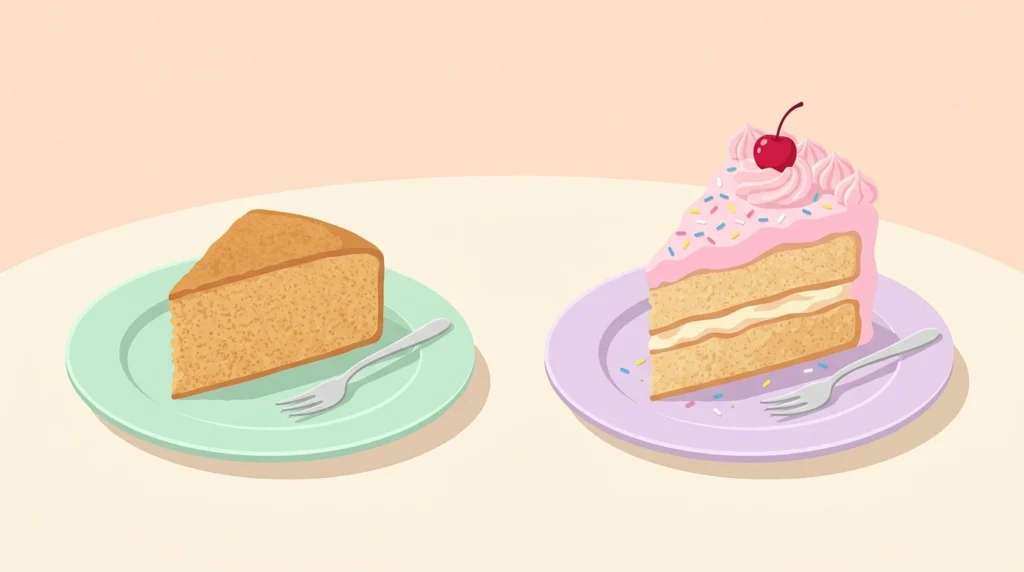
“Icing on the cake” means a nice extra that comes on top of something that is already good. It is not the main event. It is the bonus that makes a happy moment even happier.
Think about it this way. A cake can taste good without icing, so the icing is not needed. But it makes the cake sweeter, prettier, and more fun to eat. In the same way, the “icing” in life is a pleasant surprise that you did not have to have.
Here is a quick example. Say your team wins a big game. That alone is wonderful. Then you find out the win also puts you in first place. That last bit of news is the icing on the cake.
The phrase is an idiom. An idiom is a group of words whose meaning is different from the words themselves. Nobody is talking about real dessert here. People use the picture of a cake to explain a feeling, and it works well.
You can say the phrase when you are happy, grateful, or just pleased about a lucky extra. It almost always has a positive feel. You will hear it at work, at school, in the news, and at home.
Why the Cake Picture Makes Sense
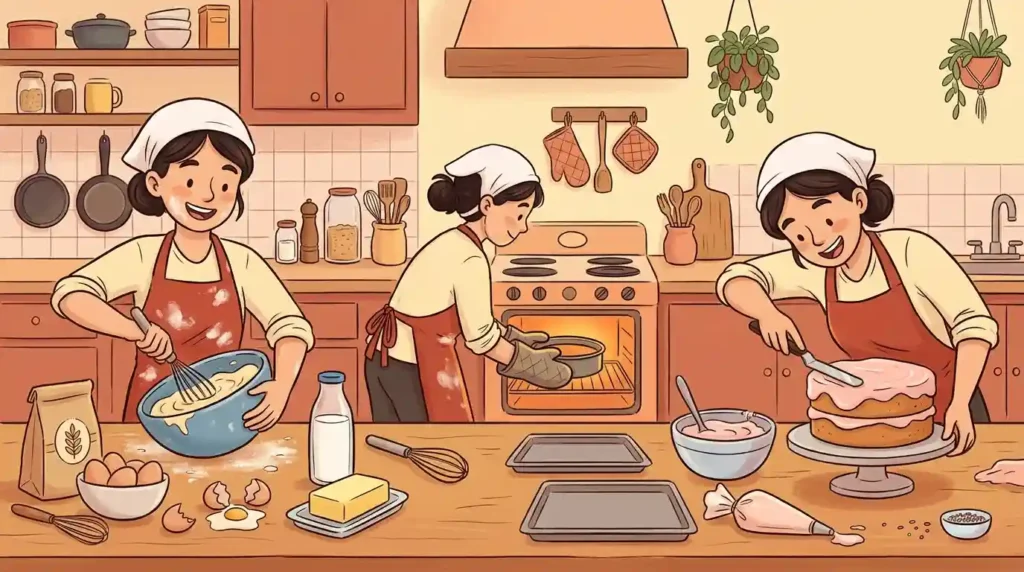
Idioms stick around because the picture in them feels true. The icing on a cake is the last thing added. The baker mixes the batter, bakes the cake, and lets it cool. Only then does the icing go on.
That order matters. The cake comes first, and the icing comes last. In the idiom, the “cake” is the good thing that happens first. The “icing” is the happy extra that arrives after.
There is one more reason the picture works. Icing is sweet and easy to see. When you look at a cake, the icing is the part your eyes notice first. It makes the whole thing look special. So when something small adds a lot of joy, the icing is a perfect match.
Notice, too, that you can enjoy a cake without icing. Plain cake is still cake. That is why the idiom is about bonus joy, not about something you must have. If the “icing” is missing, the main thing is still good.
This idea helps you use the phrase correctly. Before you say it, ask yourself two questions. First, was something already good? Second, did a little extra make it even better? If both answers are yes, the phrase fits.
Real Life Examples of Icing on the Cake

Examples make an idiom easier to learn. Here are some everyday situations where people say “icing on the cake.” Each one has a good main event and a small bonus.
| Situation | The Good Part | The Icing on the Cake |
| New job | You got the job you wanted | The office is close to your home |
| Family trip | The beach day was fun | You saw dolphins at sunset |
| School test | You passed the exam | The teacher gave you extra credit |
| Restaurant | The dinner was tasty | The dessert was free |
| Sports | Your team won the match | Your favorite player scored the final goal |
| Birthday | Friends came to your party | An old friend flew in as a surprise |
Now let’s look at how these sound in full sentences.
“I finished my project early, and my boss gave me a bonus. That was the icing on the cake.”
“We found a great house at a fair price. The big backyard was the icing on the cake.”
“My sister got into her dream school. Getting a scholarship was the icing on the cake.”
In each case, the main news was already good. The extra news made it feel even better. That is the whole idea.
You can also use the phrase when you talk about yourself in a modest way. For example, “I enjoy my work. Getting paid for it is the icing on the cake.” This tells the listener that the work itself is the real reward, and the money is a bonus.
How to Use Icing on the Cake in a Sentence
The phrase is easy to use because it is flexible. It works in several parts of a sentence, and you do not need to change its words much.
The most common pattern is “[something] was the icing on the cake.” For example, “The sunny weather was the icing on the cake.” You can swap “was” for “is” or “will be,” depending on the time. “The bonus will be the icing on the cake” works well for the future.
Another pattern uses the words “to top it off” or “and then, the icing on the cake.” For example, “We got seats at the front, and the icing on the cake was meeting the band.” Here, the phrase starts the final surprise.
You can also use it as a short comment. If a friend tells you good news, you might say, “And the best part? That’s the icing on the cake!” Spoken English likes short, lively lines like this.
Grammar tips are few. The phrase has a fixed order, so keep the words together. Say “icing on the cake,” not “cake on the icing.” Keep “the” before both nouns. Also, “icing” is a noun that does not have a plural here, so use “icing,” not “icings.”
You can add words around it for color. People say “the real icing on the cake,” “just the icing on the cake,” or “that was icing on the cake.” The word “the” is sometimes dropped in casual talk, but it is safest to keep it.
One more point: the phrase is a noun phrase. It names the bonus. So it usually follows “is,” “was,” or “became.” It rarely works as a verb. You would not say, “She icing on the cake-d the party.”
Where Did the Phrase Come From?
It is fair to say nobody knows for sure who first used “icing on the cake” as an idiom. Many language writers think it grew from the real thing, which is a baked cake topped with sweet icing. That part seems clear. The exact date and the first writer are less clear, so it is wise not to trust any story that sounds too exact.
Here is what we can say safely. Sugar icing for cakes became more common in Europe as sugar became easier to buy, around the 1600s. Before that, sugar was costly, so fancy sweet toppings were mostly for rich homes. As icing spread, it became a normal sign of a special cake, such as one for a wedding or a birthday.
Over time, people began to use cake as a way to talk about life. A cake stands for a treat. Icing stands for a treat on top of a treat. Many dictionaries list the phrase as a modern idiom, and it seems to have become popular in the 1900s. But since the first use is unclear, you will see different claims online. If a site gives a very exact year, check it against a trusted dictionary.
The phrase has also lived alongside other food sayings. English has many, such as “piece of cake,” “the cherry on top,” and “have your cake and eat it too.” Cakes seem to be a favorite way to talk about joy, ease, and reward.
Icing on the Cake vs. Cherry on Top and Other Similar Phrases
English has more than one way to say “a nice extra.” Some phrases are close cousins of “icing on the cake.” Others are a little different. The table below helps you tell them apart.
| Phrase | What It Means | Example |
| Cherry on top | A final small treat that finishes something | “We won, and the cherry on top was a trophy.” |
| Bonus | An extra benefit | “The free gift was a nice bonus.” |
| Finishing touch | The last detail that completes something | “The flowers were the finishing touch.” |
| Sweetener | Something added to make a deal more attractive | “They offered a car as a sweetener.” |
| Gravy | Extra gain, often money (informal) | “After I paid my bills, the rest was gravy.” |
| Cream on top | An extra that makes a good thing richer | “The view was cream on top.” |
Which one should you pick? “Cherry on top” is the closest. Most people use it the same way as “icing on the cake.” Some feel that the cherry is the very last touch, while the icing is a little more of the whole experience. But in daily conversation, they are almost the same.
“Bonus” is the plainest choice. It works anywhere, even in formal writing. “Finishing touch” is better when the extra completes something you made, like a room or a meal. “Sweetener” is common in business, when someone adds a perk to close a deal.
Use “icing on the cake” when you want a warm, friendly tone. It sounds natural in talks, emails to friends, blog posts, and speeches.
British vs American English
Good news: both British and American speakers use “icing on the cake.” The meaning is the same on both sides of the ocean, so you will not get confused.
There is a small difference in the food words. In the United States, many people say “frosting” for the sweet topping on a cake, and some also say “icing.” In the United Kingdom, “icing” is the usual word. But the idiom itself stays the same in both places. Americans do not say “frosting on the cake” very often. They keep the old form.
The other small difference is what people say in place of it. In the US, “cherry on top” is very common, and people may also say “cherry on the sundae.” In the UK, you will often hear “the cherry on the cake.” Both mean about the same as the icing phrase.
If you write for a mixed crowd, “icing on the cake” is a safe pick. It is understood in the United States, the United Kingdom, Canada, Australia, and many other places where English is spoken. That makes it a handy idiom for learners, too.
Common Mistakes to Avoid
Even simple idioms can go wrong. Here are the mistakes people make most often with this one.
The first mistake is using it for the main event. The phrase is about a bonus, not the big news. If you say, “Winning the lottery was the icing on the cake,” it sounds odd. Winning a huge prize is the cake. A small perk afterward would be the icing.
The second mistake is changing the words. Some people say “icing on top of the cake” or “frosting on the cake.” These are understood, but they sound a little off to many listeners. It is best to say the full, standard phrase.
The third mistake is using it for bad news. Because the phrase is sweet, it fits happy situations. If you say, “My car broke down, and the icing on the cake was a flat tire,” you are making a joke or being sarcastic. People do this on purpose sometimes, and it can be funny. But if you do not mean it as a joke, your listener may be confused. For bad pile-ups, English has other phrases, like “to make matters worse.”
The fourth mistake is mixing it up with “gilding the lily.” That phrase means adding too much to something that is already fine, and it is not a compliment. Icing on the cake is a welcome bonus. Gilding the lily is going too far. The two ideas are close but not the same.
The fifth mistake is using the phrase too often. It is a lovely idiom, but if every good thing in your story is “icing on the cake,” the reader will get tired of it. Save it for one nice moment.
Tips for Using the Idiom Well
A few simple habits can help you use “icing on the cake” like a skilled writer.
First, set up the good news before you use the phrase. Tell the reader what the main good thing was. Then add the extra. For example: “The trip was already perfect. The free upgrade was the icing on the cake.” The reader sees the order, and the phrase lands well.
Second, keep the tone light. This is a friendly idiom, so it fits stories, blog posts, speeches, and talks with friends. In very formal writing, such as legal papers or science reports, a plainer word like “additional benefit” may be better.
Third, check that the extra is small or secondary. If the extra is bigger than the main thing, another phrase may fit better.
Fourth, match the idiom to your reader. If you write for young children or new English learners, add a short note: “That means a nice extra.” Many learners know every word in the phrase but still miss its meaning, because idioms do not follow normal rules.
Fifth, try saying it out loud. The phrase has a gentle rhythm. If it sounds natural when you say it, it will probably read well, too.
Finally, mix it up. You do not have to use the same phrase every time. Switch between “icing on the cake,” “cherry on top,” and “bonus” so your writing stays fresh.
FAQs
What does icing on the cake mean?
It means a small extra that makes something good even better. The main thing is already good, and the extra is a pleasant bonus.
Is “icing on the cake” a metaphor or an idiom?
It is both. It is an idiom because the meaning is not the same as the words. It is also a metaphor because it uses a cake and its icing to stand for a good event and a bonus.
Can I use icing on the cake for bad things?
Usually, no. The phrase is for good things. You can use it as a joke for bad news, but then it is sarcasm. Make sure the tone is clear so your reader does not get confused.
What is the difference between icing on the cake and cherry on top?
They are very close, and most people use them in the same way. Both mean a nice extra at the end. “Cherry on top” can feel like the very last touch, while “icing on the cake” feels like an added bonus to the whole experience.
Is the phrase used in both British and American English?
Yes. People in both places know it and use it the same way. The only small difference is that Americans may say “frosting” for the topping in real life, but they still say “icing” in the idiom.
Who first said “icing on the cake”?
No one knows for sure. The idiom likely grew from the real habit of putting icing on cakes, and it seems to have become popular in the 1900s. Since the first use is unclear, be careful with websites that give a very exact date or name.
Conclusion
The icing on the cake’s meaning comes down to one clear idea: a small extra that makes a good thing even better. The cake is the main good news. The icing is the sweet bonus that arrives on top.
You have learned how to use the phrase in a sentence, how it differs from “cherry on top” and “bonus,” and which mistakes to avoid. You also saw that both British and American speakers use it. And you know that the exact origin is not fully clear, so it is best to stay honest about that.
When you use this idiom, remember the simple test. Was something already good? Did a little extra make it better? If yes, you have found your icing on the cake. Use it once in a while, keep your tone warm, and your writing will sound natural and friendly.