You flip over your toothpaste tube and spot a tiny colored square at the bottom. Does it mean something? The toothpaste color code meaning most people share online says green is natural and black is pure chemicals. That claim is false. The square is a mark that helps a machine cut and seal the tube in the factory. It has nothing to do with what is inside. Still, millions of people search this question every year, and the myth keeps spreading. In this guide, you will learn what the color squares really are, how they work, and why the story took off. You will also learn simple ways to check what is really in your toothpaste, so you can pick a safe one with confidence.
Quick Answer: Is There a Toothpaste Color Code?
No. There is no secret toothpaste color code that tells you about the ingredients. A sensor in the factory reads it so the machine can seal and cut each tube in the right place.
The color of that mark does not show if the toothpaste is natural, medicinal, or chemical. Toothpaste brands, packaging companies, and health groups have all said the same thing. To know what is in your toothpaste, read the ingredient list on the box or tube. That is the only reliable “code” you need.
The Popular Myth: What People Say Each Color Means
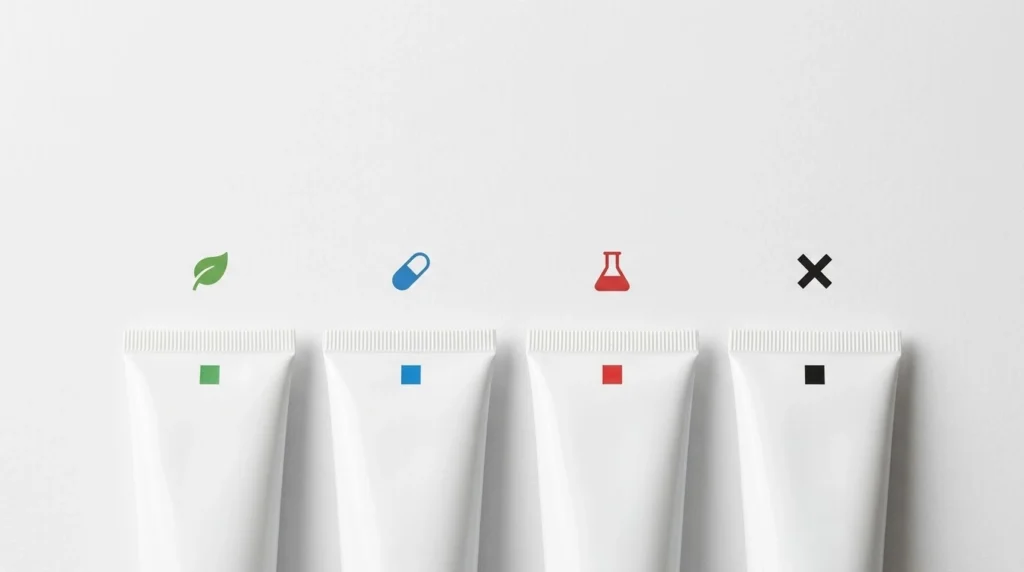
You have probably seen the chart. It goes around on social media, in text messages, and in old email chains. It claims that the color of the square tells you how “natural” the toothpaste is. Here is how the story usually goes.
| Color of Square | What the Myth Claims | Is It True? |
| Green | Made of only natural ingredients | No |
| Blue | Natural ingredients plus medicine | No |
| Red | Natural ingredients plus chemicals | No |
| Black | Made of only chemicals | No |
The chart looks neat and simple, and that is part of why people believe it. It gives you four colors and four easy answers. But simple does not always mean true. No rule, law, or industry standard says toothpaste makers must use colors this way. No official group has ever published such a system.
Some versions of the myth add other colors or change the meanings a little. That alone is a clue. If a real code existed, every version of it would match. Instead, the chart changes from one post to the next, which is what you often see with internet rumors.
What Those Colored Squares Really Are
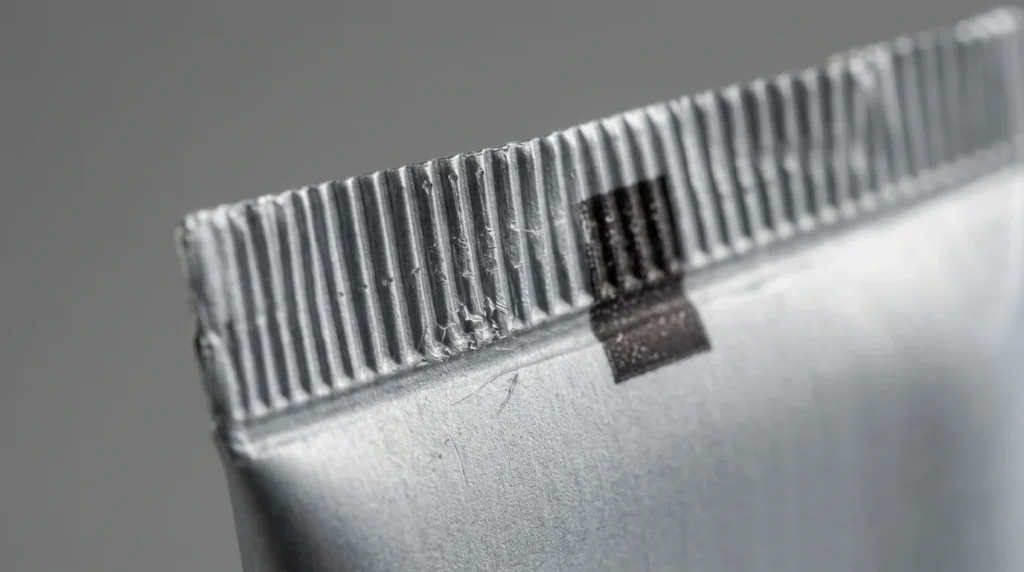
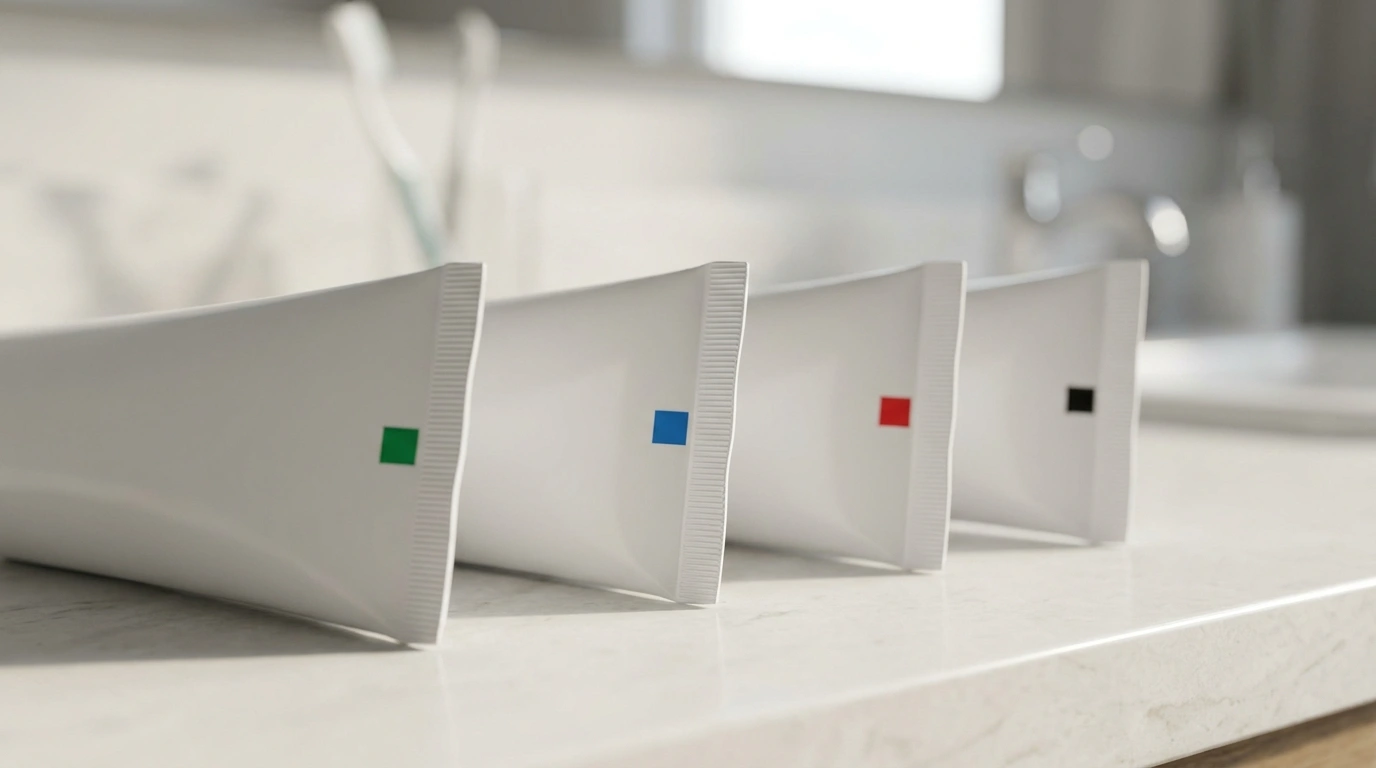
Look closely at the end of any squeeze tube, and you will see a flat, sealed edge. Many tubes have a small rectangle or square printed on that edge. It may be green, blue, red, black, or something else. This is the eye mark.
An eye mark is part of the tube’s printed design. It is put there on purpose, but not to tell you anything. It is there for the machines. Think of it like the little black bars on a barcode. You can see them, but they are made for a scanner, not for your eyes.
You can find these marks on more than toothpaste. Tubes of face cream, glue, ointment, hand lotion, sunscreen, and even some food pastes have them too. If the colored square meant “natural” or “chemical,” then a tube of super glue with a green square would be “all natural.” That makes no sense, and it shows why the myth falls apart.
The mark also does not have to be a square. On some tubes, it is a thin line or a small rectangle. On others, you may not spot one at all, because it is hidden in the design or placed where the tube is folded.
How the Sensor Mark Works in the Factory
To understand why the mark exists, it helps to know how a toothpaste tube is made and filled. Most tubes start as a long, flat sheet or a hollow cylinder of material. Many are made from layers of plastic, and some also have a thin layer of aluminum. The tube is printed with the brand name, pictures, and colors long before any toothpaste goes in.
Here is where the eye mark comes in. After the tube is printed, it travels down a fast filling line. The machine fills the tube with toothpaste from the open bottom end. Then it must squeeze the end flat, seal it, and trim it. If the seal lands in the wrong spot, the print would look crooked or the pattern would be cut off.
A small light sensor reads the eye mark to keep everything lined up. The sensor shines a beam of light and checks the contrast between the mark and the color around it. When it sees the mark, it knows exactly where to seal and cut. This all happens in a split second, thousands of times a day.
For this to work, the mark must stand out from its background. That is why you often see a dark mark on a light area. The exact color is chosen based on the tube’s design, not on what is inside. A designer picks whatever color gives the sensor the best contrast.
Why the Toothpaste Color Code Meaning Myth Is False
There are several strong reasons to say the color code is not real. Taken together, they make the case very clear.
First, no rules exist. In the United States, toothpaste labeling is guided by the Food and Drug Administration, and a toothpaste with fluoride is treated as an over-the-counter drug. The FDA asks for clear ingredient and drug facts on the package. It does not ask for, or even mention, a color square system. If such a code were real, it would be part of the label rules. It is not.
Second, the same color shows up on very different products. A “natural” brand and a “regular” brand may both use a blue mark. A tube of medicated cream might use green. When the same color appears on products that have nothing in common, it cannot be a code.
Third, packaging makers have explained the real purpose many times. Tube makers and machine makers talk about eye marks in their own manuals and websites, and they describe them as sensor guides. Major toothpaste companies have also spoken up to say the colors do not show ingredients.
Fourth, what counts as “natural” or “chemical” is not clear to begin with. Water, salt, and baking soda are all chemicals in a scientific sense. Even plant-based ingredients are made of chemicals. So a code that splits toothpaste into “natural” and “chemical” does not match how science works.
Why the Myth Spread So Fast
If the code is false, why do so many people believe it? There are a few good reasons.
People care about what they put in their mouths. Toothpaste is used every day, and many folks want to avoid harsh ingredients. When someone shares a “secret” way to spot the good stuff, it feels helpful and urgent. It also feels like inside information, which makes people want to pass it along.
The myth is also easy to remember. Four colors and four meanings can be learned in seconds. A long ingredient list is much harder to read and understand. So a quick trick wins over careful reading, even when the trick is wrong.
Social media makes this worse. A single post with a colorful chart can reach millions of people in a day. Most people share it without checking, because they think they are helping their friends and family. Over time, the myth starts to look like common knowledge, simply because so many people have seen it.
Finally, the colored square really is there. Because people can see it with their own eyes, the story feels more believable. That mix of truth and rumor is often the most powerful kind.
Eye Marks vs. Real Safety Information
It helps to see the two side by side. The eye mark and the real label do very different jobs.
| Feature | Eye Mark (Colored Square) | Real Label Information |
| Purpose | Guides the factory machine | Informs the buyer |
| Who it is for | Sensors and machines | You and your dentist |
| Tell you ingredients? | No | Yes |
| Tell you if it has fluoride? | No | Yes, in the Drug Facts |
| Tell you how to use it? | No | Yes, in the directions |
| Where to find it | Sealed end of the tube | Back of the tube and the box |
This table shows the key point. The label is made for you, and the eye mark is made for a machine. When you want facts about your toothpaste, always go to the label.
How to Read a Toothpaste Label the Right Way
Reading a label may sound boring, but it only takes a minute. Once you know what to look for, it gets easy.
Start with the Drug Facts box if your toothpaste has fluoride. The active ingredient is listed first. Most fluoride toothpastes in the United States list sodium fluoride or sodium monofluorophosphate. This is the part that helps fight cavities. The box also shows the purpose, the warnings, and the directions.
Next, look at the inactive ingredients. These are the helpers that give toothpaste its feel, taste, and look. You may see water, a mild cleaning agent called an abrasive, a foaming agent, flavoring, and a sweetener. Ingredients are listed from the largest amount to the smallest, so the first few make up most of the paste.
Then look for the American Dental Association Seal of Acceptance. This seal means the product has been reviewed by the ADA and meets its standards for safety and effectiveness. Not every good toothpaste has the seal, but it is a trusted sign that you can spot quickly.
Finally, read the directions and warnings. Adults and older children should brush twice a day for two minutes. Young kids need a much smaller amount, and they should be watched so they do not swallow the paste. If you have questions about fluoride for your child, your dentist can give clear, personal advice.
Do Colors on the Tube or Paste Mean Anything?
The eye mark is not the only color on a toothpaste product. So do other colors mean something? Sometimes they do, but not in the way the myth says.
The main colors on the tube and box are marketing choices. Many mint toothpastes use blue and green because those colors feel cool and fresh. Whitening toothpastes often use white, silver, or light blue. Brands for sensitive teeth might use soft, calm colors. These choices help you find the product on a busy store shelf, but they are not rules. One brand’s red box may mean cavity protection, and another brand’s red box may mean cinnamon flavor.
The color of the paste itself comes from the recipe. Many pastes are white. Gels are often clear or tinted blue or green. Some toothpastes have stripes, which are made by keeping two mixtures apart inside the tube until they come out together. The colors in these pastes come from dyes or natural coloring that are allowed for use, and they are meant to look nice and make brushing more fun.
None of these colors work as a safety code. A bright blue gel is not “more chemical” than a white paste. The only way to compare them is to read the ingredient list.
Common Mistakes People Make
A few mistakes come up again and again when people talk about this topic. Knowing them can save you time and worry.
The biggest mistake is trusting the color square to judge a product. Some people throw away toothpaste because it has a black mark, or they pay more for one with a green mark. That is wasted money and effort, since the mark says nothing about quality.
Another mistake is believing that “natural” always means “better.” That does not make them bad, but it is worth knowing. A product can look healthy and still miss what your teeth need most.
A third mistake is sharing the myth without checking it. It feels harmless, but it spreads wrong information to friends and family. A better habit is to pause and look for a reliable source before you pass something along.
The last mistake is skipping the label. Many people read the front of the tube, which is full of marketing words like “pure,” “fresh,” or “advanced.” The real facts are on the back. A quick look there tells you much more than any colored square.
Real-Life Examples
Let’s walk through a few everyday cases to make this clear.
Imagine you pick up two tubes in a store. One has a green square on the end, and the other has a black one. Under the myth, the green one is “natural,” and the black one is “chemical.” But when you read the backs, you see both list sodium fluoride, water, and a mild abrasive. They are nearly the same inside. The squares only differ because each tube has a different design.
Now think about a parent shopping for a four-year-old. A friend says to buy only tubes with a green mark. But the parent reads the label and sees the green-marked tube has no fluoride and no kid directions.
Here is one more case. A man finds a tube of hand cream and a tube of toothpaste from different companies. Both have the same blue square. If blue meant “natural plus medicine,” then his hand cream and his toothpaste would be the same kind of product. Clearly, they are not. The square only helped the machines that made them.
Tips for Choosing a Safe Toothpaste
You do not need a secret code to pick a good toothpaste. A few simple steps will do the job.
Look for fluoride unless your dentist tells you otherwise. Fluoride is a well-studied ingredient that helps make teeth stronger and fight cavities. Check for the ADA Seal if you want an extra sign of trust.
Pick a flavor and feel you enjoy it. If you like how your toothpaste tastes, you will brush more often and for longer. Brushing twice a day for two minutes matters far more than the brand or color.
Think about your own needs.
Keep kids safe with the right amount. Experts commonly suggest a tiny smear, about the size of a grain of rice, for children under three, and a pea-sized amount for ages three to six. Teach kids to spit out the paste instead of swallowing it.
When in doubt, ask your dentist. They know your mouth and can recommend the right product in a minute. A short talk is worth more than a hundred online charts.
FAQs
What is the toothpaste color code meaning?
There is no real color code. The colored square on the tube is an eye mark that guides a factory sensor. It does not tell you about the ingredients.
Does a green square mean the toothpaste is natural?
No. A green square is only a printing mark. A toothpaste with a green square can have the same ingredients as one with a black, blue, or red square.
Why is there a colored square on the toothpaste tube?
The square helps a machine line up the seal and cut at the end of the tube. A light sensor reads it, so every tube is sealed in the right spot.
Do other products have these colored squares?
Yes. Many squeeze tubes have them, including creams, lotions, glue, and some food pastes. This shows the squares are about packaging, not about toothpaste ingredients.
How can I tell what is really in my toothpaste?
Read the label. Check the Drug Facts box for the active ingredient and the inactive ingredients list. You can also look for the ADA Seal of Acceptance.
Is it safe to use toothpaste with a black square?
Yes, if the toothpaste is made by a trusted brand and used as directed. The color of the square has no link to safety. Always follow the directions on the package.
Conclusion
The toothpaste color code meaning is one of the most popular packaging myths, but it is not true. The green, blue, red, and black squares are simple eye marks. They help machines seal and cut tubes at the right spot, and that is all they do. They do not tell you if a paste is natural, medicated, or full of chemicals.
The good news is that you do not need a secret code. Everything you need to know is printed on the box and tube. Read the ingredient list, check for fluoride, look for the ADA Seal, and follow the directions for the right amount. If you ever feel unsure, your dentist is the best person to ask. Next time you see that little colored square, you can smile, knowing it is just a note for a machine, and not a message for you.