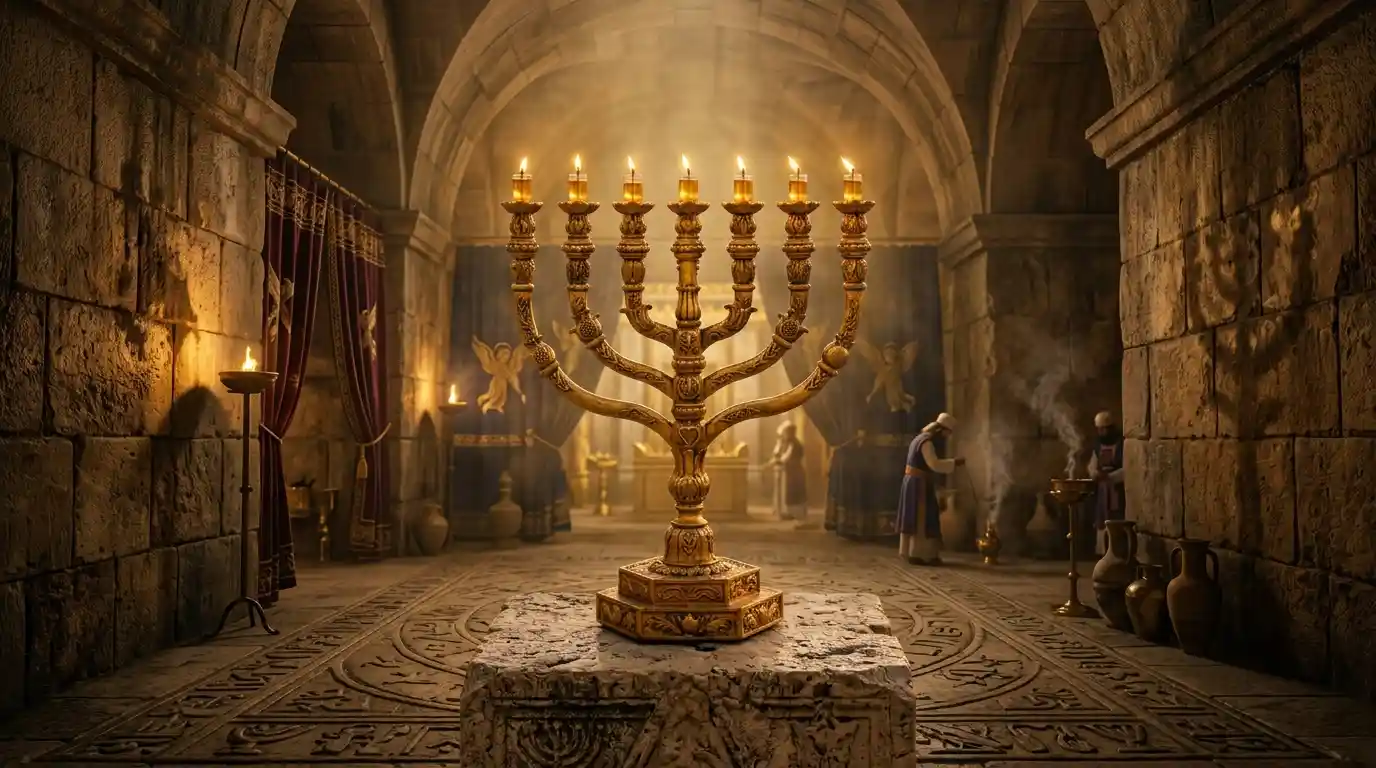
The 7 candle menorah’s meaning goes back thousands of years to the days of the ancient Jewish Temple, where this gold lampstand stood as a symbol of light, wisdom, and God’s presence. Today, people search for this topic because they see a seven-branched menorah in a museum, on a flag, or as jewelry, and they want to know what it stands for. In this article, you’ll learn where the seven-branch menorah came from, what each part means, and how it’s different from the nine-branch menorah used during Hanukkah.
Quick Answer
The seven candle menorah is one of the oldest and most sacred symbols in Judaism. It represents the seven days of creation, divine light, and wisdom. This menorah was first described in the Bible as a golden lampstand that stood inside the Tabernacle and later the Holy Temple in Jerusalem. It is not the same as the nine-branch menorah (called a hanukkiah) that people light during Hanukkah.
Meaning or Definition
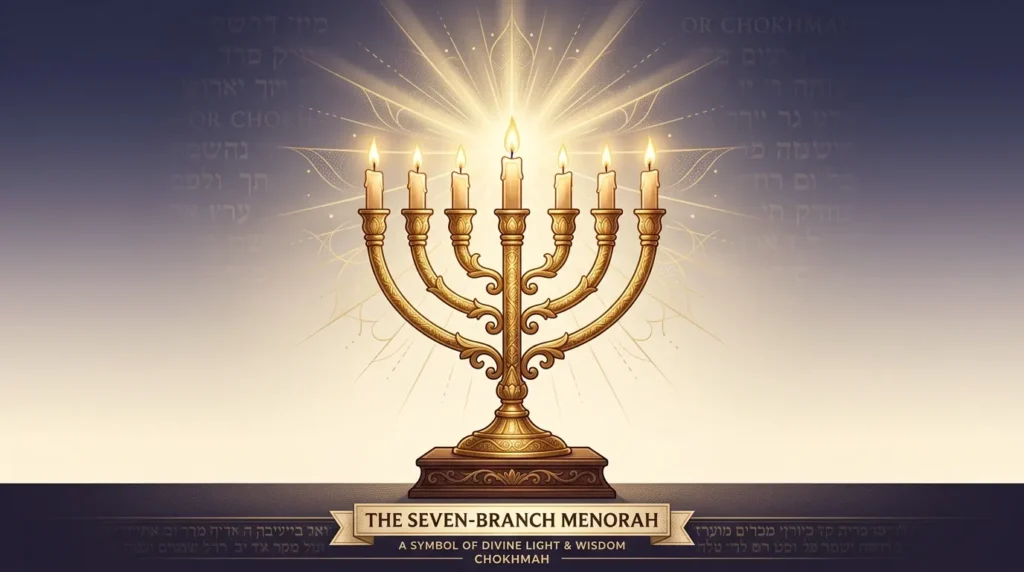
A menorah is a branched candelabrum, which is just a fancy word for a candle or lamp holder with several arms. The original menorah had exactly seven branches: one tall stem in the middle and three curved arms on each side, all rising to the same height.
This design wasn’t random. Each branch held an oil lamp, and all seven lamps were lit at once. The number seven carries deep meaning in Jewish tradition. It connects to the seven days of the week, including the Sabbath, and it also represents completeness and holiness. Many scholars believe the seven lights symbolize wisdom, knowledge, understanding, counsel, might, and the fear of God, with the center light representing God’s own presence.
The menorah wasn’t just a decoration. It was meant to be a source of physical and spiritual light, a reminder that light itself is one of God’s first creations and one of His most powerful gifts.
Origin or History

The story of the menorah begins in the Book of Exodus. God instructed Moses to build a menorah out of pure, hammered gold, with cups shaped like almond blossoms decorating each branch. This detailed design shows how important the object was meant to be. It wasn’t just functional; it was beautiful, almost like a golden tree of light.
The menorah stood inside the Tabernacle, the portable place of worship the Israelites carried through the desert. Priests lit it every evening, and it burned through the night. Later, when King Solomon built the First Temple in Jerusalem, the menorah found a permanent home there.
Over the centuries, the Temple was destroyed and rebuilt more than once. The Second Temple also held a menorah, and when Rome conquered Jerusalem in 70 CE, soldiers took the menorah as spoils of war. There’s a famous stone carving on the Arch of Titus in Rome that shows Roman soldiers carrying this exact menorah away. It’s one of the earliest images we have of what the object actually looked like.
Because the original menorah was lost, no one knows exactly where it ended up. Some historians think it may have been destroyed, while others believe it could still be hidden somewhere, though there’s no solid proof either way. What we do know for certain is that the seven-branch menorah became one of the most recognized symbols of Jewish identity and faith, long after the Temple itself was gone.
7-Branch Menorah vs. 9-Branch Hanukkah Menorah

One of the biggest points of confusion is that people often use the word “menorah” for two very different objects. Here’s a simple breakdown of how they differ.
| Feature | 7-Branch Menorah | 9-Branch Menorah (Hanukkiah) |
| Number of candles/lamps | 7 | 9 (8 plus 1 helper candle) |
| Used for | Ancient Temple worship, ongoing symbol of Judaism | Hanukkah holiday celebration |
| Origin | Book of Exodus, Tabernacle and Temple | Story of the Hanukkah miracle of oil |
| Lit all at once? | Yes, all seven lit together | No, one new candle added each night |
| Symbol of | Creation, wisdom, divine light | Rededication of the Temple, small miracles |
The seven-branch menorah is a general, year-round symbol of Judaism. It appears on the Emblem of the State of Israel, on synagogue walls, and in religious artwork. The nine-branch version, on the other hand, only comes out during the eight nights of Hanukkah, when families light one extra candle each night to remember the story of the oil that lasted eight days instead of just one.
What Each Part of the Menorah Symbolizes
Every part of the seven-branch menorah carries its own layer of meaning. Understanding these details helps explain why this object has stayed so important for so long.
| Part of the Menorah | What It Symbolizes |
| Central branch | God’s presence, the source of all light |
| Six outer branches | Human wisdom, knowledge, and understanding |
| Almond blossom cups | Growth, renewal, and beauty in worship |
| Pure gold material | Holiness, value, and lasting importance |
| Continuous flame | Eternal light, hope, and spiritual guidance |
Some rabbis and scholars also connect the seven branches to the seven days of creation described in Genesis, with the center branch representing the Sabbath, the day of rest and holiness that follows the six days of work.
Real-Life Examples of the Seven-Branch Menorah Today
You don’t have to visit an ancient temple to see this symbol in action. The seven-branch menorah shows up in many places today.
The most famous modern example is the Emblem of the State of Israel. When Israel became a country in 1948, its founders chose a seven-branch menorah, flanked by olive branches, as the national emblem. You can see it on government buildings, official documents, and even outside the Israeli Parliament (the Knesset) in Jerusalem, where a large bronze menorah statue stands as a gift from the British government.
Synagogues around the world also often display a seven-branch menorah near the ark that holds the Torah scrolls. It’s meant to remind worshippers of the ancient Temple and the ongoing presence of God’s light in Jewish life.
Jewelry makers and artists frequently use the seven-branch design too, since it’s considered one of the most recognizable and meaningful symbols in Jewish culture, separate from the holiday-specific Hanukkah candleholder.
Common Mistakes People Make
Because both menorahs look similar at a glance, a few mix-ups happen often.
The first common mistake is calling the Hanukkah candleholder a “menorah” without realizing there’s a difference. In casual conversation, many people do call the nine-branch Hanukkah lamp a menorah, and that’s not technically wrong since “menorah” simply means lampstand in Hebrew. But if someone is asking specifically about the seven-branch version, it helps to know they’re asking about the original Temple menorah, not the Hanukkah one.
Another mistake is assuming the seven-branch menorah is only a symbol used during a specific holiday. Unlike the Hanukkah version, the seven-branch menorah isn’t tied to one holiday. It’s a year-round, general symbol of Jewish faith and identity.
Some people also assume the number seven was chosen just for design purposes. In reality, the number carries deep religious meaning tied to creation, holiness, and completeness, not simply decoration.
Tips for Understanding This Symbol Respectfully
If you’re learning about the seven-branch menorah out of curiosity, respect, or personal interest, here are a few helpful tips.
First, remember that this is a sacred religious symbol for Jewish people, not just a decorative item. Treating it with the same respect you’d give any other faith’s holy objects goes a long way.
Second, if you’re buying menorah artwork or jewelry as a gift, check if the person wants the seven-branch style (a general symbol of Judaism) or the nine-branch style (specifically for Hanukkah). Getting this right shows thoughtfulness.
Third, if you want to learn more, visiting a local synagogue’s website, a Jewish museum, or asking a rabbi directly are great ways to get accurate, first-hand information instead of relying only on general internet searches.
FAQs
What does the number seven mean on a menorah?
The number seven represents completeness and holiness in Jewish tradition. Many people connect it to the seven days of creation, with the center branch symbolizing the Sabbath.
Is a menorah always seven branches?
No. The original, biblical menorah has seven branches. The version used during Hanukkah has nine branches, with eight for each night of the holiday and one extra “helper” candle called the shamash.
Why is the menorah important in Judaism?
The menorah symbolizes divine light, wisdom, and God’s presence. It stood in the ancient Tabernacle and Temple and remains one of the oldest continuous symbols of Jewish faith.
What happened to the original menorah from the Temple?
Roman soldiers took the menorah from the Second Temple in 70 CE, and its exact fate afterward is unknown. A stone carving on the Arch of Titus in Rome shows what it looked like.
Why does Israel use a menorah as its national symbol?
Israel chose the seven-branch menorah as its official emblem in 1948 because it represents a direct link between the modern Jewish state and ancient Jewish history and faith.
Can non-Jewish people display a menorah?
Many non-Jewish people display menorahs as art or out of respect for Jewish culture. It’s generally seen as respectful as long as it’s treated as a meaningful symbol rather than a casual decoration.
Conclusion
The seven candle menorah is far more than an old-fashioned lamp. Its seven branches point to creation, wisdom, and the idea that light itself is sacred. While it’s easy to confuse it with the nine-branch Hanukkah menorah, knowing the difference helps you understand and appreciate each symbol for what it truly represents. If you’re researching for personal interest, a school project, or out of genuine curiosity about Jewish tradition, the seven-branch menorah remains one of history’s most enduring symbols of light and faith.