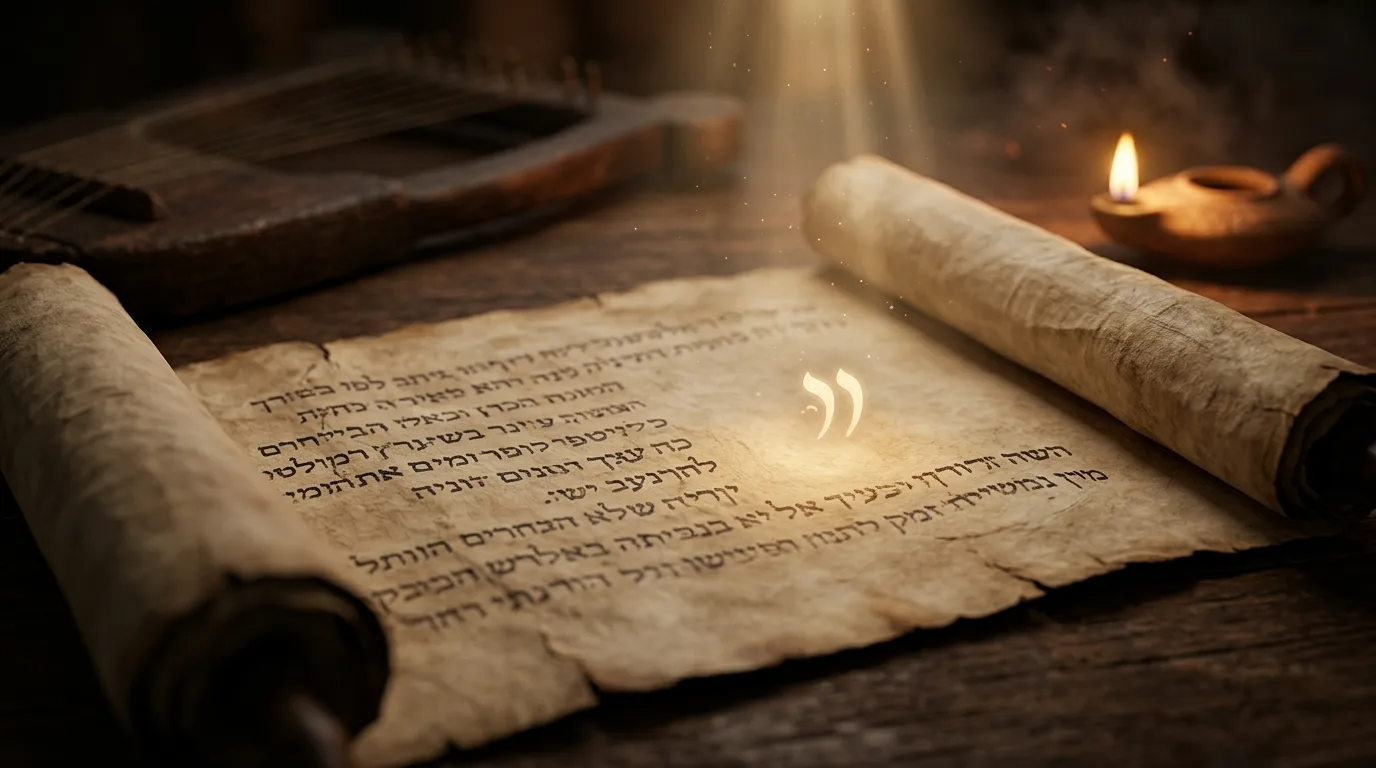
Have you ever read the word “Selah” in a Psalm and wondered what it means? You are not alone. Many readers stop at this little word and scratch their heads. Here is the short answer. The selah meaning in Hebrew is not fully certain, but most scholars say it points to a pause, a rest, or a musical break. Some think it means “lift up.” The word shows up 74 times in the Bible, mostly in Psalms. It is a small word with a big mystery. In this article, you will learn what Selah may mean, where it appears, and how it is spelled in Hebrew. You will also see why experts still disagree, along with simple examples, common mistakes, and easy ways to use Selah in daily life.
Selah Meaning in Hebrew: The Quick Answer
The best short answer is this: Selah most likely tells the reader or singer to pause, think, or lift up the voice and instruments. Nobody knows for sure, because the Bible never explains the word.
That may sound surprising. But it is true. Ancient writers did not stop to define every term. They knew what Selah meant, so they did not need to explain it. Over many centuries, the exact meaning was lost. Today, scholars have three main ideas. The first is a pause or rest. The second is a musical interlude. The third is a call to lift up or praise.
All three ideas lead to a similar result. When you see Selah, slow down. Let the words sink in. Think about what you just read or sang. That simple habit is helpful, no matter which theory is correct.
The Hebrew Word Itself
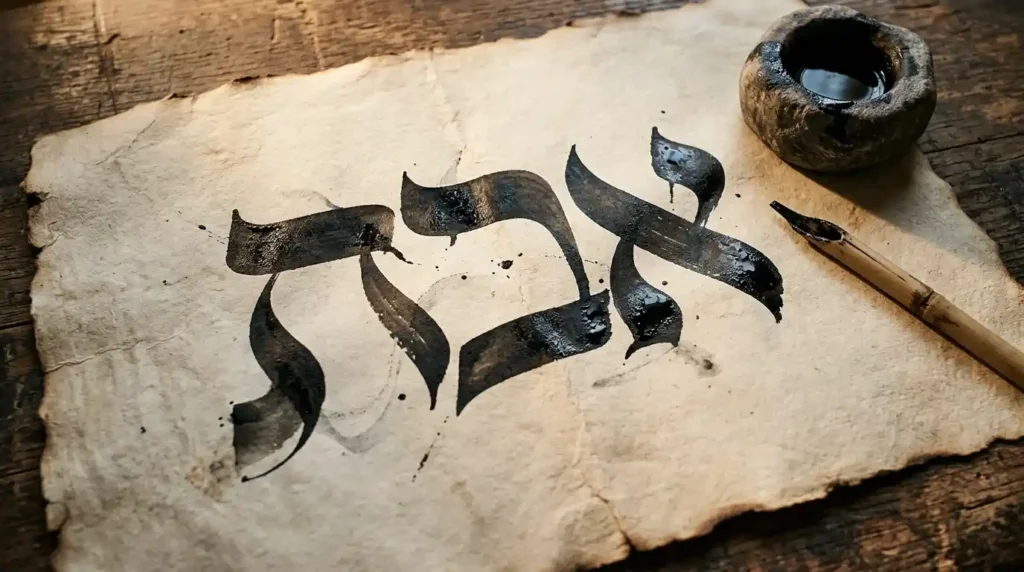
Let’s start with the word as it is written. In Hebrew, Selah is spelled סֶלָה. It has three letters: samekh, lamed, and he. Hebrew is read from right to left, so you start with the letter on the far right.
The Hebrew pronunciation is close to “SEH-lah.” The first part sounds like the “se” in “set.” The second part sounds like “lah.” Many English speakers say “SEE-lah” or “SAY-lah.” Those are common too, and no one will mind. English Bibles usually keep the word as it is. They do not translate it, because translators are not sure what to put in its place. Many Bibles add a small note saying the meaning is unknown.
The word is not used like a normal Hebrew word in a sentence. It is not a noun like “king” or a verb like “sing.” It stands alone, often at the end of a verse or a line. This is one reason scholars think it is a kind of instruction. It works like a note on a page of music, such as “rest here” or “play louder.”
Because it is so short and so unusual, Selah has been studied for a very long time. Jewish scholars, early Christian writers, and modern experts have all given their ideas. Let’s look at those soon. First, let’s see where the word actually shows up.
Where Selah Appears in the Bible

Selah appears 74 times in total. Seventy-one of those are in the book of Psalms, and the other three are in the book of Habakkuk. It is found in 39 different Psalms. It never appears in the New Testament.
Here is a simple overview:
| Book | Times Selah Appears | Example Passages |
| Psalms | 71 | Psalm 3, Psalm 46, Psalm 89 |
| Habakkuk | 3 | Habakkuk 3:3, 3:9, 3:13 |
| All other books | 0 | None |
The first time you meet the word is in Psalm 3. After that, it keeps coming back. Some Psalms use it just once. Psalm 46 uses it three times. Psalm 89 uses it four times, which is the most in one Psalm.
There is a pattern here. Almost every use is in a Psalm, and Psalms were songs. They were sung or played in worship, often with instruments. Habakkuk chapter 3 is also written like a song. It even has musical notes at the start and end. So Selah seems to belong to the world of music and worship.
Another detail is worth noticing. Selah often falls right after a big idea. It might come after a statement about God’s power, a cry for help, or a promise of safety. This timing supports the idea of a pause. It is as if the writer says, “Stop and think about that.”
The Main Theories About What Selah Means
Experts have offered several explanations over the years. None has been proven. Still, each one has some support, and each one helps us understand how the word may have worked.
The most popular idea is that Selah means a pause or rest. In this view, the singers stopped, and the listeners had a quiet moment to think. This fits well with how people read Psalms today. The idea is simple and easy to use in prayer.
A second idea says Selah is a musical signal. It may have told the musicians to play an instrument alone between lines of singing. This is often called an interlude. The Greek translators of the Old Testament seem to have understood it this way, which we will see in the next section.
A third idea says the word comes from a Hebrew root that means “to lift up.” If so, Selah might call the singers to raise their voices or to lift their praise. Some readers also like to think it tells the heart to lift up toward God. This idea comes from comparing Selah to a similar Hebrew root that appears elsewhere in the Bible.
A fourth idea is that Selah means something like “forever” or “always.” Some old translations seem to read it that way.
Here is a table that puts these ideas side by side:
| Theory | What It Suggests | Main Strength | Main Weakness |
| Pause or rest | Stop and think | Fits the places where Selah appears | No clear proof from the Bible text |
| Musical interlude | Instruments play alone | Matches early Greek translation | We lack ancient music notes to confirm it |
| Lift up | Raise voice or praise | Connects to a known Hebrew root | The link to the root is not certain |
| Forever or always | A closing note of lasting truth | Found in some ancient translations | Does not fit every verse well |
As you can see, every theory has a weak spot. That is why careful writers say “possibly” or “most likely” when they talk about Selah. Anyone who says they know the exact meaning for sure is going beyond the evidence.
What Ancient Translators Thought
One helpful way to study Selah is to see how early translators handled it. They lived much closer to the time when the Psalms were sung, so their guesses carry some weight.
The oldest major Greek translation of the Hebrew Bible is called the Septuagint. Its translators did not use the word Selah. Instead, they often used a Greek word, Diapsalma. Many scholars understand this as a break in the singing, possibly with an instrument playing alone. So the early Greek readers seem to have taken Selah as a musical pause.
Other ancient translators seem to have read it differently. Some Greek and Aramaic versions used words that suggest “always” or “forever.” This may mean they saw Selah as a way to stress that a statement stays true for all time.
So even in ancient days, people were not fully sure. That is a useful fact. It shows that the confusion around Selah is not new. It also shows why we should be humble. If skilled translators from long ago had different ideas, we should not pretend the matter is settled.
Most modern English Bibles keep the Hebrew word and leave it untranslated. Some add a small footnote. This choice is honest. It tells the reader, “This is a real word in the text, but we do not know its exact meaning.”
Why the Meaning Matters When You Read
You might wonder if the exact meaning even matters. In one way, it does not. If Selah means pause, play, or lift up, the result for the reader is similar. You slow down and pay attention.
In another way, it matters a lot. Reading the Psalms is not like reading a news story. These are songs and prayers. They were made to be felt, not rushed. Selah is like a small sign on the road. It says, “Take a breath here.”
Think about how you read a text message from a friend. You may read it fast, then stop on one line that surprises you. You read that line again. Selah works in a similar way. It marks the spot where the writer wants you to stop and read again.
Knowing this can change how you read the Bible. Instead of racing to the end of a Psalm, you can stop at each Selah. Ask yourself what the lines before it are saying. Ask what it means for your own life. This slow style of reading can bring a deeper understanding.
There is also a lesson about honesty. The Bible has some details that remain unclear. That is okay. We can enjoy and learn from the text without having every answer.
Real-Life Examples From the Bible
Examples make the idea clearer. Let’s look at a few places where Selah appears and see how a pause could fit.
In Psalm 3, the writer is in danger. Many people are rising against him. He says that many are saying God will not help him. Then comes Selah. The pause lets the reader feel how heavy those words are. After that, the writer turns and says that God is a shield around him. The break makes the turn feel stronger.
In Psalm 46, the writer speaks about the earth shaking and the mountains falling into the sea. Even then, he says, there is no need to fear. Selah appears at the end of key parts. Each time, it seems to give a moment to take in the message that God is a safe place in hard times. Three pauses in one short Psalm give it a calm, steady rhythm.
In Habakkuk 3, the prophet describes God’s mighty power in a vivid picture. The word Selah shows up in the middle of that picture. Here, a pause could give room to picture the scene, or an instrument could add drama.
Now think about a modern example. Imagine you are listening to a choir. The singers finish a powerful line, and then the music goes quiet for a moment. You feel the weight of what you just heard. That quiet moment is a bit like what Selah may have done.
You can also use this idea at home. If you read a Psalm out loud, try stopping where Selah appears. Count to five slowly. Then keep reading. Many people say this small habit helps them focus.
Common Mistakes People Make
Because Selah is so mysterious, people often make the same errors when they talk about it. Here are the most common ones.
The first mistake is saying the meaning is fully known. Some websites and books state that Selah “means” one specific thing, as if it were settled. In truth, scholars still debate it. A better way to say it is that Selah probably means a pause or musical break.
The second mistake is treating Selah as part of the message. Most scholars think it is not a word to be spoken as a sentence. It is more like a direction. When you read aloud, you do not need to stress it. You can simply pause.
The third mistake is believing it appears in the New Testament. It does not. It is found only in Psalms and Habakkuk.
The fourth mistake is mixing it up with other Hebrew words. For example, “Amen” and “Hallelujah” are well-known Hebrew words with clear meanings. Selah is different, because its meaning is uncertain. Do not use them as if they were the same kind of word.
The fifth mistake is making up a deep meaning that the text does not support. It can be tempting to build a big story around a single word. But when the evidence is thin, it is wiser to be careful. If you share an idea about Selah, make it clear that it is an idea and not a proven fact.
How to Use Selah in Daily Life
Even without a final answer on the meaning, Selah has become a useful word in modern life. Many people use it as a reminder to slow down.
Some people write “Selah” in their journals after a hard thought. It means, “I am going to stop and think about this.” Others say it in prayer groups as a way to invite quiet. Some use it as a short sign-off at the end of a message, as in “Let that sink in.”
Here are some simple ways to put the idea to work:
- Read a Psalm slowly. Stop where you see Selah and think for a few breaths.
- When you feel rushed, say the word to yourself. Use it as a cue to breathe.
- Write down one thing you learned each time you pause.
- Share a verse with a friend and ask, “What do you think about this part?”
These steps are easy and take only a minute or two. They also match the likely purpose of the word, which is to help people stop and reflect.
Selah in Songs and Modern Culture
Today, Selah is easy to find outside the Bible. It is a popular name for music groups, albums, and songs. Some parents choose it as a first name. Churches, bookstores, and coffee shops use it in their names too, hoping to suggest a calm place to pause.
This shows how well the idea has traveled. People who may not know the Hebrew background still feel the word means “stop and reflect.” That feeling matches what most scholars believe it meant long ago.
You can also see Selah in worship music. Songwriters sometimes add it to lyrics as a way to mark a quiet moment. This brings the word back to its roots in song.
Because it is so widely used, you may find it in many places. When you do, you now know the story behind it. You also know the honest truth: the exact meaning is still debated, but the spirit of the word is clear.
FAQs
What does Selah mean in Hebrew?
The exact meaning is unknown. Most scholars believe it means a pause, a rest, or a musical break. Some think it means “lift up” or “forever.”
How do you pronounce Selah?
In Hebrew, it sounds like “SEH-lah.” In English, people also say “SEE-lah” or “SAY-lah.” All are widely used.
How many times is Selah in the Bible?
It appears 74 times. There are 71 in Psalms and 3 in Habakkuk. It is found in 39 different Psalms.
Should I say Selah out loud when I read a Psalm?
Most readers do not. Many scholars see it as a direction, like a note in music. You can pause instead of saying it, though it is fine to read it aloud if you like.
Is Selah a word of praise?
Not clearly. Some think it may call people to lift up their praise, but this is only one theory. Its main use seems to be marking a pause or break.
Why do Bibles not translate Selah?
Translators are not sure what it means, so they keep the Hebrew word. Many add a footnote to tell readers the meaning is uncertain.
Conclusion
So, what is the selah meaning in Hebrew? The honest answer is that no one knows for sure. The best guess is that it signals a pause, a musical break, or a call to lift up praise. All of these point to the same helpful habit: slow down and think.
Selah appears 74 times in the Bible, mostly in the Psalms. Early translators, ancient scribes, and modern scholars have all tried to explain it. Their ideas differ, but they share a common thread of reflection. That is why this tiny word still speaks to so many people today.
Here is a practical tip. Next time you read a Psalm, stop at each Selah. Take a slow breath. Ask yourself what the lines mean to you. You do not need a perfect definition to gain from the pause. Sometimes the best way to understand a word is simply to live out its spirit.