Have you ever told someone a fact, and they answered, “Well, you don’t say”? Maybe you felt confused. Were they shocked? Were they joking? You don’t say the meaning is simple: it shows surprise. But it can also be sarcasm, which means saying the opposite of what you feel. The words stay the same, but the message can change a lot.
Many people search for this phrase because it can sound friendly or rude, depending on how it is said. In this guide, you will learn what it means, where it comes from, and how tone changes everything. You will also see real examples, easy tables, common mistakes, and tips for using it well.
You Don’t Say Meaning in Simple Words

“You don’t say” is a short reply people give after hearing news. It has two main meanings. The first is a real surprise. The second is playful or sharp sarcasm, used when the news was obvious.
Think of it as a small reaction, like “Wow” or “Really?” Nobody expects you to explain it. You just say it and move on.
The phrase is called an idiom. An idiom is a group of words that means something different from the words alone. If you read “you don’t say” word by word, it sounds like a rule: “You are not allowed to speak.” But that is not what it means at all. Nobody is telling you to be quiet. The speaker is reacting to what you just said.
Here is a quick way to remember it:
- If the news is surprising, the phrase can mean “I can’t believe it.”
- If the news is obvious, the phrase can mean “Yes, I already knew that.”
So the phrase is like a coin with two sides. The side people see depends on how the speaker says it and what was said before.
The Two Main Uses of “You Don’t Say”

Let’s look at both uses more closely, because mixing them up is the most common problem.
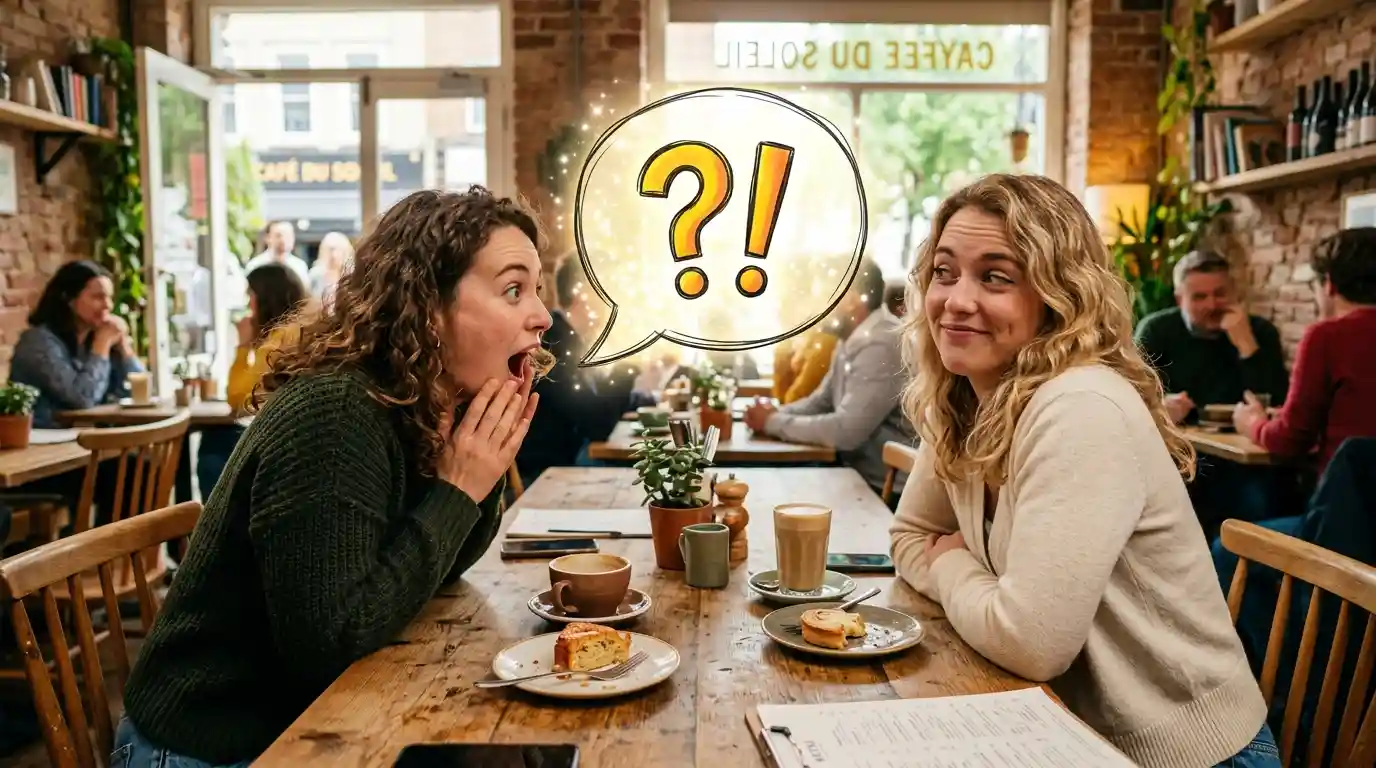
Use one: real surprise. Someone shares news that is new to you. You answer with “You don’t say!” to show you are amazed. In this case, your voice goes up. Your face looks curious or excited. People often use it this way when they hear gossip, big news, or an odd fact.
Imagine your neighbor says, “Our new puppy learned to open doors.” You might reply, “You don’t say! That’s amazing.” You are happy and a little shocked.
Use two: sarcasm. Now imagine your friend says, “It’s really hot today,” on a day when it is 100 degrees. You reply, “You don’t say.” You do not mean it as a real question. You mean, “Everyone already knows that.” Your voice is flat or slow. You might roll your eyes or smile a little.
Sarcasm is common in American English. Many people use “you don’t say” this way today, more often than for real surprise. If you hear the phrase in a movie, at work, or online, sarcasm is quite likely.
The trick is to look at the whole moment. Ask yourself: Was the news new or obvious? How did the speaker sound? What did their faces show? Those three clues almost always give you the answer.
How Tone of Voice Changes the Meaning

The words “you don’t say” never change. The music around them does. That music is called tone.
When someone is truly surprised, their voice usually rises at the end. It sounds bright and open. They might say it fast, as if the words popped out before they could stop them. A person may also add extra words, such as “You don’t say! When did that happen?”
When someone is being sarcastic, the voice often stays flat. Each word may sound slow and heavy. The speaker may pause before saying it. There is often no follow-up question, because they are not really curious.
There is also a friendly kind of sarcasm. Close friends and family tease each other this way. In that case, the tone is warm, and a smile usually comes with it. Nobody feels hurt.
Then there is the unfriendly kind. If a boss or a stranger says it in a cold voice, it can feel like an insult. It can make you feel silly for stating something obvious.
Text messages make this harder. In writing, you cannot hear the voice. That is why “You don’t say.” with a period can look cold, while “You don’t say!!” or “You don’t say 😮” looks more like real surprise. Small marks like these help the reader guess your tone.
Real Life Examples of “You Don’t Say”
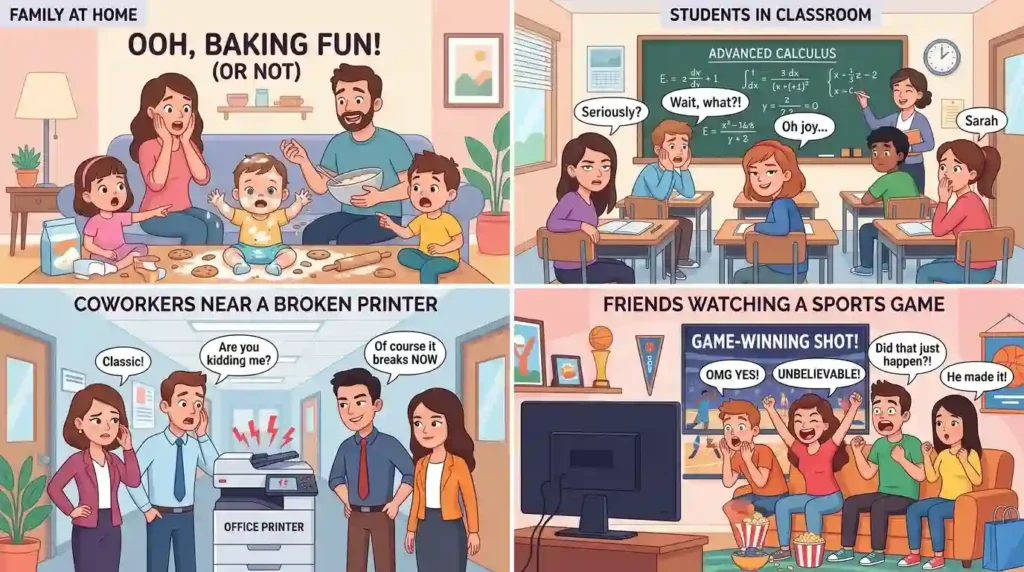
Seeing the phrase in action is the best way to learn it. Here are common places you may hear it.
At home, a child might say, “I finished all my homework.” A parent who is truly proud may say, “You don’t say! Good job.” That is surprise and joy.
At school, a student says, “The test is going to be hard.” Another student who already knows this may answer, “You don’t say.” That is light sarcasm.
At work, a coworker says, “The printer is broken again.” Someone nearby, tired of the printer, might say, “You don’t say.” That is sarcasm mixed with a little humor.
Here is a table that puts these examples in one place.
| Situation | What Was Said First | Reply | Meaning |
| Family news | “Grandma is visiting next week.” | “You don’t say! I miss her.” | Real surprise and joy |
| Weather talk | “Wow, it’s raining.” (during a storm) | “You don’t say.” | Sarcasm |
| Workplace | “The meeting starts at nine.” (everyone knows) | “You don’t say.” | Gentle joke |
| Sports | “Our team won the final!” | “You don’t say! Tell me everything.” | Real surprise |
| Online chat | “The water is wet.” | “You don’t say.” | Playful sarcasm |
Notice something in the table. When the reply is a real surprise, people often keep talking. They ask questions or add feelings. When it is sarcasm, the phrase usually stands alone, like a full stop.
Where Did “You Don’t Say” Come From?
People love to ask about the history of a phrase, but here honesty matters. No one can point to a single person who first said “you don’t say.” No reliable record shows exactly when or where it began.
What we do know is that the phrase has been part of English for a long time, likely more than a century. Older books and newspapers used it as a polite way to react to news. Back then, it usually showed real surprise, like “Is that so?” or “Really?”
Over time, the meaning grew. People started using it when the news was not surprising at all. That shift is common in language. A phrase begins with one meaning, and then speakers bend it to be funny or sharp. Today, the sarcastic use is what many people think of first.
Because the exact story is unclear, be careful with websites that give you a neat, exciting origin story. If a page names one specific inventor or date without a good source, it may be guessing. The safest thing to say is this: the phrase is old, it started as a way to show surprise, and sarcasm became popular later.
If you want to dig deeper, a good place to check is a trusted dictionary, such as Merriam-Webster or the Oxford English Dictionary. They track how words and phrases change over time.
Grammar and Correct Usage
You don’t have to worry much about grammar here, because “you don’t say” works on its own. It is a short sentence, and it stands alone. Still, a few simple rules will help.
First, it is usually a reply. People say it after hearing something. It rarely starts a conversation. You would not walk up to a friend and open with “You don’t say.”
Second, punctuation shows feeling. An exclamation mark, as in “You don’t say!”, shows excitement. A period, as in “You don’t say.”, can look flat or sarcastic. A question mark, as in “You don’t say?”, can show doubt, like “Are you sure?”
Third, you can add words after it. For example, “You don’t say. I had no idea,” or “You don’t say! Where did you hear that?” These extras make your meaning clearer.
Fourth, the phrase is informal. That means it is best for casual talk with friends, family, and coworkers you know well. In a formal letter or a school essay, you would want other words, unless you are quoting someone.
Here is what this looks like in practice:
- “You don’t say!” (excited)
- “You don’t say.” (flat, likely sarcastic)
- “You don’t say?” (unsure or doubtful)
- “Well, you don’t say.” (a bit old-fashioned, warm)
Also notice that it is always “you don’t say,” not “you didn’t say” or “you can’t say.” Those are different phrases with different meanings.
You Don’t Say vs. Similar Phrases
English has many phrases that work like “you don’t say.” Some show real surprise. Others are sarcastic. A few can be both. Knowing the difference will help you pick the right one.
| Phrase | Usually Means | Tone | Best For |
| You don’t say | Surprise or sarcasm | Depends on voice | Casual talk |
| Really? | Surprise or doubt | Neutral | Almost anywhere |
| No way! | Strong surprise | Excited | Friends and family |
| Is that so? | Polite interest | Calm | Formal or older speakers |
| No kidding | Surprise or sarcasm | Depends on voice | Casual talk |
| Tell me about it | “I agree, I know” | Friendly | Sharing a common problem |
| Captain Obvious | “That was obvious” | Sarcastic | Teasing |
| Thanks for the news flash | “I already knew” | Sarcastic | Playful or sharp teasing |
“You don’t say” sits in the middle. It is softer than “Captain Obvious,” which is clearly a joke about someone. It is also more flexible than “Really?”, which most people take as real curiosity.
If you are not sure your listener will get your tone, “Really?” is safer. If you want a little humor, “You don’t say” is a good pick. If you want to be very clear that you are amazed, try “No way!” or “That’s amazing!”
Common Mistakes People Make
Even native speakers slip up with this phrase. Here are the mistakes you will see most often.
Mistake one: using sarcasm with the wrong person. Sarcasm can hurt when the listener does not know you well. A new coworker may not laugh if you say “You don’t say” to their comment. Save it for people who understand your humor.
Mistake two: missing the sarcasm. Some learners of English think every “you don’t say” is a real surprise. Then they explain the news in more detail, and the speaker gets annoyed. Watch the tone and the situation.
Mistake three: using it in serious moments. If a friend shares sad news, saying “You don’t say” in a flat voice can feel cold. Choose a warmer reply, like “I’m so sorry to hear that.”
Mistake four: writing it in formal work. Emails to a boss, teachers, or customers should stay polite and clear. A sarcastic phrase can be misread in writing.
Mistake five: changing the words. Some people say “you never say” or “you do say.” These do not carry the same idiom. Keep the phrase exactly as “you don’t say.”
Mistake six: overusing it. Sarcasm is spicy. A little is fun. Too much makes you sound negative. If every reply you give is “You don’t say,” people may stop sharing news with you.
Is “You Don’t Say” Rude?
The honest answer is: it depends. On its own, the phrase is not a bad word or an insult. It is a reaction. The rudeness, if any, comes from how you say it and who hears it.
Among friends, it is often a joke. Friends use sarcasm to show they feel comfortable. You may hear it during a game, at a family dinner, or in a group chat, and everyone laughs.
At work, it depends on the workplace. Some teams joke around all day. Others are more serious. If you are new, listen for a while first. If nobody else uses sarcasm, you might skip it.
With people you do not know, be careful. A sarcastic reply can make the other person feel foolish. That can hurt a new friendship or a business connection.
Age and culture matter too. Older speakers may use “you don’t say” for real surprise, so they might feel confused when it is used sarcastically. Also, sarcasm is used differently around the world. In some places, it is normal. In others, it may seem impolite. If you are talking with someone from a different background, direct words like “Really? I didn’t know that” are often clearer.
A simple rule works well: when in doubt, be kind first and funny second.
Tips for Using “You Don’t Say” Well
Ready to use the phrase yourself? These tips will help you sound natural.
Start by matching your voice to your meaning. For real surprise, raise your voice and smile. For sarcasm, slow down and keep your voice flat. Your listener will pick up on that right away.
Next, think about your audience. Use it with people who know you. If you are unsure, try a friendlier phrase.
Add a follow-up when you mean it. If you are truly surprised, keep the talk going with a question. “You don’t say! How did you find out?” shows you care. It also removes any doubt about your tone.
In writing, add helpful signs. An exclamation mark or an emoji can show you are not being harsh. Without these, your message might look colder than you planned.
Practice with easy examples. Try saying “You don’t say” out loud in two ways, once with surprise and once with sarcasm. Hear the difference. Then think of a few times you might use each one.
Finally, do not lean on it too much. The best speakers use a range of phrases. Mix in “Really?”, “No way,” and “That’s interesting” so your talk feels fresh.
Current Usage and Trends
Today, “you don’t say” lives in many places: movies, TV shows, social media, comments, and everyday chats. In most of these, the sarcastic meaning leads.
Online, people often use it under posts that state something plain or already known. For example, a news story might say a busy road has heavy traffic, and a reader comments “You don’t say.” Others read that as a joke, and it may get likes.
It also shows up in memes and short videos, where a character stares at the camera and says it with a dry voice. Because of this, younger people may mostly know the sarcastic meaning.
At the same time, the sincere meaning has not disappeared. Many older adults and people who love classic books or films still use it to show honest surprise. So you may hear both uses in the same week.
I cannot give exact numbers on how often each use appears, because reliable public data on that is not available. What we can say with confidence is that the phrase is still active, well understood in American English, and flexible enough to fit both moods.
FAQs
1. What is the simple meaning?
It means “I’m surprised” or, more often today, “That’s obvious.” Which one depends on the speaker’s tone and the situation.
2. Is “you don’t say” sarcastic?
Often, yes. Many people use it as sarcasm when someone says something everyone already knows. But it can also show real surprise, so always check the tone.
3. Is “you don’t say” polite or rude?
Neither by itself. Said warmly, it is polite or playful. Said coldly to a stranger, it can feel rude. Know your listener before you use it.
4. Can I use “you don’t say” in an email?
It is better to avoid it in formal emails. Without your voice, the reader may miss your tone. In casual messages to friends, it is fine, especially with an exclamation mark or emoji.
5. What can I say instead of “you don’t say”?
For real surprise, try “Really?”, “No way!”, or “Is that so?” For playful sarcasm, try “No kidding” or “Tell me about it.”
6. Where did “you don’t say” come from?
No one knows the exact start. The phrase has been used for a long time, at first to show surprise. Its sarcastic use grew later. Be careful with sources that claim a single, certain origin.
Conclusion
What you don’t say comes down to two things: surprise and sarcasm. Both use the same three words, but the tone, the situation, and the speaker’s face tell you which one is meant. If the news is new, it usually shows wonder. If the news is obvious, it usually shows a joke or a small eye roll.
Remember a few key points. The phrase is casual, so it fits best with friends and family. It is old, but the exact origin is unclear. And sarcasm can hurt, so use it with people who know your style.
Here is one last piece of practical advice. When you hear “you don’t say,” pause and look for clues before you answer. When you say it yourself, make your tone match your meaning, and add a question or a smile when you are truly amazed. Do that, and your words will land the way you want.